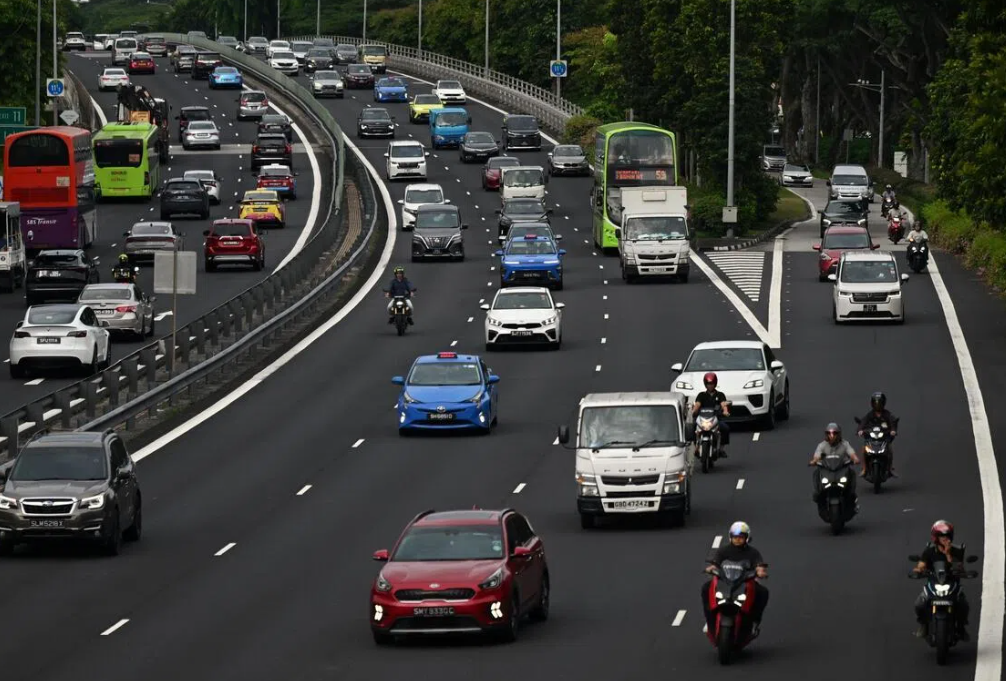
Singapore's largest ride-hailing and taxi operators have committed to maintaining supplementary driver fees through the end of September, a decision announced jointly through the National Private Hire Vehicles Association to address the sustained financial pressures facing transport workers. ComfortDelGro, Grab, Gojek and Tada have all extended their respective surcharges, which were originally introduced as temporary measures to help drivers weather escalating operational expenses.
The NPHVA, a labour union affiliate representing private-hire vehicle drivers, disclosed the extension following ongoing consultations with platform operators regarding cost pressures. In a Facebook announcement on July 22, the association emphasized that these additional fees stem from genuine economic challenges facing drivers rather than profit motives. The decision reflects the outcome of prolonged dialogue between worker representatives and the companies operating Singapore's ride-hailing ecosystem.
ComfortDelGro, which operates Singapore's largest taxi fleet, has structured its fees according to fare value. Passengers booking through the platform's mobile application will encounter a $0.50 surcharge for trips costing less than $15, with an $0.80 charge applied to higher-value journeys. This pricing applies across multiple service categories, including cross-border rides to neighbouring regions, premium limousine services and hourly rental bookings. Additionally, the company maintains a $0.01 per 400 metres rate increase for short-distance journeys under 10 kilometres, a measure also retained through September.
The ride-sharing competitors implemented their own fee structures during April, establishing a $0.90 driver charge across Grab and Gojek services. Tada differentiated its approach by charging $1.20 for journeys exceeding $18 in value. These platform-specific fees, collected separately from standard fares, bypass normal commission deductions and flow directly to driver earnings, ensuring that workers capture the full benefit of these supplementary charges without intermediary platform deductions.
The historical context underlying these fee extensions traces back to 2022, when initially introduced in response to global fuel market disruptions. What began as a pandemic-era measure has persisted due to sustained energy price pressures affecting Singapore's transportation sector. The geopolitical dimensions remain relevant to Southeast Asian readers, particularly given recent conflicts affecting global energy infrastructure.
Fuel price dynamics have fundamentally shaped this policy landscape. In March 2024, when ComfortDelGro first introduced its surcharges, 95-octane petrol retailed between $2.91 and $2.92 per litre across major Singapore service stations. By late July, benchmark pricing had climbed substantially to $3.36 or $3.37 per litre at major operators including Caltex, Shell, Esso, SPC and Sinopec. This represents an approximately 15 percent increase in fuel costs within a four-month window, directly translating to reduced driver profitability absent compensatory mechanisms.
The geopolitical backdrop deserves scrutiny for regional implications. February's escalation between the United States and Israel against Iran raised global energy security concerns, particularly surrounding the Strait of Hormuz—a critical maritime chokepoint through which substantial crude oil volumes transit toward Asian markets. Although immediate closure threats receded, lingering uncertainty continues affecting petroleum futures pricing and spot market costs across Singapore and the broader Southeast Asian region.
Interestingly, fuel price disparities within Singapore suggest that baseline cost pressures may not uniformly justify extended surcharges across all service models. Cnergy and Smart Energy petrol stations, operating smaller retail networks, advertised 95-octane fuel at $2.54 and $2.62 per litre respectively as of late July. These prices substantially undercut the major operator benchmark, suggesting that aggressive pricing strategies by premium brands rather than universal scarcity drive the elevated costs cited by platform operators.
For Malaysian readers, this Singapore situation carries instructive implications for ride-hailing labour standards and cost-sharing mechanisms. The NPHVA's structured approach to negotiating driver compensation through formalized surcharges offers a model distinct from less transparent arrangements elsewhere in Southeast Asia. The explicit commitment to passing fees entirely to drivers without platform commission extraction represents a labour advocacy achievement worth monitoring as Grab, Gojek and other platforms expand operations across the region.
The extension through September 30 avoids the volatility of making permanent structural changes while preserving flexibility for platform operators to reassess conditions quarterly or semi-annually. This interim approach reflects tacit acknowledgment that energy prices may prove unstable, rendering longer-term commitments imprudent. For commuters already absorbing the surcharges, this implies no near-term relief, while drivers gain temporary income security.
Moving forward, the NPHVA signalled intention to maintain regular engagement with platforms regarding cost mitigation strategies. This positions the association as an ongoing interlocutor rather than a one-time negotiator, establishing precedent for continuous dialogue around driver welfare. Whether September's deadline triggers permanent fee integration, complete removal or further extension remains undetermined, creating planning uncertainty for both drivers and passengers.

