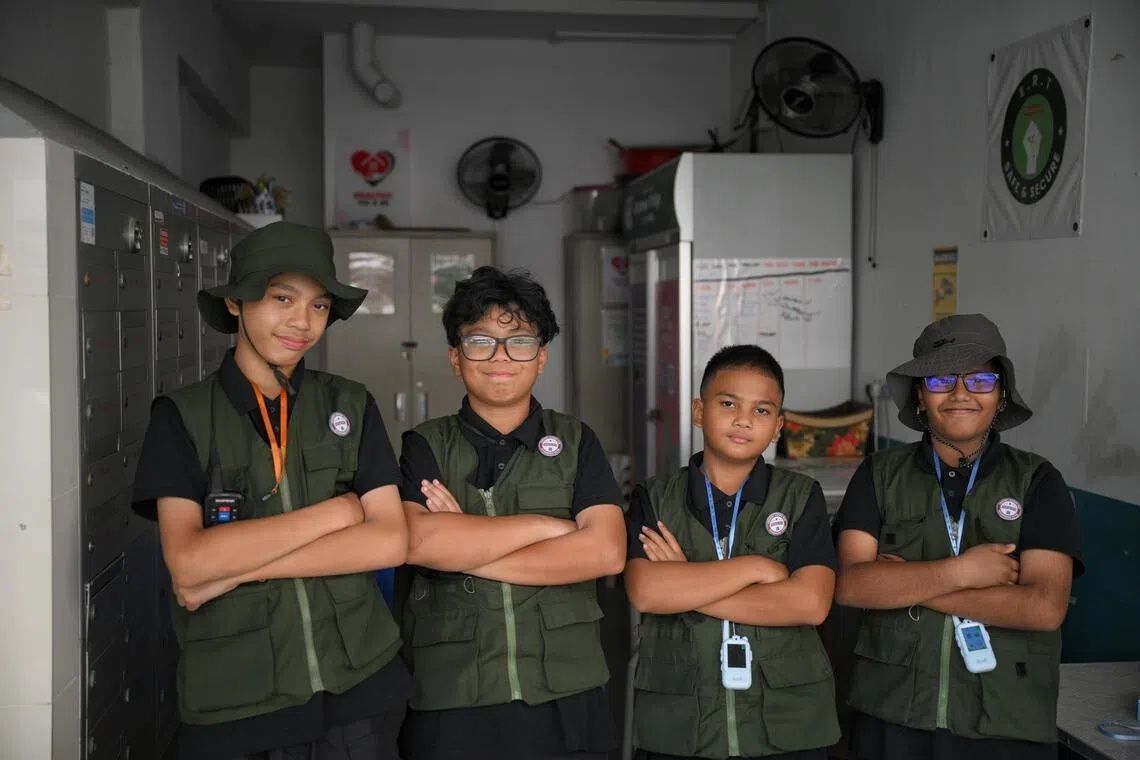
At just twelve years old, Rafieq Sahin Rafizal faced a problem that troubled him enough to take action. The community fridge stocked with free milk and drinks for disadvantaged children in his Lengkok Bahru neighbourhood kept being emptied by visitors who seemed to take far more than their share. Rather than accept this as inevitable, the young student decided something had to change. What began as an impulse to guard a refrigerator has since transformed into a remarkable grassroots neighbourhood initiative that demonstrates the potential of young people to contribute meaningfully to their communities, even during the years when many their age are focused purely on schoolwork and play.
Today, Rafieq serves as the de facto leader of the Emergency Response Team LB, joined by three classmates from Gan Eng Seng Primary School: Aaron Sarandev, Al-Mirza Danish, and Didie Andiqa Muhaimin, whose ages range from eleven to fourteen. The group patrols their estate daily after school hours, functioning as informal community guardians who document and report issues that might otherwise go unnoticed. Their rounds take them through up to six blocks, where they scan for problems ranging from bulk waste dumped in inappropriate areas to acts of vandalism and potentially hazardous charging of personal mobility devices in shared spaces. Upon identifying concerns, they photograph the situation and relay information to Rafieq's mother, Marlina Yased, a 48-year-old homemaker who serves as the team's coordinator and liaison with estate management.
The initiative emerged from Marlina's own community-minded efforts. In 2023, she established the neighbourhood's community fridge programme, recruiting sponsors to support residents facing financial hardship. While most items in the main fridge remain secured, a separate unlocked unit contains milk and beverages meant for schoolchildren needing refreshment before classes begin. When Marlina observed items disappearing wholesale, she recognised the deeper issue was not merely about monitoring goods, but about channelling youthful energy toward collective benefit. By repositioning the patrol concept, she transformed a potential security frustration into an opportunity for young people to develop civic responsibility and practical skills in addressing neighbourhood challenges.
Since August 2025, when daily patrols commenced, the team has intervened in numerous situations beyond their initial mandate. Members have assisted an elderly resident with mobility difficulties in transporting groceries home and have mediated disputes among younger children in the estate. These seemingly small acts reveal how presence and attentiveness—qualities that neighbourhood institutions often lack in dense urban settings—can address unmet community needs. The boys have discovered that their uniform vests and clear identification create a sense of legitimacy and approachability that encourages residents to recognise them as helpful resources rather than simply schoolchildren out and about.
In early 2026, the team encountered circumstances far more grave than littering or fire hazards. After noticing an unusually foul odour emanating from a particular flat, they alerted Marlina, who informed estate cleaners and encouraged other residents to contact authorities. Police subsequently discovered the decomposed remains of an elderly man inside the unit. The discovery underscores an often-overlooked vulnerability in high-density housing: the invisibility of isolated elderly residents who may deteriorate without regular contact. The boys' attentiveness potentially shortened the time the deceased spent undiscovered, a consideration that adds weight to the broader community surveillance role they have adopted.
Recognition of their efforts will reach a national platform in August when the four young patrollers participate in Singapore's National Day Parade. They will feature as part of a special segment honouring citizens whose actions strengthen the nation's social fabric. For the schoolboys, this marks their inaugural appearance in the annual celebration—a milestone that reflects official acknowledgement of their contribution to civic life. Such recognition carries significance beyond the parade itself; it validates the notion that community participation is not merely the domain of adult civic organisations or government agencies, but something that motivated young people can meaningfully undertake.
The Emergency Response Team LB began with seven members but has contracted to four. The remaining participants dedicate roughly one hour daily to their patrols, balancing this commitment against schoolwork and leisure activities. They maintain radio contact with Marlina and a 21-year-old volunteer named Fahmidah Farihullah to coordinate their movements and report findings. Rafieq drew inspiration for the group's name from Singapore's police Emergency Response Team, admiring the officers who manage high-risk situations. His rationale for the patrol work reflects maturity beyond his years: acknowledging that while play and recreation are valuable, dedicating focused time to serving one's community represents an investment in something larger than individual enjoyment.
Community reception has gradually shifted from scepticism to appreciation. Some residents initially questioned whether school-aged youngsters should occupy such roles, perhaps viewing their involvement as unusual or unnecessary. However, many neighbours have come to view the patrols positively, particularly those who observe the boys remaining purposefully engaged rather than gathering aimlessly around the estate. Nasha Asrin, a 27-year-old resident raising five children, expressed relief at witnessing youth channelled toward constructive ends rather than idle congregation—a sentiment reflecting broader anxieties about adolescent supervision and purposefulness in urban environments.
The personal development outcomes for participating boys suggest benefits extending beyond their neighbourhood's material improvements. Aaron credits the daily patrols with instilling responsibility and perseverance, particularly on occasions when fatigue tempts him to skip the rounds. Marlina has observed measurable changes in some participants, including improved school attendance and enhanced classroom focus—outcomes documented through feedback from their parents. Didie, who initially joined because he felt unoccupied, discovered through the experience that structured community contribution provides the meaningful engagement his free time previously lacked. These individual transformations illustrate how civic participation can serve developmental functions for adolescents, offering purpose and social connection alongside their contribution to collective wellbeing.
The story of Lengkok Bahru's young sentries carries implications beyond Singapore's specific context. Throughout Southeast Asia, dense urban housing and stretched municipal resources create similar gaps in community oversight and social connection that remain difficult to address through conventional institutional means. The Lengkok Bahru model demonstrates how relatively modest coordination—combining a parent's initiative, willing youth, basic communication tools, and supportive neighbours—can generate meaningful neighbourhood improvements. While not a replacement for formal governance structures, such grassroots initiatives reveal untapped potential for young people to contribute substantively to their immediate environments, challenging assumptions that meaningful civic participation requires adult status or professional credentials.

