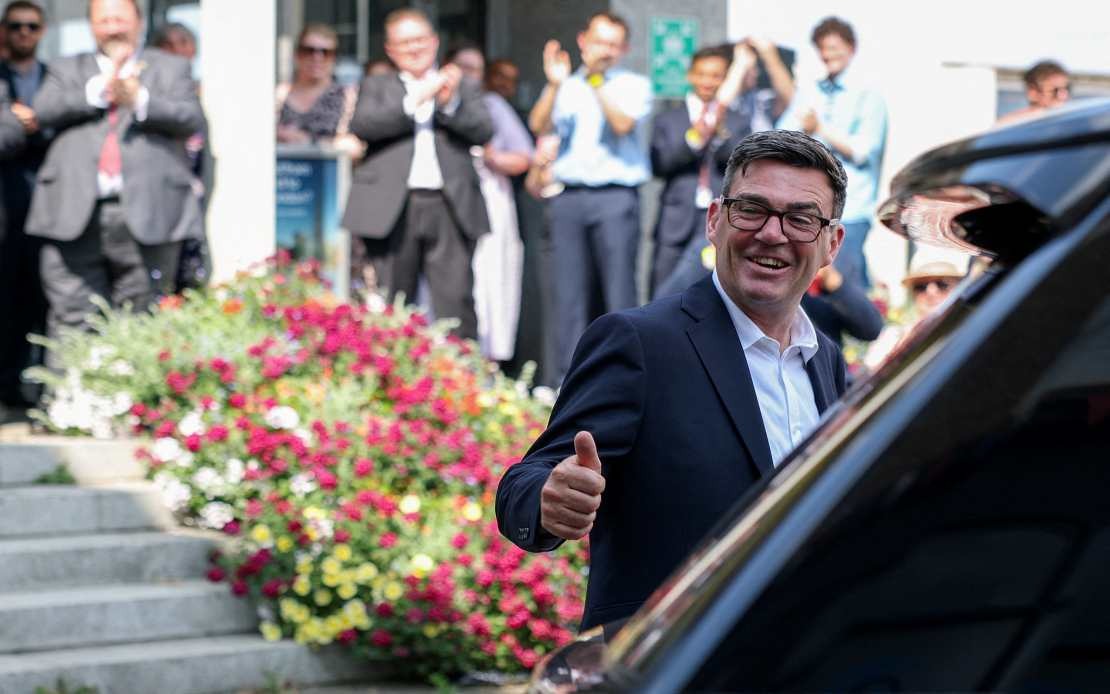
Singapore's Prime Minister Lawrence Wong has formally welcomed Andy Burnham to the helm of British government, underscoring the strategic importance both capitals place on their partnership at a moment of significant geopolitical flux. Burnham, after meeting King Charles III on Monday at Buckingham Palace, was formally invited to establish a new administration following Labour's electoral victory, cementing a transition that carries implications for Indo-Pacific security architecture and multilateral governance.
Wong's congratulatory correspondence went beyond diplomatic pleasantries, framing the transition as an opportunity for both nations to navigate contemporary challenges collaboratively. His emphasis on mutual success during a period of "profound geopolitical and economic change" reflects Singapore's reading of current global instability—from great power competition between the United States and China to economic uncertainties rippling through supply chains and trading systems that affect Southeast Asia directly.
The foundation for this cooperation, as Wong outlined, rests on the Singapore-UK Strategic Partnership, a framework that has matured over decades of consistent diplomatic and commercial engagement. This relationship transcends ceremonial ties; it encompasses practical dimensions spanning defence arrangements, intelligence sharing, and coordinated positions within international forums. For Malaysia and the broader region, this partnership matters considerably because it shapes how a major Western power approaches Asian security questions and regional organisations.
Wong identified innovation, science, and technology as priority cooperation domains, signalling Singapore's strategic pivot toward attracting advanced research collaborations and positioning itself as a hub for cutting-edge development. Such partnerships with established Western technological powers provide competitive advantages that ripple through Southeast Asia's innovation ecosystem. Technology transfer, talent attraction, and research excellence in fields ranging from artificial intelligence to advanced manufacturing directly influence regional competitiveness and economic trajectories.
Defence cooperation constitutes another pillar that warrants attention from regional observers. Singapore's emphasis on strengthened security ties with Britain reflects the persistent importance of Western military presence and capability in Southeast Asian waters. The Five Power Defence Arrangements, which Wong specifically mentioned, represent a longstanding multilateral security framework involving Singapore, Malaysia, Britain, Australia, and New Zealand. This mechanism, though sometimes overlooked in contemporary discourse dominated by great power competition, continues facilitating coordinated responses to maritime security challenges, freedom of navigation concerns, and regional stability questions that affect all Southeast Asian nations.
Wong's reference to Singapore's forthcoming assumption of ASEAN Chairmanship carries particular significance for understanding regional dynamics. The chairmanship rotates annually among the ten member states, and Singapore's turn provides an opportunity to shape the regional agenda around priorities such as sustainable development, digital integration, and security cooperation. The Prime Minister's mention of coordinating with Britain on "shared global and regional challenges" during Singapore's tenure suggests an intention to leverage ASEAN's voice while maintaining dialogue with major powers.
Equally important is the reference to Britain's G20 Presidency in 2027. The Group of Twenty encompasses the world's major economies and provides forums for addressing issues ranging from financial stability to climate change to development inequalities. A coordinated Singapore-UK approach within G20 processes could amplify Southeast Asian perspectives on issues critical to developing nations and emerging markets, from climate finance to technology transfer to debt sustainability.
Britain's role as an ASEAN Dialogue Partner represents a formalised channel through which the United Kingdom engages with the regional bloc collectively rather than bilaterally. This status enables Britain to participate in ASEAN meetings, coordinate positions, and maintain awareness of regional developments. Wong's specific highlighting of this engagement demonstrates Singapore's valuation of Britain's continued interest in Southeast Asian affairs at a time when such engagement cannot be taken for granted, particularly as Britain recalibrates its foreign policy priorities following recent domestic political upheaval.
For Malaysian readers and observers, Wong's message carries implications extending beyond Singapore-British bilateral relations. The articulation of how established partners can "achieve more by working together" even amid global uncertainty offers a template for how Southeast Asian nations might approach their own international relationships. Singapore's deliberate cultivation of multiple partnerships—maintaining strategic autonomy while deepening cooperation with various powers—reflects a pragmatic approach that other regional states continue studying.
The transition in British leadership also carries symbolic weight within broader patterns of political change across the Western world. Burnham's Labour government may bring different perspectives on trade, climate policy, and international engagement compared to previous administrations. Singapore, as a highly internationalised economy deeply integrated into global trading systems, has institutional interests in how major Western powers approach commerce, regulation, and international economic governance.
Wong's felicitation emphasises continuity and mutual benefit, seeking to establish early rapport with Burnham's administration while positioning Singapore as a reliable, sophisticated partner capable of contributing meaningfully to addressing transnational challenges. This approach reflects Singapore's broader strategic philosophy: punching above its weight through focused engagement, intellectual contribution, and reliable partnership rather than through military might or resource wealth.
The exchange between Singapore's leader and Britain's new prime minister, while superficially routine, encapsulates fundamental realities of contemporary international relations in the Indo-Pacific region: established powers remain relevant through demonstrated commitment and adaptability; regional states actively shape their engagement with major powers rather than passively accepting influence; and cooperation frameworks, whether bilateral or multilateral, continue providing practical mechanisms for addressing shared interests even as the international system undergoes significant transformation.

