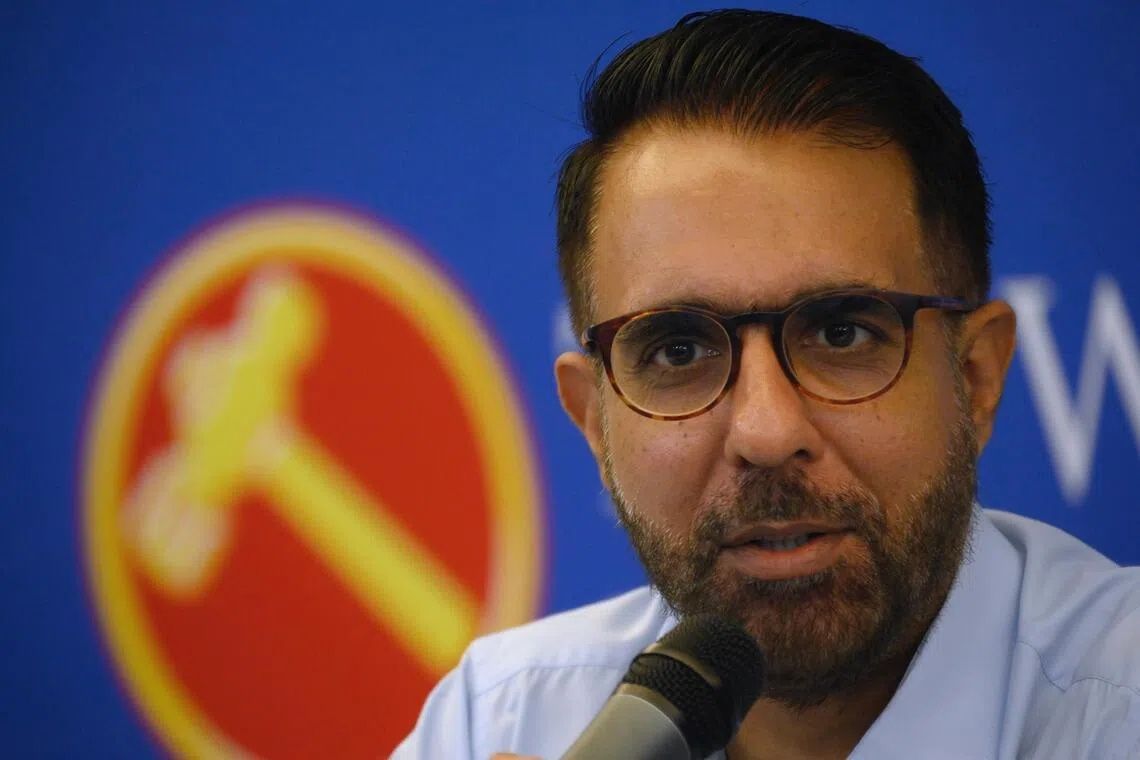
Singapore's opposition Workers' Party is bracing for its most significant internal leadership contest in over a decade, with discontented party cadres preparing to challenge Secretary-General Pritam Singh at elections scheduled for June 28. The effort to unseat the long-serving leader has gained momentum following a High Court decision in December 2025 that upheld his conviction for providing misleading information to a parliamentary committee—a verdict that has triggered broader questions within the party about his fitness to lead an opposition movement founded on principles of transparency and accountability.
The push for change emanates from a group of roughly 25 cadres, drawn from across the party's approximately 100-strong inner circle, who formally requested a special conference in December. This gathering will precede the party's regular biennial election meeting, creating a two-stage process for determining Pritam's future. At the special conference, Pritam will be required to respond to questions about his actions preceding his conviction, whilst cadres will vote on whether he should continue in office. The dissidents have made clear their preference that he resign voluntarily, though they have secured agreement for a secret ballot to determine his fate if he chooses to remain.
Pritam's legal troubles stem from his handling of former Sengkang GRC MP Raeesah Khan's admission that she had fabricated a parliamentary anecdote in August 2021. Rather than immediately insisting that Khan clarify the record, Pritam allowed the false account to persist until Khan finally confessed in November that year. Parliamentary investigators and subsequently the courts determined that Pritam had actively guided Khan in sustaining the deception—a finding that has proven corrosive to his standing among party members who regard integrity as fundamental to the Workers' Party's political brand.
While several senior party MPs have been approached as potential challengers, none has publicly committed to running against Pritam. Names circulating within party circles include Gerald Giam of Aljunied GRC and Dennis Tan of Hougang, alongside Sengkang GRC MPs He Ting Ru and Jamus Lim. Notably, He and Lim served on the disciplinary panel that concluded Pritam had violated party rules through his conviction. The fluidity of the situation means candidates could emerge at virtually any stage, with some cadres suggesting that the outcome of the first meeting could determine whether viable challengers present themselves at the formal election.
The spectre of Low Thia Khiang looms large over these proceedings. As party chief from 2001 to 2018 and architect of the Workers' Party's breakthrough victory in the 2011 General Rahang Constituency election, Low retains considerable influence among the cadre base. Recent speculation suggests that Low voted against Pritam during a central executive committee meeting reviewing the disciplinary panel's findings, raising questions about whether the former leader might throw his support behind an alternative candidate. Such endorsement could prove decisive, as insiders estimate that Low's backing combined with the committed nucleus of 30 unhappy cadres might provide sufficient numbers to unseat Pritam, who requires only a simple majority to retain his position.
Low himself experienced a leadership challenge in 2016 when Aljunied GRC MP Chen Show Mao contested for secretary-general, a bid that ultimately failed. Many of the party veterans now agitating for Pritam's removal backed Chen's campaign, suggesting a persistent faction within the Workers' Party that has periodically questioned the direction and leadership of the party. This historical context indicates that the current challenge, while unprecedented in its intensity during Pritam's eight-year tenure, reflects enduring tensions within the opposition movement about strategy and personnel.
The conviction alone does not fully explain the cadre unrest. The Workers' Party's performance at the 2025 general election disappointed many members who had anticipated the party would capture additional constituencies given what they regarded as a particularly strong slate of candidates. Instead, the party made no electoral gains, prompting criticism of Pritam's strategic decisions, including his decision to withdraw from Marine Parade-Braddell Heights GRC on Nomination Day. These electoral disappointments have compounded frustration over his stewardship, with some cadres privately suggesting that the party has stalled under his leadership.
The loss of the Leader of the Opposition position adds another dimension to the leadership crisis. After Pritam's conviction became public, Prime Minister Lawrence Wong moved in January 2026 to remove him from this ceremonial parliamentary role, inviting the Workers' Party to nominate an alternative MP. The party declined, choosing instead to publicly stand behind Pritam—a decision that some cadres now quietly regret. Critics argue that rejecting Wong's offer demonstrated political weakness and forfeited an opportunity for the opposition to maintain parliamentary prominence, ultimately damaging both the party's standing and the broader opposition cause.
Central to the cadre rebellion is a concern about the Workers' Party's moral positioning in Singapore politics. The party has historically differentiated itself through an emphasis on integrity and competence, positioning itself as an alternative to the governing People's Action Party. With Pritam convicted of misleading Parliament—the legislature where opposition credentials are tested—many cadres fear the party has surrendered its most valuable political asset. As one anonymous cadre expressed the sentiment, the Workers' Party's electoral appeal rests fundamentally on voter confidence that the party represents something ethically distinct; a leader convicted of dishonesty undermines this positioning entirely.
The party's formal communications suggest that no restriction prevents Pritam from contesting re-election, despite the formal letter of reprimand issued after the disciplinary panel's findings. This legal position, however, obscures the real question animating internal discussions: whether the party's political interests are served by his continued leadership. The June 28 proceedings will represent a rare moment of internal party democracy in Singapore's opposition landscape, with consequences extending beyond factional positioning to the fundamental question of how the Workers' Party wishes to present itself to voters.
As the special conference and election approach, party insiders note that developments could shift rapidly. The decision whether to challenge an incumbent leader requires not only conviction but also confidence in securing sufficient votes, meaning potential candidates are likely calculating carefully before making commitments. The outcome will fundamentally shape the Workers' Party's trajectory heading into the next general election cycle, determining whether it continues under Pritam's stewardship or transitions to a new generation of leadership. For Malaysian observers of Singapore's opposition politics, the episode illustrates how personal failings by opposition leaders can generate cascading consequences, potentially weakening the entire non-governing political ecosystem.

