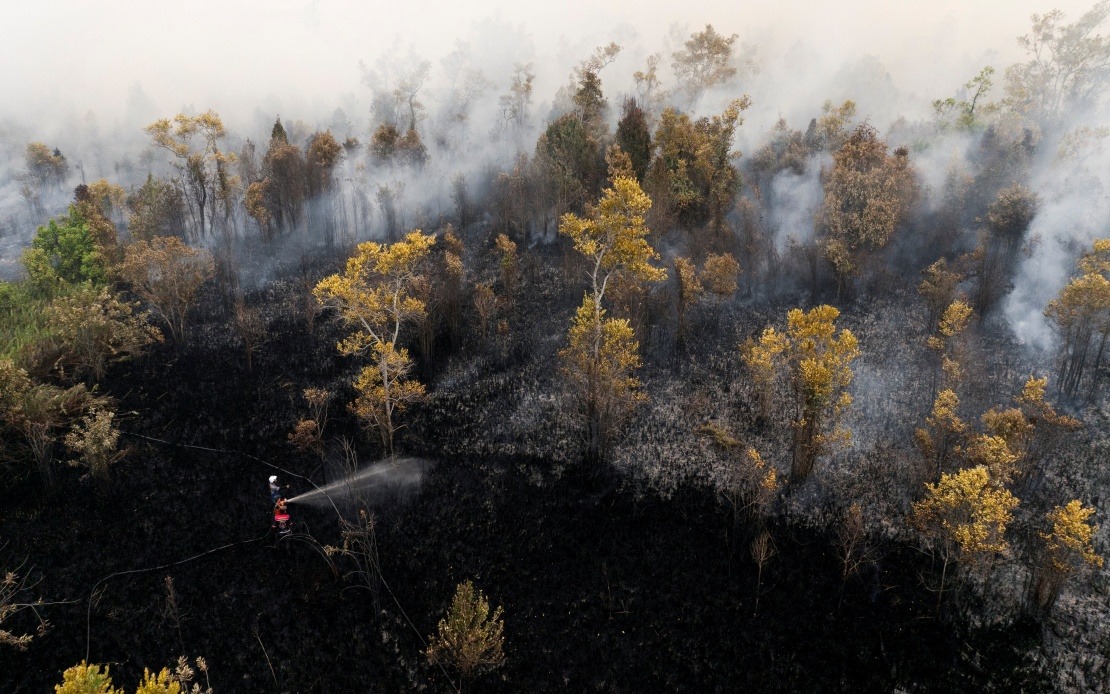
Singkawang Airport suspended all domestic flight operations on Saturday as thick haze from forest and land fires engulfed West Kalimantan, prompting officials to prioritise air safety over travel convenience. The decision reflected Indonesia's strict stance on visibility requirements—a non-negotiable factor in aviation safety protocols that supersedes commercial pressure. The airport, which serves the northwestern region of Indonesian Borneo roughly 145 kilometres from the provincial capital of Pontianak, urged stranded passengers to liaise directly with their airlines for rebooking or compensation options.
This disruption represents an escalating pattern of seasonal fire-related chaos across Kalimantan. The Indonesian Transport Ministry's Directorate General of Civil Aviation, under Lukman F. Laisa's leadership, has long maintained that visibility conditions below operational thresholds demand immediate flight adjustments—whether through delays, diversions, or outright cancellations. Laisa emphasised that aviation safety constitutes the primary operational concern, with carriers mandated to implement corrective measures whenever atmospheric conditions deteriorate beyond acceptable limits. The ministry's statement underscored a commitment to continuous monitoring and coordination among all stakeholders in the aviation sector.
Satellite imagery painted a concerning picture of fire prevalence across Kalimantan on Friday evening. NASA's Terra and Aqua satellite systems detected 56 high-confidence hotspots concentrated in Central Kalimantan, alongside 51 in West Kalimantan and 19 in South Kalimantan by 9:30 pm local time. These figures, while troubling in absolute terms, suggested regional variation in fire intensity—Central Kalimantan emerging as the current epicentre of concern. The data underscored why authorities viewed the Singkawang closure not as an isolated incident but as symptomatic of a broader environmental crisis threatening transportation networks across the island.
Air quality deterioration has become increasingly severe in sections of both West and Central Kalimantan, according to readings from the Meteorology, Climatology and Geophysics Agency (BMKG). Multiple districts were registering very unhealthy air quality indices, a classification reserved for conditions posing immediate health risks to vulnerable populations including children, the elderly, and those with respiratory conditions. Beyond aviation disruption, such air quality levels force broader socioeconomic consequences: school closures, commercial activity restrictions, and heightened healthcare demand as respiratory cases surge.
Firefighting response has mobilised across multiple fronts. Ground-based firefighting teams work alongside aerial operations deploying water-bombing tactics—labour-intensive efforts that depend on precise coordination and adequate resource allocation. Authorities have additionally prepared weather modification capabilities, standing ready to implement cloud-seeding operations whenever meteorological conditions prove conducive. These interventions, while necessary, highlight the reactive posture Indonesia often adopts toward fire season, suggesting preventative measures may warrant greater institutional investment.
Criminal investigations have commenced across affected provinces, signalling authorities' determination to pursue accountability beyond environmental containment. Central Kalimantan police leadership, represented by Inspector-General Iwan Kurniawan, reported that approximately 12 suspects had been named in forest and land fire cases by mid-August. The investigation framework aims to establish causation for each fire incident—a critical distinction between accidental blazes and intentional land clearing through arson. Successfully prosecuting perpetrators represents a potentially significant deterrent against repeat offences, though historical enforcement patterns suggest conviction rates remain modest.
The economic implications extend beyond isolated airport disruptions. Regional connectivity underpins commercial networks vital to Southeast Asia's supply chains, and Kalimantan's position as a major resource-producing region means transportation bottlenecks reverberate across the broader region. For Malaysian enterprises operating across the border or routing goods through Indonesian ports, such disruptions introduce unpredictability into logistics planning. Airlines serving West Kalimantan face revenue losses and passenger goodwill erosion, while exporters of Kalimantan's agricultural and mineral products confront shipping delays that ripple through regional markets.
The crisis also underscores regional air quality interdependencies. Transboundary haze has plagued Southeast Asia since the 1997-1998 fires, creating persistent diplomatic tensions between Indonesia and its neighbours. While this particular event centres on domestic disruption, the atmospheric circulation patterns that previously dispersed Indonesian smoke toward Malaysia and Singapore remain meteorologically plausible. Regional governments would monitor the situation carefully, recognising that escalating fire activity in Kalimantan inevitably threatens cross-border air quality if conditions persist or intensify.
Looking forward, the Singkawang closure exemplifies how climate vulnerability intersects with aviation infrastructure. Increasing fire frequency and severity—trends climate scientists associate with changing precipitation patterns and longer dry seasons—will likely force more frequent airport suspensions. Airlines and airports must develop operational protocols for extended closures, while authorities require sustained investment in fire prevention infrastructure. For Malaysian stakeholders tracking regional developments, the unfolding situation in Kalimantan serves as a reminder that environmental crises transcend national boundaries and demand coordinated, anticipatory responses rather than seasonal crisis management.

