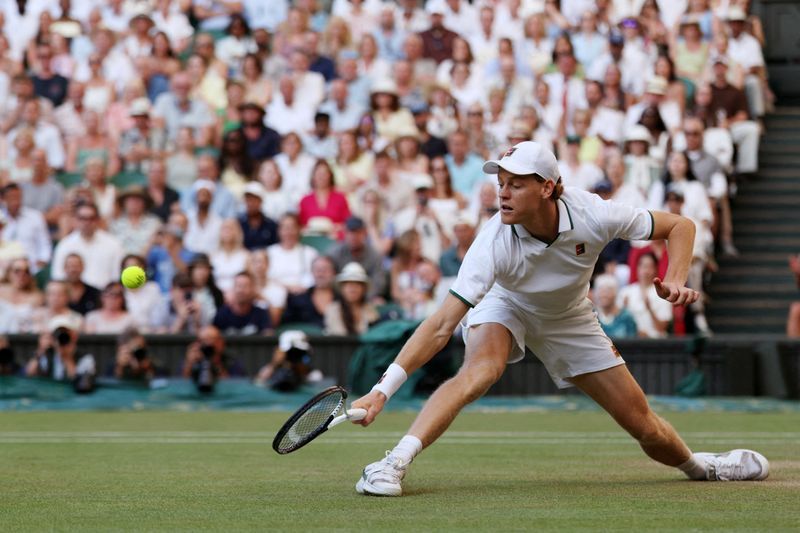
The professional tennis calendar has been dealt a significant blow with the withdrawal of world number one Jannik Sinner from the US Open, the sport's final Grand Slam tournament of the year. The 24-year-old Italian announced his decision to skip the event on Friday, citing a right knee injury that has prevented him from competing for several weeks and continues to hamper his recovery despite intensive work with his medical team.
Sinner's absence marks a major disruption to what was shaping up to be a compelling final major championship. The reigning champion at Wimbledon, where he claimed his fifth Grand Slam title just weeks earlier, had been expected to be among the primary favourites for the trophy at Flushing Meadows. His decision to withdraw underscores the severity of the injury and reflects the cautious approach his team has taken to ensure he does not risk further damage that could extend his absence beyond the current season.
The injury first emerged earlier in August, forcing Sinner to miss two crucial hard-court preparation tournaments. Both the Cincinnati Open and the Canadian Open serve as essential warm-up events for players competing at the US Open, given the shared playing surface and timing. His absence from both events signalled the gravity of the situation, though hopes remained that additional rest might allow him to recover in time for New York. However, upon returning to court in Monte Carlo for rehabilitation work, Sinner and his support staff determined that more recovery time remained necessary.
In a statement released through social media platform X, Sinner acknowledged the difficult decision while emphasising his commitment to his rehabilitation process. He noted that despite his determination and the dedicated efforts of his team and medical personnel, the injury had not improved sufficiently to permit competitive play at the required level. The announcement reflects the reality that elite athletes must sometimes prioritise long-term health over short-term competition, particularly when dealing with injuries to load-bearing joints like the knee.
Sinner's withdrawal comes at a particularly opportune moment for his principal rival, Spanish player Carlos Alcaraz, who occupies the world number two ranking. Alcaraz had been absent from competitive tennis for four months before announcing his intention to compete at the US Open, marking his return to the sport following injury concerns of his own. The timing of Alcaraz's comeback, coupled with Sinner's departure from the draw, fundamentally reshapes the tournament's landscape and elevates the Spaniard's championship prospects considerably.
The strategic advantage gained by Alcaraz cannot be overstated in professional tennis contexts. As the highest-ranked player remaining in the field, he assumes the role of primary favourite despite having spent months away from competition. His previous Grand Slam success at the US Open, where he defeated Sinner in last year's final, provides both experience and confidence heading into this edition. The removal of his closest rival from the tournament substantially improves his pathway to capturing an eighth Grand Slam title, a significant milestone in his career.
For Malaysian and Southeast Asian tennis enthusiasts, Sinner's withdrawal represents a broader lesson in the demanding nature of professional sport at the highest levels. The incident demonstrates how injuries to elite athletes can reshape major sporting events within days, altering narrative arcs and shifting competitive balances. It also highlights the rigorous medical protocols that top-ranked professionals must follow, prioritising career longevity over individual tournament participation.
The US Open, scheduled to run from August 23 through September 13, will now proceed without the services of the man who has dominated men's tennis throughout 2024. This absence opens opportunities for other contenders in the draw and creates a more unpredictable tournament landscape. Players ranked third and below now stand an improved chance of reaching deep into the competition and potentially challenging for the title.
Sinner's injury setback also carries implications for the broader tennis calendar and the sport's competitive structure. The Italian's withdrawal, following months of dominant performances that included multiple title wins and extended winning streaks, reminds observers that even the most talented athletes remain vulnerable to physical setbacks. His recovery timeline and potential return to competition will be closely monitored by fans and analysts throughout the remainder of the season.
The incident serves as a timely reminder of the physical toll that professional tennis exacts on its competitors. The demanding nature of the sport, particularly on hard courts where the US Open is contested, places enormous strain on joints and muscles. For Sinner, the decision to prioritise recovery demonstrates maturity and a longer-term strategic perspective on his career, even as it denies fans the opportunity to witness his performances in one of the sport's most prestigious tournaments.

