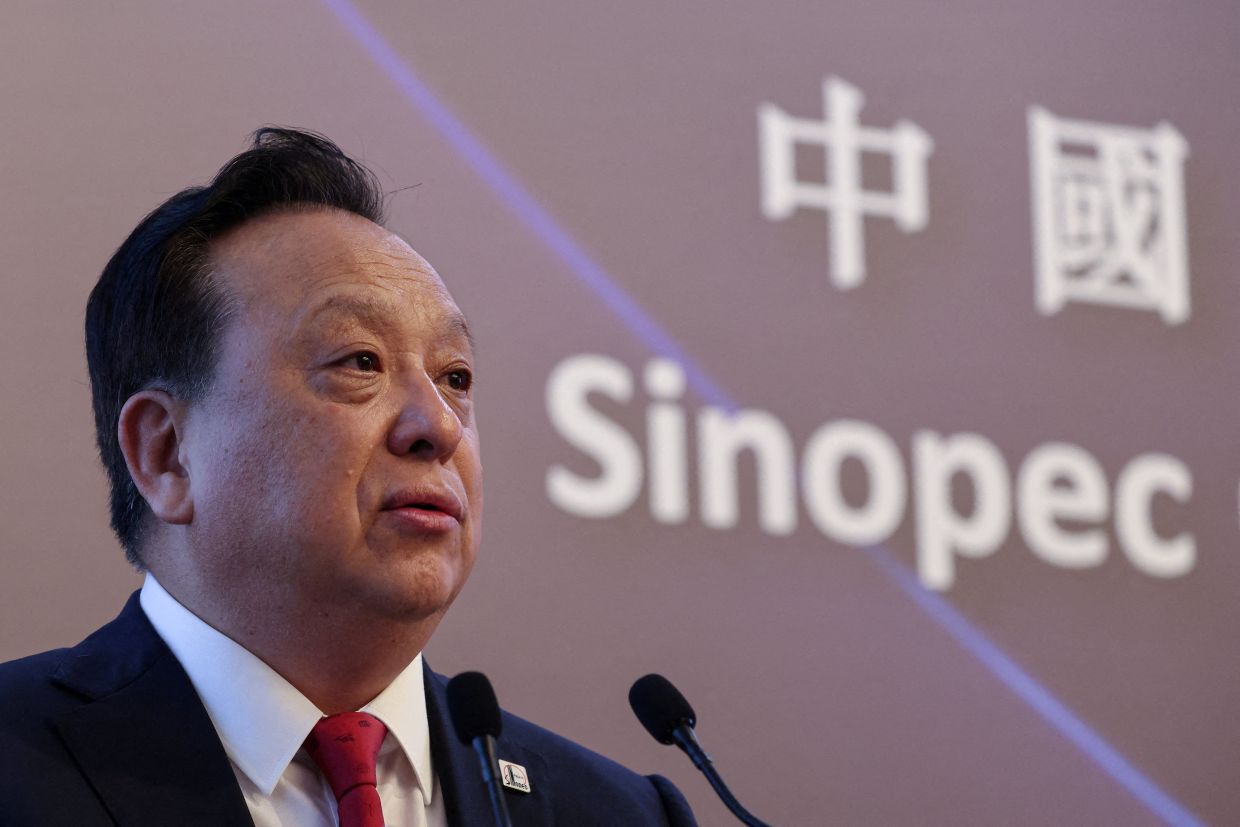
Hou Qijun has arrived at China's Sinopec with an agenda that defies the customary approach of ageing state enterprise bosses in their final years before mandatory retirement. Rather than manage decline quietly, the newly appointed chairman is orchestrating a comprehensive restructuring of the world's largest oil refiner, convinced that business-as-usual will lead to commercial obsolescence. His appointment a year ago marked the beginning of an aggressive transformation, driven by the stark reality that Sinopec's traditional revenue engines—petrol and diesel—face terminal decline as vehicle electrification accelerates globally and environmental pressures intensify.
The crux of Hou's strategy involves fragmenting Sinopec's unwieldy corporate structure into four dedicated profit centres, each tasked with independent accountability and rapid decision-making. This reorganisation redistributes authority downward, allowing individual business units to pivot swiftly without navigating the labyrinthine approval layers that typically characterise Chinese state enterprises. The four divisions—encompassing oil, gas and new energy operations; refining and petrochemical manufacturing; financial services; and a merged entity combining global commodities trading with domestic fuel and chemical distribution networks—represent a deliberate attempt to inject market-responsive agility into a sprawling bureaucracy.
Hou articulated his challenge with candour unusual for a state sector executive, acknowledging in a July statement to China's State-owned Assets Supervision and Administration Commission that Sinopec's fundamental obstacle transcends technological capacity or resource availability. "The biggest hurdles for such a self-revolutionary transformation lie not on technology, resources or markets, but the system and institutional inertia," he declared, diagnosing what he termed the "big company syndrome"—a condition where expanding scale paradoxically diminishes responsiveness to market signals. This diagnosis resonates throughout the Chinese state enterprise sector, where organisational bloat frequently calcifies decision-making mechanisms precisely when competitive pressures demand nimble adaptation.
The commercial backdrop to Hou's intervention is sobering. Sinopec's fuel sales have collapsed to 2017 levels despite two decades of nominal GDP expansion, illustrating the profound structural headwinds confronting legacy petroleum businesses. Last year, the company shifted approximately 3.6 million barrels daily of petrol and diesel, predominantly into the domestic Chinese market—a volume increasingly detached from underlying transportation demand as electric vehicles displace combustion engines. Hou crystallised this predicament with disarming logic during a recent Hong Kong earnings briefing: the company manufactures fuel for automobiles precisely as half of new car purchases no longer require it, rendering production expansion economically illogical.
Sinopec's financial performance through the first half of 2026 masks these structural vulnerabilities, with net profit rising 19 percent despite exposure to oil supply disruptions stemming from the Iran war and government restrictions on downstream fuel price increases. This margin compression—where volumes decline yet profits nominally advance—underscores that Sinopec operates in a shrinking Chinese domestic market where government price controls transfer profitability challenges upstream rather than resolving underlying demand destruction. The state enterprise therefore occupies an increasingly precarious position: constrained from passing costs to consumers yet unable to grow volumes, creating a squeeze that only fundamental business model transformation can alleviate.
Hou's recalibration pivots decisively toward petrochemicals and new energy, categories offering superior long-term growth trajectories than transport fuels. Sinopec will dedicate roughly 20 percent of capital expenditure—exceeding 30 billion yuan (US$4.46 billion) annually through 2030—toward new energy and advanced materials development. This reallocation acknowledges that hydrocarbon demand will progressively migrate from low-value fuels toward higher-margin specialty chemicals, sustainable aviation fuels, hydrogen production, and carbon capture technologies. Such investments align Sinopec's trajectory with China's energy transition imperatives while potentially offering resilience through product diversification.
The petrochemical pivot confronts formidable competitive obstacles, however. Sinopec must navigate fierce rivalry from government-supported competitors including Wanhua Chemical and privately-owned Satellite Chemical, while simultaneously contending with systemic ethylene overcapacity across Asia—a fundamental constraint limiting margin expansion in plastic and synthetic fibre production chains. Success requires not merely capital deployment but genuine innovation in production efficiency, product differentiation, and market positioning capabilities that state enterprises have historically struggled to cultivate. Hou's acknowledgement that "converting technology into productivity" demands "expediting execution" suggests awareness that technological advantage proves ephemeral without superior implementation discipline.
Hou's shale development agenda represents another pillar of his transformation strategy. Sinopec intends commencing commercial-scale shale production at the Jiyang trough within its flagship Shengli oilfield, where conventional reserve accessibility has substantially depleted. Hou positioned himself as direct commander of this initiative during March announcements, signalling personal accountability for execution success. This project embodies both opportunity and challenge: shale development could regenerate Shengli's production trajectory but demands substantially higher capital intensity and technical sophistication than conventional extraction, compounding near-term cost pressures precisely when margins face compression from other segments.
Hou's appointment itself signals China's state asset regulator recognises that Sinopec requires transformational rather than incremental leadership. His background as a geologist who constructed his career at Daqing—China's legacy flagship oilfield—before ascending to general manager status at CNPC provides deep energy sector expertise spanning upstream production, infrastructure development, and integrated value chain architecture. He previously demonstrated restructuring credentials by orchestrating the consolidation of pipeline assets from China's three major oil companies into PipeChina between 2019 and 2021, a politically intricate assignment requiring navigation of competing state enterprise interests and central government coordination. This experience positioned him to recognise institutional architecture as a variable controllable through decisive leadership intervention.
Peers and analysts characterise Hou as a decisive, action-oriented figure with unusual willingness to communicate strategic thinking directly rather than through filtered corporate messaging. His capacity to articulate comprehensive energy value chain logic—spanning upstream production through downstream consumer markets—positions him to potentially capitalise on government backing for commercially challenging initiatives including hydrogen production and carbon capture technologies, domains where state support can sustain investments through extended pre-profitability periods. Nevertheless, competitive dynamics pose persistent risks: Sinopec's capacity to compete effectively against non-state actors operating across new energy segments remains unproven, and China's renewable energy landscape increasingly features privately-backed competitors unconstrained by state enterprise governance structures.
Sinopec's transformation unfolds against the broader context of global energy market disruption and China's climate commitments. The company must simultaneously navigate declining transport fuel demand, petrochemical overcapacity, geopolitical disruptions to oil supply chains, and internal pressure to meet state carbon targets—challenges that cannot be resolved through conventional operational excellence alone. Hou's reorganisation represents explicit acknowledgement that bureaucratic inertia constitutes Sinopec's primary competitive liability, more constraining than resource scarcity or technological deficiency. Whether his restructuring generates sufficient organisational flexibility to execute complex transitions toward chemicals and new energy remains uncertain, but the scale and candour of his intervention suggest China's state asset authorities believe fundamental institutional transformation represents the only viable pathway toward commercial sustainability for the world's largest refiner.

