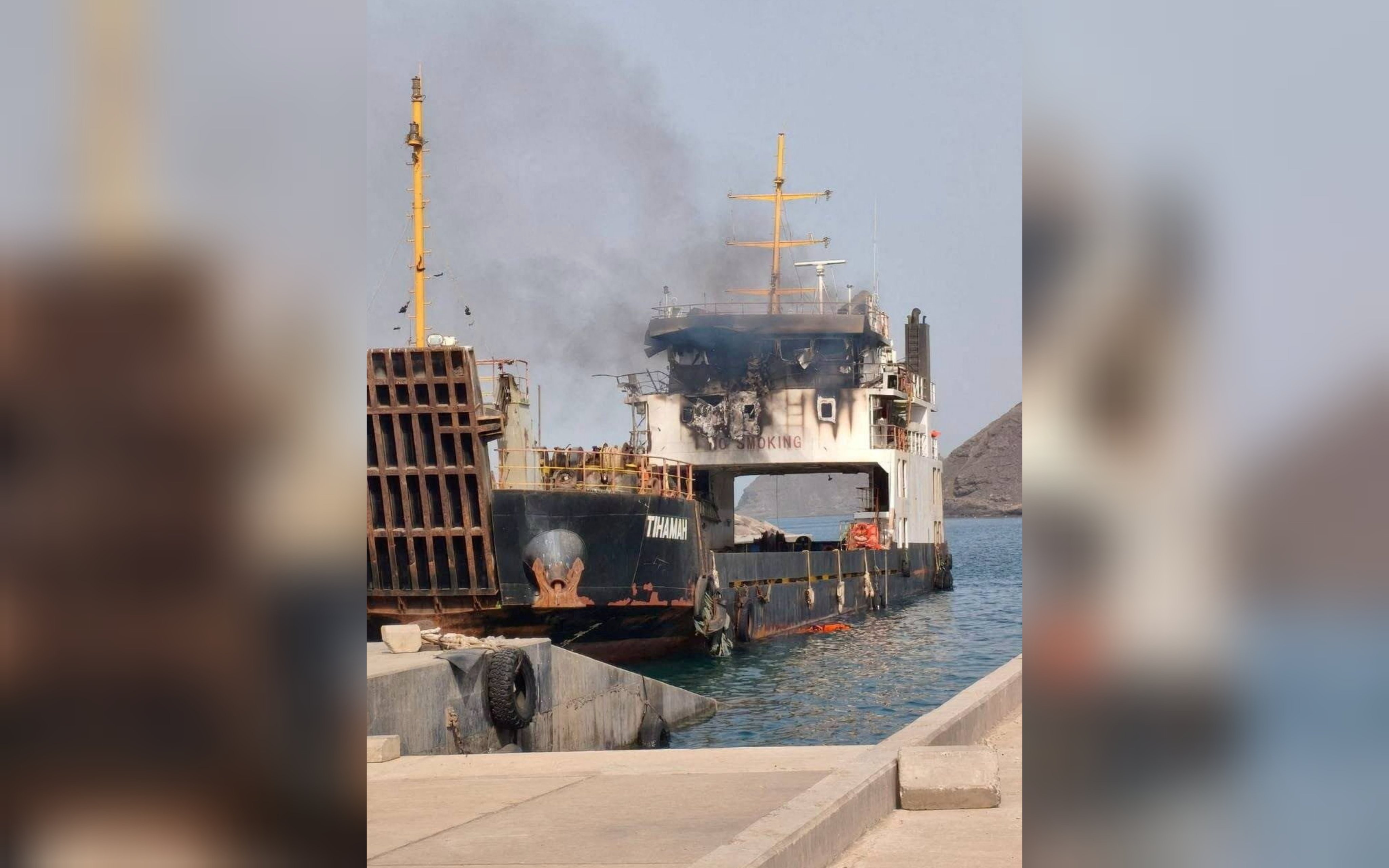
Six people died and ten sustained injuries after Yemen's Houthi faction launched an assault on a commercial vessel transporting food supplies through the Bab al-Mandeb Strait on Tuesday, according to Yemen's Coast Guard. The incident underscores the escalating peril facing maritime traffic in one of the world's most critical shipping corridors, a narrow passage connecting the Red Sea to the Indian Ocean and separating Yemen from Djibouti and Eritrea.
The fatalities comprised four crew members—three Pakistani nationals and one Indonesian—alongside two soldiers from Yemen's armed forces, specifically the 2nd Naval Brigade. The Coast Guard statement, issued through state television, confirmed that eleven sailors of Pakistani and Indonesian origin were successfully extracted from the vessel. Seven additional crew members, two coast guard personnel, and a further 2nd Naval Brigade member numbered among the injured.
Yemen's Transportation Ministry identified the targeted vessel as the Tihamah, a Yemeni-flagged ship that came under sustained ballistic missile bombardment. The ministry reported that the vessel absorbed three direct strikes from ballistic weapons, triggering fires aboard and causing extensive material destruction. In a particularly troubling escalation, Houthi forces allegedly launched an additional missile strike specifically targeting rescue and recovery operations attempting to reach survivors, suggesting a deliberate effort to maximize casualties and obstruct humanitarian intervention.
The ministry formally denounced the operation as a "terrorist crime," positioning the attack within a broader pattern of Houthi aggression against civilian infrastructure and international commerce. Officials argued that the targeting of a food supply vessel represents a fundamental threat to maritime safety and legitimate international trade passing through the strategic waterway. This characterization reflects growing concern among Yemen's internationally recognized government about weaponized interference with humanitarian and commercial operations.
The attack forms part of what Yemen's Transportation Ministry describes as an intensifying Houthi campaign deliberately targeting ports, civilian installations in government-controlled territories, and commercial ships servicing those regions. The pattern suggests a strategy designed to destabilize government-held areas through disruption of essential supply chains and economic activity. Food supplies constitute a particularly sensitive target given Yemen's humanitarian crisis, where millions of people depend on maritime imports for survival.
The immediate consequences extend beyond the vessel and its crew. Yemen's Transportation Ministry cautioned that such attacks pose direct and substantial risks to the availability and cost of food and consumer goods for millions of Yemenis across both government-controlled and Houthi-held territories. By targeting supply vessels, the strikes threaten to exacerbate existing shortages and compound the suffering of civilian populations already suffering from years of conflict and economic deterioration.
The Bab al-Mandeb Strait holds exceptional strategic importance for global maritime commerce and regional security. Situated as the entry point to the Red Sea from the opposite side of the Arabian Peninsula compared to the Strait of Hormuz, this waterway channels essential shipping lanes connecting Europe, Asia, and Africa. Disruptions to traffic through the strait consequently carry implications well beyond Yemen's borders, affecting supply chains and energy markets throughout Southeast Asia and beyond.
For Malaysia and other Southeast Asian nations, incidents in the Bab al-Mandeb Strait warrant particular attention. Malaysian shipping companies and exporters rely on unobstructed passage through the Red Sea for efficient trade routes to Europe and Africa. Regional vessels transiting the area face heightened insurance costs, potential delays, and security risks. The involvement of Pakistani and Indonesian crew members further underscores how maritime insecurity in the Bab al-Mandeb affects broader Asian shipping communities and labor markets.
The Houthi group, formally designated as Ansar Allah, has repeatedly targeted maritime traffic in the region, citing Israeli actions and support for their stated cause. Their arsenal includes ballistic missiles and drone technology capable of striking vessels at considerable distance. Previous incidents have involved attacks on commercial shipping, container vessels, and naval assets, creating a climate of uncertainty for operators planning routes through the Red Sea and Gulf of Aden.
As of Tuesday evening, the Houthi group had not issued public statements responding to accusations regarding the attack or clarifying their operational objectives. This silence follows a consistent pattern in which the movement declines immediate commentary on specific strikes, though officials have previously justified attacks on shipping as responses to broader geopolitical developments affecting their interests and allies in the region.
The incident exposes the vulnerability of civilian maritime activity to armed group operations in contested waters. Commercial vessels lack military defenses capable of intercepting ballistic missiles, rendering them essentially defenseless against sophisticated weaponry. Insurance companies have progressively adjusted coverage and premiums for transit through the Bab al-Mandeb, but costs ultimately reflect in shipping expenses borne by consumers and businesses dependent on Red Sea trade routes.
Yemen's ongoing conflict, now in its tenth year, has produced a humanitarian catastrophe affecting millions. The maritime dimension of the conflict, while less visible than ground operations, carries profound implications for civilian welfare. Supply disruptions resulting from attacks on commercial vessels reduce availability of essential commodities and increase prices for populations already struggling with poverty and malnutrition. The targeting of food supply ships specifically suggests an intentional strategy to weaponize hunger and desperation as instruments of political pressure.

