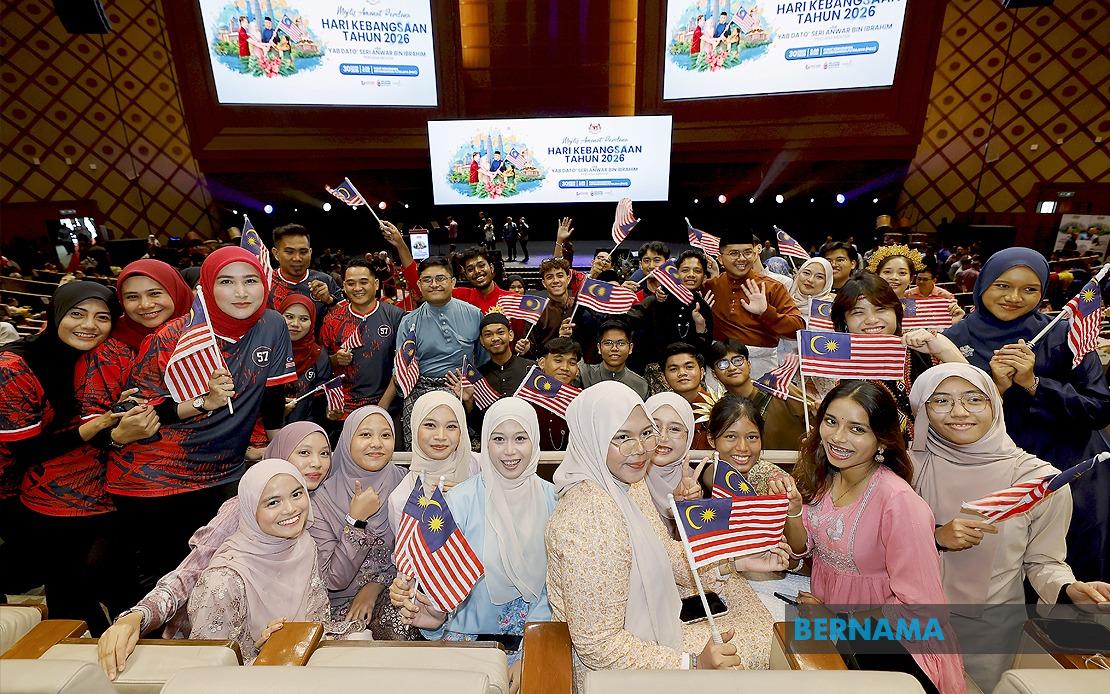
Prime Minister Datuk Seri Anwar Ibrahim has outlined six government initiatives aimed at providing tangible support to Malaysians across different income brackets and sectors, with observers noting the measures are deliberately calibrated to address concerns affecting the M40 income group, young adults, and microentrepreneurs. The announcements, made during the National Day Prime Minister's Address at the Putrajaya International Convention Centre, signal the administration's continued focus on cost-of-living pressures and digital transformation as twin policy priorities.
Among the centrepiece initiatives is the restoration of the Budi MADANI RON95 fuel subsidy programme to 300 litres monthly per eligible motorist, reversing a previous reduction from that threshold. For commuters and those dependent on vehicles for their livelihoods, this adjustment carries immediate practical significance. The measure directly addresses household transportation costs, a persistent pain point for Malaysian families managing fixed incomes and irregular expenses. Alongside this, the government has also raised the Budi Diesel quota from 300 litres to 400 litres per month, offering comparable relief to commercial operators and those using diesel-powered vehicles for business purposes.
Reactions from young professionals indicate the fuel subsidy changes resonate strongly with working-age Malaysians managing daily commute costs. Mohd Aliff Rino, a 26-year-old company secretary, characterised the BUDI95 expansion as meaningful relief, particularly for vehicle owners navigating routine refuelling expenses. The psychological impact of such measures extends beyond mere arithmetic: predictability in fuel allocation allows households to budget with greater confidence, reducing anxiety about unexpected transport shortfalls. For those required to travel extended distances for employment, the additional litres translate into reduced financial strain across weekly and monthly budgeting cycles.
A parallel track within the six-measure package targets technological access and digital competency. The government will provide free three-month subscriptions to three artificial intelligence applications for 100,000 young adults aged 18 to 30 who successfully complete modules under the "AI for the People" programme. This initiative reflects growing recognition that digital literacy and familiarity with emerging technologies have become essential career prerequisites in an increasingly automated economy. Young professionals such as Nur Liyana, a 24-year-old accounts assistant, view such programmes as aligned with workplace realities where AI tools increasingly augment professional functions across sectors from finance to human resources.
The AI initiative carries particular significance for Malaysia's aspirations toward high-value economic activity and knowledge-intensive employment. By subsidising early access to sophisticated software tools for young adults, the government seeks to democratise technological exposure beyond premium-paying corporate environments. This approach acknowledges that sustained competitive advantage in regional and global markets depends upon workforce familiarity with cutting-edge applications, and that early adoption among youth populations creates multiplicative effects as they advance into senior roles within organisations.
Educational infrastructure receives substantial attention through a 50 per cent increase in school maintenance allocations for 2027, bringing total funding to RM1.5 billion. This commitment addresses long-standing concerns about physical deterioration of educational facilities, particularly in less-affluent districts where maintenance backlogs have accumulated over years. Adequate school infrastructure directly supports teaching effectiveness and student welfare, with credible evidence linking facility quality to academic outcomes and student retention rates, especially among disadvantaged populations.
Microenterprises and informal traders constitute another policy focus through the RM200 million Geran Sejahtera MADANI grant programme, channelled toward hawkers, night market operators, and home-based business proprietors, predominantly women. This segment of the economy employs millions of Malaysians and represents crucial informal social safety mechanisms within communities, yet operates with chronically constrained access to formal credit and government support infrastructure. Direct grant assistance bypasses cumbersome loan approval processes that often exclude small operators lacking collateral or formal business registration.
Microfinancing capacity expansion forms a complementary element, with the government increasing microfinance facilities by RM1 billion to reach RM6 billion in total 2026 funding. This allocation targets precisely the credit gap affecting small businesses unable to access conventional banking products. Enhanced microfinance availability can catalyse business expansion, employment creation within communities, and individual asset accumulation among economically vulnerable populations historically excluded from formal financial systems.
Regulatory simplification forms a discrete but consequential component of the six-measure framework. Raising the e-Invoice exemption threshold from RM1 million to RM3 million annually reduces compliance burdens on small and medium enterprises, allowing business operators to allocate administrative resources toward growth rather than regulatory adherence. This adjustment acknowledges that excessive compliance costs disproportionately disadvantage smaller operators whose thin margins cannot absorb substantial administrative overhead, thereby improving competitive dynamics between small businesses and corporate competitors.
The comprehensive nature of the six measures reflects deliberate policy sequencing designed to address interconnected challenges across income distribution, age cohorts, and economic sectors. Rather than concentrating resources within single constituencies, the framework distributes support across vehicle users managing daily commute costs, young professionals navigating career formation during technological transition, students and educational institutions requiring adequate physical infrastructure, and microentrepreneurs sustaining household economies and community commerce. This inclusive approach seeks to build political legitimacy while addressing acknowledged pain points across Malaysian society's economic spectrum, from working families to ambitious youth to struggling business operators.
The timing of these announcements during the National Day address carries symbolic weight, framing support for diverse population segments as expressions of national solidarity and shared commitment to equitable development. For policymakers, the concentration of multiple initiatives within a single address creates cumulative narrative impact and administrative efficiency in implementation planning across multiple government agencies. Observer commentary suggests these measures will likely feature prominently in near-term government communications, reinforcing narratives of responsive administration attuned to constituent concerns across socioeconomic boundaries.

