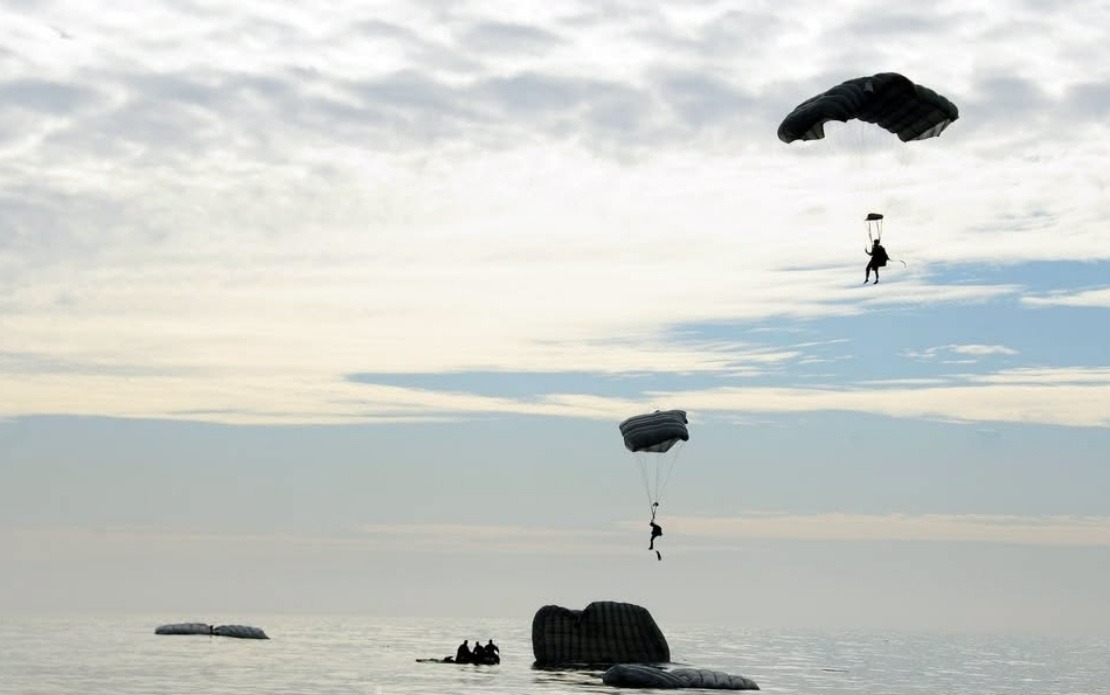
Six personnel from Malaysia's elite Naval Special Warfare Forces, known as PASKAL, have been safely recovered after an unplanned drift at sea during a free-fall parachuting training operation in the South China Sea. The Royal Malaysian Navy announced the successful rescue on Wednesday, confirming that all six commandos were located and retrieved by an RMN vessel after the incident occurred during the previous day's exercise. The personnel had departed their designated landing site after encountering abrupt atmospheric conditions that severely compromised their ability to navigate accurately to the intended touchdown zone.
The unexpected situation unfolded when rapidly shifting weather patterns created dense conditions that obscured the visibility essential for precision parachuting operations. Such environmental volatility is not uncommon in the South China Sea, where tropical weather systems can develop and intensify with minimal warning, particularly during the monsoon transitional periods. The sudden meteorological changes forced the six jumpers off course, leaving them dispersed across an unforeseen section of ocean rather than reaching the planned recovery area. Despite this deviation from the exercise protocol, the Navy's maritime assets responded swiftly, dispatching vessels to locate and extract the personnel from the water without significant delay.
The Royal Malaysian Navy characterised the incident not as a failure but as a validation of PASKAL's demanding training philosophy. In an official statement, the service highlighted how the unit's rigorous and operationally realistic preparation regime equips personnel with the mental fortitude and practical competencies to navigate genuine crises beyond their standard operational parameters. The episode, rather than signalling deficiency in the exercise planning, actually demonstrated the effectiveness of conditioning that extends beyond conventional combat skill acquisition. PASKAL's approach to preparation emphasises unpredictability and adversity as integral components of professional development, ensuring that operators can maintain composure and execute survival protocols when circumstances deviate sharply from expectations.
The Navy particularly noted that such intensive preparation cultivates qualities far broader than tactical combat effectiveness. The resilience displayed during the unplanned water recovery, combined with the discipline required to remain organised during an unanticipated emergency, reflects the unit's commitment to developing well-rounded special operations personnel. These attributes align with PASKAL's long-standing operational motto, "Sentiasa yang Terbaik" meaning Always the Best, a principle that guides recruitment, training, and unit culture. The motto encapsulates an institutional expectation that members continuously pursue excellence across all dimensions of their professional conduct, from technical proficiency to psychological readiness.
Such training incidents occur periodically across special operations forces worldwide and often become valuable learning opportunities. The recovery of all personnel without injury or serious complications suggests both sound contingency planning and effective communication protocols between the exercise controllers and response teams. The presence of recovery vessels in proximity to the exercise zone indicates that the Navy had implemented appropriate safety measures despite the weather deterioration that triggered the deviation. This layered approach to risk management, balancing the necessity of realistic training against personnel safety obligations, represents a cornerstone principle within modern military special operations training frameworks.
The incident underscores the inherent challenges of conducting military training operations in the maritime domain. Unlike land-based exercises, sea operations introduce variables including tidal conditions, currents, visibility limitations, and unpredictable weather systems that cannot be fully controlled or predicted in advance. Training coordinators must constantly evaluate whether conditions remain within acceptable parameters or whether environmental factors have escalated beyond manageable thresholds. The decision-making required to pause exercises or adjust protocols in response to developing weather systems represents a critical skill for exercise commanders charged with safeguarding personnel while maintaining operational credibility.
For Malaysia specifically, the maintenance of elite maritime special operations capabilities carries strategic significance given the nation's extensive coastline and substantial maritime economic interests. The South China Sea, where this exercise occurred, remains an area of considerable geopolitical attention and naval activity. Ensuring that Malaysian maritime forces possess highly trained, mentally resilient personnel capable of operating effectively under demanding conditions serves both national security interests and contributes to Malaysia's capacity to participate in regional maritime security cooperation. Investment in realistic, challenging training environments reflects a serious commitment to operational effectiveness in this strategically important water space.
The Royal Malaysian Navy reaffirmed its commitment to maintaining equilibrium between the imperatives of combat readiness and personnel welfare. This balance represents a persistent tension within military organisations worldwide. Too cautious an approach to training may produce personnel unprepared for actual operational demands, while excessively hazardous exercises unnecessarily jeopardise personnel. The successful recovery of all six PASKAL commandos demonstrates that thoughtful safety architecture can coexist with demanding operational preparation. The Navy indicated that it would continue pursuing this balanced methodology to protect maritime sovereignty while preserving the welfare and effectiveness of personnel charged with that responsibility.
The incident also reflects broader patterns within Malaysia's defence establishment regarding investment in professional military capability development. PASKAL represents one component of a larger modernisation and professionalisation agenda within the RMN and broader Malaysian armed forces. Regular training exercises, particularly those conducted in demanding and realistic conditions, form an essential foundation for maintaining unit cohesion and operational proficiency. While individual incidents generate headlines, the consistency and rigour of training programmes across Malaysia's military services contribute substantially to the nation's security posture and regional standing.

