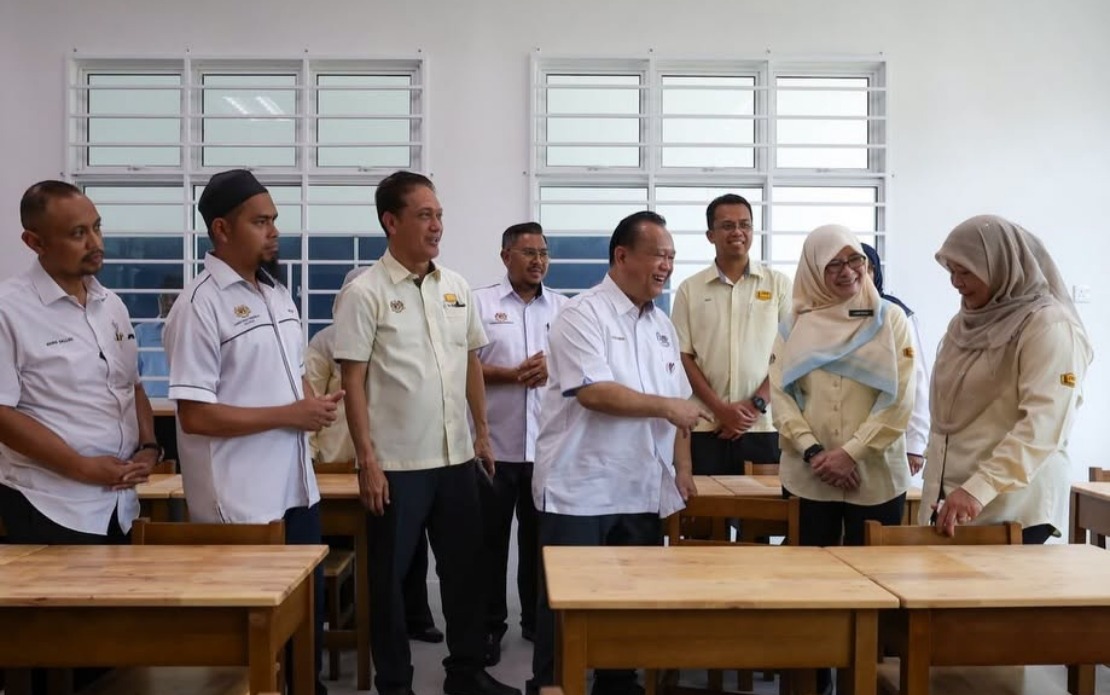
The reconstruction of a deteriorating school building at Sekolah Kebangsaan FELDA Kota Gelanggi 1 in Jerantut has reached completion significantly before its scheduled deadline, delivering enhanced educational infrastructure to the institution's student population. Works Minister Datuk Seri Alexander Nanta Linggi announced the achievement at a handover ceremony, highlighting how the RM7.998 million initiative was delivered without requiring any extension of time—a marker of effective project management by the government and its contractors.
Construction commenced on January 13 last year, with the project reaching substantial completion on June 26, considerably outpacing the original target completion date of May 2, 2027. This achievement represents a delivery timeline nearly twelve months faster than initially planned, demonstrating what government officials consider a significant success in the implementation of public infrastructure projects across the nation. The accelerated completion addresses longstanding concerns about educational facility standards while showcasing what administration officials view as improved execution capabilities within the government construction sector.
The scope of work encompassed the construction of a new academic block featuring three classrooms alongside specialized instructional spaces, including a dedicated science room and health facilities. Complementing these additions, the project also delivered a Special Education Integration Programme block specifically designed to accommodate pupils with diverse special educational needs. This dual-purpose construction strategy reflects evolving priorities within Malaysian education policy, which increasingly emphasizes inclusive learning environments that integrate students requiring additional support alongside their mainstream peers.
According to Minister Nanta, approximately seventeen pupils with special educational needs currently attend the school and will directly benefit from the tailored facilities provided under this development initiative. The establishment of dedicated PPKI facilities represents a meaningful investment in inclusive education infrastructure within rural Pahang, where such specialized amenities are often limited. For families in the Jerantut area, this expansion significantly reduces the need to seek specialized educational services in more distant urban centers, improving accessibility and reducing logistical burdens on households.
The minister indicated that similar reconstruction and upgrade initiatives targeting deteriorating educational structures throughout Pahang are presently in various stages of implementation. He expressed optimism that these parallel projects might likewise achieve early completion, suggesting a broader pattern of improved delivery schedules across the state's public works portfolio. Such optimism reflects confidence in current contractor performance and government project oversight mechanisms, though whether such accelerated timelines can be sustained across multiple concurrent initiatives remains to be demonstrated.
During the handover ceremony, Minister Nanta placed particular emphasis on the importance of promptly addressing defects identified during the mandatory defect liability period. He instructed contractors to respond with efficiency and effectiveness to any complaints or maintenance issues arising during this post-completion monitoring phase. This focus on quality assurance reflects recognition within government circles that early project delivery becomes meaningful only when structural integrity and facility performance meet or exceed specified standards, a concern particularly vital in educational settings where student safety and welfare are paramount considerations.
The minister further directed the Public Works Department to maintain vigilant oversight following the formal handover. Sustained post-completion monitoring ensures that all installed facilities continue operating safely, remain in proper working condition, and consistently meet the technical and safety standards established during design and construction phases. This emphasis on ongoing maintenance and performance verification reflects lessons learned from previous infrastructure projects, where inadequate post-completion monitoring sometimes resulted in premature deterioration of public facilities despite satisfactory initial delivery.
The Jerantut project carries particular significance for rural education in Malaysia's eastern corridor. The Felda settlement context adds social dimensions to what might otherwise be viewed as routine infrastructure development, as many families within Felda communities depend on publicly provided services including education. The reconstruction of SK FELDA Kota Gelanggi 1 thus represents a tangible government commitment to maintaining educational standards within agricultural resettlement communities, which sometimes experience slower infrastructure development compared to urban centers.
The acceleration of this project's completion timeline also offers preliminary indicators regarding government efficiency in public procurement and project execution. Construction industry observers note that maintaining schedule performance without quality compromise requires effective communication between multiple stakeholders, including the developer, contractor, supervising architect, and government client representatives. The achievement suggests that such coordination mechanisms functioned adequately in this instance, though broader conclusions about systemic improvements would require assessment of multiple projects over extended periods.
Looking forward, the successful delivery of SK FELDA Kota Gelanggi 1's reconstruction may establish benchmarks for similar initiatives elsewhere in Pahang and potentially inform performance expectations for future government construction contracts. Minister Nanta's public emphasis on early completion and quality maintenance sends implicit signals to the construction industry regarding government priorities and evaluation criteria for contractor performance. However, observers note that replicating such results across diverse project types and geographic contexts presents substantial challenges, as site-specific conditions, local labor availability, and supply chain factors vary considerably across different regions and project circumstances.

