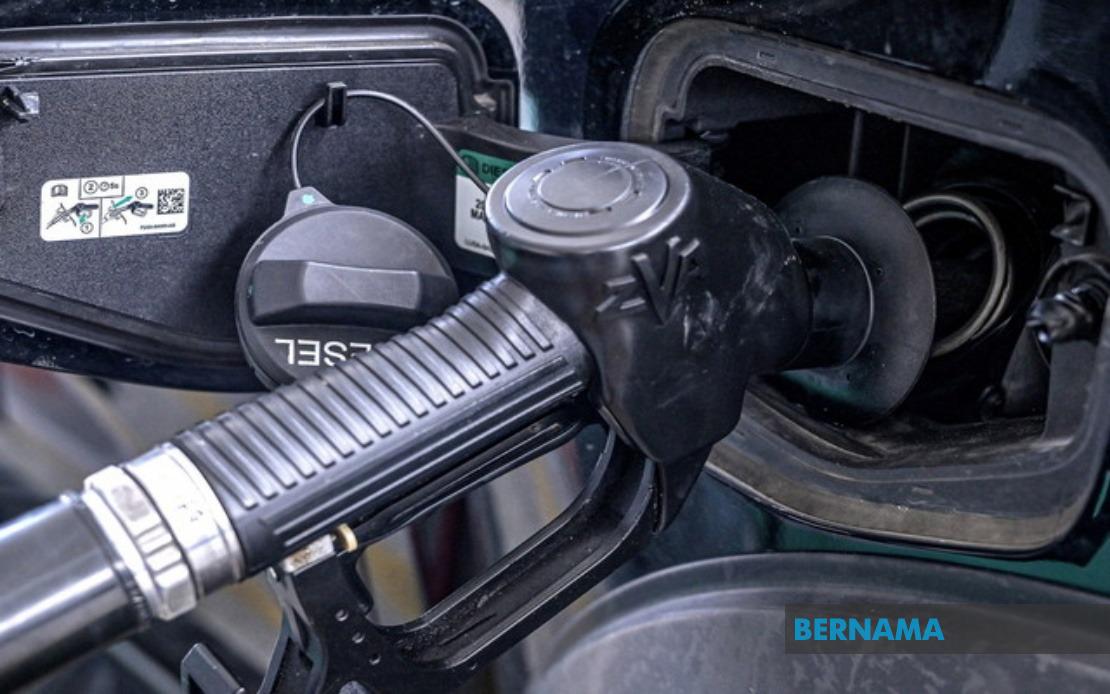
The Malaysian government has begun accepting applications for diesel subsidies targeting business-owned transport vehicles, marking a significant expansion of its Subsidised Diesel Control System (SKDS) aimed at cushioning operational costs for small enterprises. Domestic Trade and Cost of Living Minister Datuk Armizan Mohd Ali announced the initiative, which welcomes company-owned private vehicles such as jeeps and pickup trucks into the subsidy scheme. Successful applicants will gain access to diesel support from July 15, contingent upon approval and receipt of a fleet card through official channels.
The newly eligible vehicle category represents a deliberate policy shift to broaden economic relief beyond traditional commercial transport operators. Participation requires that vehicles be formally registered as business assets under the Company Private Use class designation within the Road Transport Department's MySikap system. This regulatory requirement ensures proper documentation and accountability, preventing misuse of subsidies intended for legitimate commercial purposes. The registration classification creates a clear distinction between personal and business use, a critical safeguard given the substantial fiscal commitment subsidies represent.
Eligibility criteria extend beyond vehicle documentation to encompass business structure requirements. Applicants must operate as either sole proprietorships or partnerships with formal registration through Malaysia's Companies Commission (SSM) or equivalent local authorities in Sabah and Sarawak. This framework deliberately targets micro and small enterprises, recognising their vulnerability to fuel price volatility and their importance to Malaysia's economy. By restricting benefits to documented small business structures, the government aims to direct resources toward entrepreneurs who depend heavily on transport costs for viability.
The diesel subsidy programme itself has undergone progressive expansion over recent policy cycles. Prior to this announcement, authorities had already extended SKDS eligibility to encompass public land transport operators and enterprises engaged in consumer goods distribution. Each expansion reflects the government's recognition that transport costs create cascading effects throughout the broader economy. When fuel expenses rise, small businesses—particularly those in logistics, trading, and service delivery—face margin compression that threatens sustainability and employment. The latest iteration specifically targets gaps in previous iterations, ensuring that companies operating their own transport fleets gain equivalent support to specialist carriers.
Accessibility represents a crucial component of the scheme's design. Interested business owners need not navigate complex bureaucratic processes; applications flow through the MySubsidi portal, a centralised digital platform designed for straightforward submission. This approach contrasts with earlier subsidy regimes that sometimes required multiple agency interactions and created administrative bottlenecks. Digital simplification reduces information barriers that frequently discourage genuine small business participation, particularly among rural entrepreneurs or those with limited experience in government procurement systems. Minister Armizan encouraged applicants to submit documentation promptly, suggesting awareness that early participation may streamline processing.
The July 15 implementation date for successful applicants signals careful planning and coordination among relevant government departments. The interval between announcement and benefit commencement allows time for system preparations, fleet card production, and processing of initial applications. Timing also matters contextually; fuel prices and economic conditions in mid-July will shape programme effectiveness and uptake rates. Malaysian businesses planning transport investments may time vehicle purchases to coincide with subsidy activation, creating potential multiplier effects in vehicle sales and the automotive sector.
For Malaysian small business operators, particularly those in trading, manufacturing, and service provision, this expansion offers tangible cost relief during a period of economic adjustment. Companies operating multiple vehicles or those with high-mileage operations will experience the most substantial impact. Pickup trucks and jeeps are ubiquitous across Malaysian commerce, from agricultural supply chains to construction services to trading enterprises. By explicitly naming these vehicle types, the government signals direct recognition of their economic importance and legitimacy for subsidy consideration.
The scheme reflects broader policy responses to living cost pressures that have dominated government economic agendas since 2022. Fuel subsidies, while fiscally demanding, serve multiple objectives beyond immediate price relief. They support employment preservation by maintaining business viability, they encourage continued economic activity in cost-sensitive sectors, and they demonstrate government responsiveness to grassroots economic hardship. However, subsidy mechanisms also create dependency risks and can distort market signals that might otherwise encourage efficiency improvements or alternative fuel adoption.
Regional competitiveness considerations may also influence the programme's scope. Countries across Southeast Asia employ varying subsidy strategies to support small business competitiveness. Malaysia's approach, by targeting transport costs directly, positions local enterprises favourably relative to competitors facing unsubsidised fuel regimes. This becomes particularly significant for cross-border trading and regional supply chain participation, where cost advantages translate into market positioning.
The registration requirement through JPJ's MySikap system underscores the government's commitment to data-driven administration. Vehicle and business registration systems provide government agencies with unprecedented visibility into economic activity, enabling more targeted policy interventions. This information infrastructure, built incrementally over recent years, makes programmes like SKDS administratively feasible in ways that would have proven impractical in earlier policy eras.
Moving forward, the programme's sustainability depends partly on fuel price trajectories and broader fiscal capacity. Subsidy expansion reflects political commitment but also fiscal constraints; the government must balance support ambitions against budgetary realities. Monitoring uptake, cost implications, and genuine economic impact will shape any future programme adjustments or extensions.

