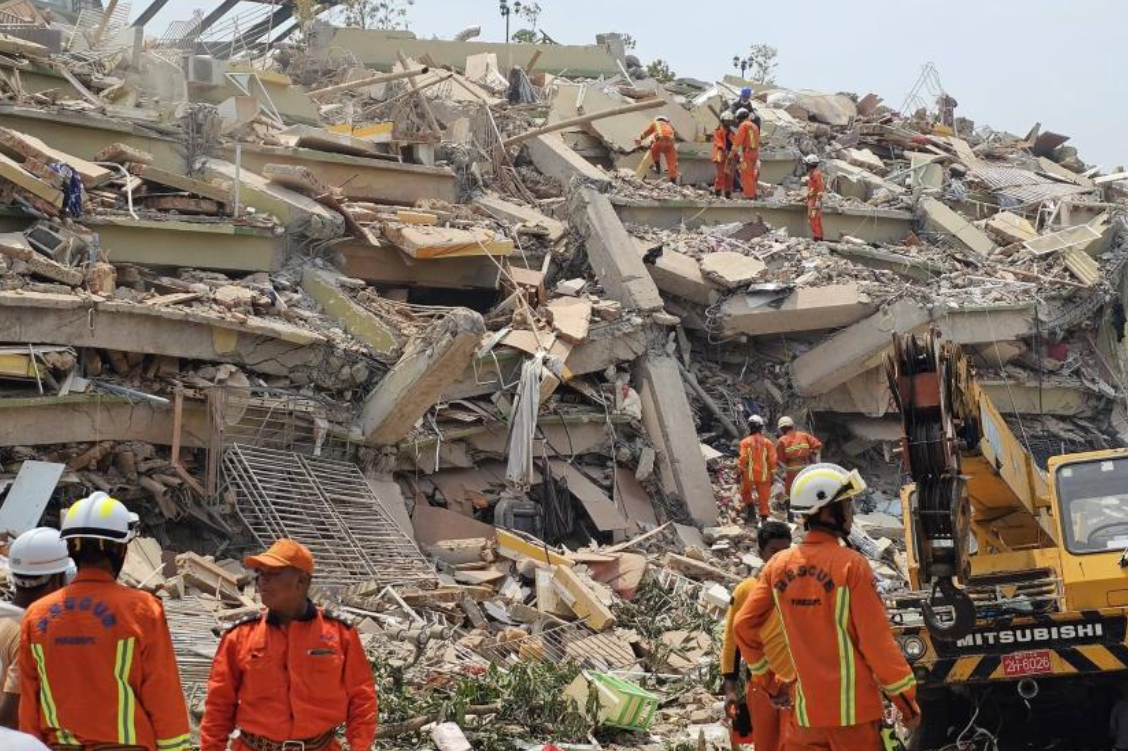
The owner of Sky Villa Condominium in Mandalay, Myanmar, has received a five-year custodial sentence with hard labour following the catastrophic collapse of his building during an earthquake that claimed more than 200 lives. U Naing Htun Lin, whose property became one of the deadliest structural failures triggered by the disaster, was convicted under Section 304-A of the Penal Code by the Aungmyaythazan Township Court on June 23, marking a significant legal resolution to one of Myanmar's most significant recent tragedies.
The judicial process began when U Naing Htun Lin faced charges at the Aungmyaythazan Township Court on February 10, initially permitted to remain free on bail while defending himself against allegations of negligence resulting in death. The trajectory of his legal status shifted dramatically when bail protections were withdrawn on March 17, forcing him into remand custody as the case proceeded through the tribunal. The framework for prosecution relied on negligence statutes rather than more severe criminal charges, suggesting judicial findings that structural inadequacy rather than intentional wrongdoing precipitated the disaster.
Official records indicate that U Zaw Moe Aung, representing the Special Investigation Department, pursued the matter as plaintiff throughout proceedings, with the case originating from investigations conducted by No. (1) Area Police Station in Aungmyaythazan Township. The sentencing determination came after months of legal examination, reflecting the complexity of establishing liability in cases involving structural failure during natural disasters. Both prosecution and defence teams are currently navigating appeals and revision processes, demonstrating that the judicial chapter remains open despite the conviction, as higher courts may still reconsider aspects of the verdict.
The Sky Villa structure itself stood eleven storeys tall on 60th Street between 21st and 22nd Streets in Aungmyaythazan Township, positioning it among numerous residential properties devastated when seismic activity overwhelmed building safety margins across Mandalay. Over two hundred bodies were recovered from the ruins, establishing Sky Villa as among the deadliest single-structure failures resulting from the earthquake and casting persistent questions about construction standards, regulatory oversight, and developer accountability throughout Myanmar's building sector.
U Naing Htun Lin held the position of managing director at NTL Construction Company, the firm responsible for constructing Sky Villa, creating direct institutional responsibility for design and execution decisions that may have contributed to inadequate structural integrity. This connection between developer identity and construction standards raises broader concerns about oversight mechanisms within Myanmar's real estate development industry, where the absence of robust regulatory frameworks has historically enabled cost-cutting measures compromising safety.
In the aftermath of the catastrophe, U Naing Htun Lin's family, including his wife Daw Thet Thet Khine, organized three separate memorial ceremonies at a monastery pavilion on 19th Street in Aungmyaythazan Township. These gatherings provided bereaved families with formal acknowledgment of loss and opportunities for collective mourning, whilst the developer simultaneously offered financial restitution of 10 million kyats per deceased victim. This combination of ritual contrition and monetary compensation, whilst potentially easing immediate financial burdens for affected families, does not resolve underlying systemic issues surrounding construction oversight and developer accountability.
The sentencing carries implications extending well beyond individual punishment, signalling judicial willingness to hold developers criminally responsible for structural failures during natural disasters. Malaysian observers monitoring Myanmar's legal evolution should note that applying negligence statutes to construction catastrophes establishes precedent for personal liability when building performance falls catastrophically short during foreseeable seismic events. This framework could influence how Malaysian courts examine developer accountability in future structural failures, particularly given Southeast Asia's shared seismic vulnerability and comparable gaps in regulatory enforcement across the region.
The ongoing appeal and revision proceedings suggest that Myanmar's legal system remains engaged with determining appropriate accountability thresholds for construction professionals. Whether appellate courts will affirm, reduce, or modify the five-year sentence may establish whether negligence convictions represent meaningful deterrence against inadequate construction practices or function primarily as symbolic accountability without substantially altering industry standards. The distinction matters considerably for future building safety across Myanmar and potentially throughout Southeast Asia, where earthquake preparedness remains inconsistent and developer oversight often lacks teeth.
For Malaysia's construction and real estate sectors, the Sky Villa case presents a cautionary precedent regarding both structural integrity standards and developer liability exposure. Whilst Malaysian building codes generally exceed those operating in Myanmar, the conviction demonstrates that courts will examine whether developers exercised appropriate diligence in ensuring seismic resilience proportionate to local geological risk. The case underscores the necessity for continuous regulatory vigilance, rigorous inspection protocols, and professional accountability mechanisms that transcend national borders and establish consistent expectations across the Southeast Asian region.

