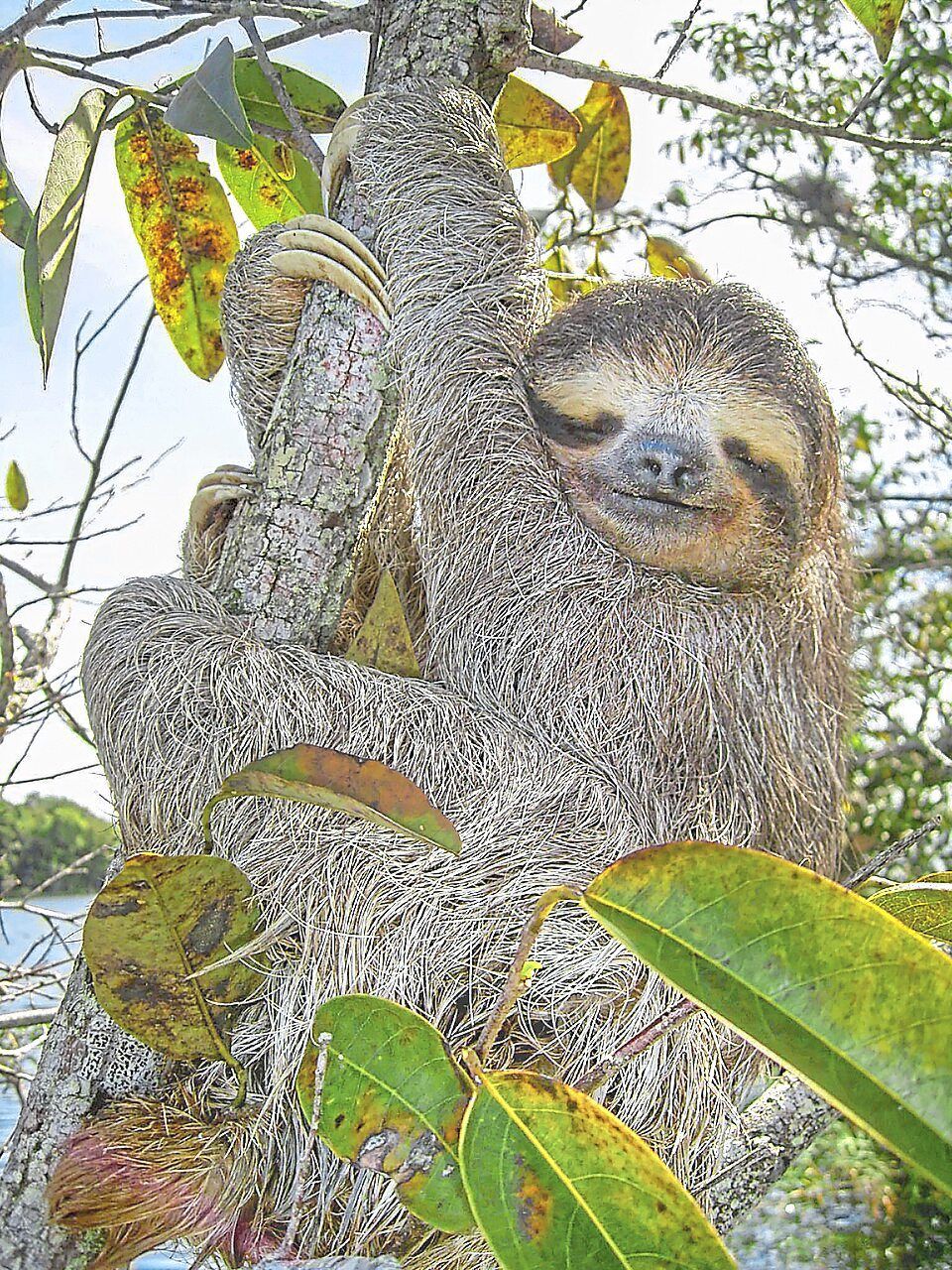
Scientists have identified a remarkable genetic feature in sloths that could fundamentally reshape how researchers approach human ageing and metabolic disease. The discovery stems from the first comprehensive sequencing and analysis of the sloth genome, revealing that these tree-dwelling creatures have maintained active 'jumping genes' – mobile DNA sequences known as transposons – for millions of years. Unlike humans, whose transposons have largely become dormant evolutionary relics, sloths have preserved functioning copies of these genetic elements, suggesting they may play a crucial role in the animal's extraordinarily low metabolic rate.
The international research effort drew together teams from the Wellcome Sanger Institute, the Leibniz Institute for Zoo and Wildlife Research, the Hospital Sirio Libanes, and collaborators at the Max-Planck Institute for Molecular Cell Biology & Genetics in Germany. Researchers extracted DNA samples from a captive sloth and subjected the tissue to comprehensive genomic sequencing, establishing a baseline understanding of what makes sloths genetically distinct. Through a comparative approach, the team then examined the sloth genome alongside those of related South American mammals – the anteater and armadillo – all members of the Xenarthra clade, the sole group of placental mammals that originated on the South American continent.
The analysis revealed that sloths possess multiple copies of active transposable elements, short DNA sequences capable of moving between different locations within the genome. These transposons represent an evolutionary puzzle: they arose in the common ancestor of all modern sloth species approximately 30 million years ago and have been meticulously preserved ever since. Rather than accumulating mutations that would render them inactive, as occurred in most mammals including humans, sloths have maintained these jumping genes as functional components of their genetic architecture. This conservation over such an extended timespan indicates that natural selection has actively protected these sequences, suggesting they confer significant survival advantages.
The most striking discovery concerns the connection between these jumping genes and mitochondrial function. Researchers found that numerous transposons are directly associated with mitochondria, the cellular structures responsible for energy production and the regulation of metabolic pathways. This association offers a tantalizing explanation for why sloths possess the slowest metabolism of any mammal – their unique constellation of conserved transposons may orchestrate an energy-efficient physiology that allows them to thrive on minimal caloric intake. Rather than representing metabolic weakness, this low-energy state appears to be a sophisticated evolutionary adaptation, maintained through genetic mechanisms unavailable to other mammals.
Dr Marcela Uliano-Silva, senior bioinformatician and co-lead author at the Wellcome Sanger Institute, emphasises that evolutionary processes have already tested countless biological strategies across billions of years. By investigating unusual animals like sloths, scientists can discover genetic solutions that humans never developed. The sloth genome provides a natural experiment in energy management and metabolic efficiency, offering insights that conventional laboratory research cannot easily replicate. This perspective inverts the typical research paradigm: rather than studying human genetics and attempting to apply findings to other species, scientists can examine how other organisms have solved biological problems that plague humanity.
The implications for human health appear substantial. Dr Pedro Galante, co-lead author at the Hospital Sirio Libanes in São Paulo, notes that many conditions affecting humans – including diabetes, age-related disorders, neurodegeneration, and muscle wasting – fundamentally involve dysfunction in energy production and mitochondrial operation. Sloth cell lines could serve as a natural biological model for understanding how organisms successfully maintain function during low-energy states, and critically, what cellular processes malfunction when energy metabolism breaks down in disease. This research avenue potentially offers fresh therapeutic targets for conditions that have resisted conventional pharmaceutical approaches.
The long-term applications extend beyond conventional medical treatments. Dr Galante suggests that understanding sloth biology could inform tissue preservation techniques, critical care medicine approaches, research into the biological mechanisms of ageing, investigation of metabolic diseases, and even strategies for protecting human astronauts during extended space missions. These applications highlight how fundamental biological research in unexpected organisms can generate practical benefits for human welfare across multiple domains. The sloth genome represents not merely academic curiosity but a potential resource for solving some of medicine's most intractable challenges.
Dr Camila Mazzoni, head of evolutionary and conservation genomics at the Leibniz Institute for Zoo and Wildlife Research in Berlin, characterises sloths as remarkable among mammals: they maintain robust health despite operating at metabolic extremes that would be catastrophic for other species. Understanding the mechanisms enabling this feat could reveal how cells accomplish efficient energy management under constraint. Mazzoni's team proposes that sloths have evolved genetic backup systems – possibly involving their conserved jumping genes – that compensate for their characteristically sluggish mitochondria and sustain their distinctive lifestyle. This hypothesis suggests that transposons, often dismissed as 'selfish DNA' with no evolutionary purpose, may actually function as sophisticated regulatory systems.
For Malaysian and Southeast Asian researchers, this discovery carries particular resonance. Tropical biodiversity across the region remains incompletely characterised at the genomic level, meaning similar valuable genetic insights may await discovery in local fauna. The sloth genome project demonstrates that comprehensive sequencing of unusual species can yield profound understanding of fundamental biological processes. Regional institutions involved in conservation genetics, medical research, and biotechnology could pursue comparable investigations of endemic Southeast Asian species, potentially uncovering genetic mechanisms of relevance to human disease treatment and the region's broader scientific advancement.
The research methodology employed – extracting genomic material from captive populations, conducting large-scale sequencing, and performing comparative analysis against related species – represents an accessible model that regional laboratories could replicate. As sequencing costs continue declining and bioinformatic expertise expands throughout Southeast Asia, opportunities multiply for local scientists to contribute to global understanding of genomic evolution. The sloth genome project ultimately illustrates how detailed investigation of nature's diversity, particularly regarding animals with unusual physiological characteristics, can generate profound insights applicable to human biology and medicine.

