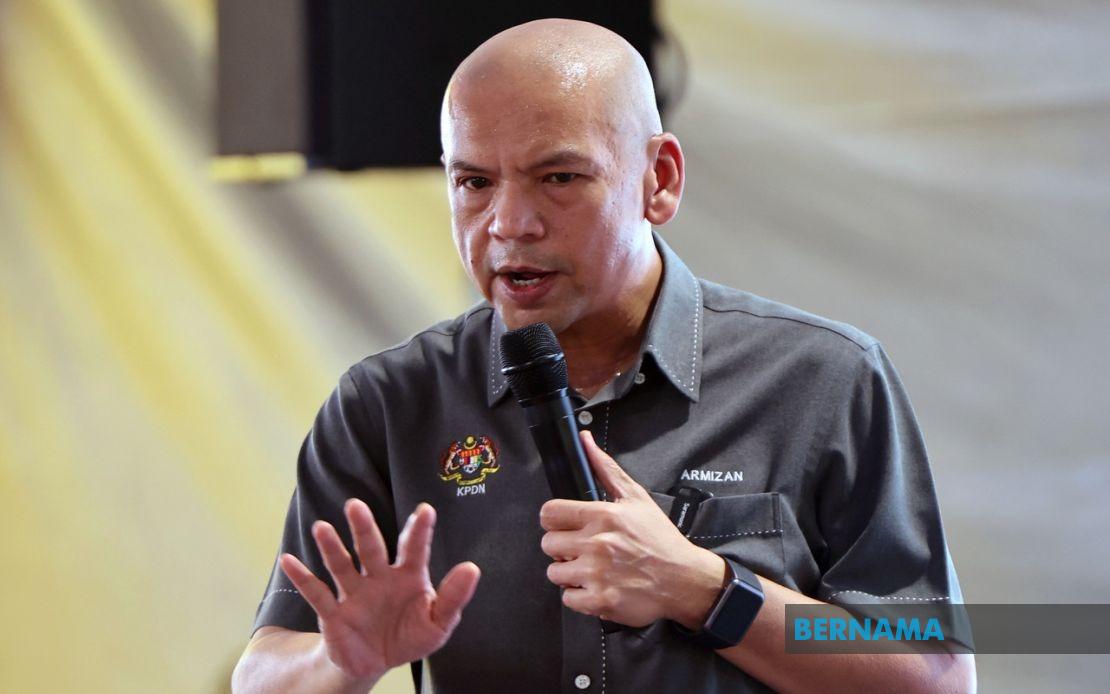
The Federal Government is extending targeted diesel subsidy assistance to small companies and local contractors through a new monthly quota system designed to support micro-entrepreneurs struggling with rising fuel costs. Domestic Trade and Cost of Living Minister Datuk Armizan Mohd Ali announced in Kota Kinabalu that qualifying small firms will receive 300 litres of subsidised diesel monthly via fleet cards, following the rollout of the subsidised diesel programme across Sabah, Sarawak, and Labuan from July 1 onwards.
The policy addresses a critical gap in the original subsidy framework, which had excluded many small business operators who previously found it difficult to apply for assistance under their individual names. By extending eligibility to partnership companies and sole proprietorships registered nationwide, the government is recognising that significant numbers of micro-entrepreneurs rely on diesel vehicles for their livelihood but fall outside the two primary sectors covered by the Subsidised Diesel Control System—public transport and goods or consumer necessities logistics. This adjustment represents a pragmatic recognition that the subsidy's initial design inadvertently created barriers for legitimate small business users.
Armizan emphasised that this intervention measure received swift approval from the Federal Cabinet, underscoring the administration's commitment to supporting grassroots economic activity. The flexibility in targeting reflects growing awareness within government circles that blanket subsidy schemes often fail to reach vulnerable business operators who operate at the margins of formal categorisation. For Malaysian small firms already contending with compressed profit margins and volatile input costs, the additional diesel allowance offers meaningful relief that could translate into operational stability over the coming months.
The three-pillar approach guiding subsidy implementation in the eastern Malaysian states reveals the delicate balancing act policymakers must undertake. First, the government prioritises affordability for affected communities and businesses, recognising that fuel costs ripple through supply chains and consumer prices. Second, officials remain vigilant against subsidy leakage—the diversion of subsidised fuel to unintended users or black-market resale, a persistent challenge in sprawling jurisdictions like Sabah and Sarawak where enforcement capacity is stretched. Third, the government must manage its fiscal burden, as diesel subsidies represent a significant recurrent expenditure that competes with other development priorities.
To strengthen implementation in remote and interior areas of Sabah and Sarawak, state-level agencies will take a more active role in registering eligible beneficiaries and verifying eligibility criteria. This decentralisation of administrative responsibility acknowledges that federal offices in Kuala Lumpur lack the ground-level knowledge and community connections necessary to identify genuine small business operators in dispersed rural settlements. By mobilising local government apparatus, Putrajaya aims to ensure that geographic distance and bureaucratic complexity do not prevent eligible firms from accessing entitlements they deserve.
The subsidy scheme's introduction reflects broader pressures on household and business finances across Malaysia. With global crude oil prices subject to geopolitical volatility and transport-dependent economies like Malaysia's facing structural cost pressures, targeted fuel subsidies serve as a social stabiliser. However, the targeting mechanism itself has proven contentious, requiring continuous refinement to balance equity against fiscal sustainability. The expansion to include small companies represents an incremental adjustment rather than a wholesale policy reversal, suggesting the government is learning from early implementation experience.
Armizan's concurrent announcement of the MADANI Foster Village Project—allocating RM500,000 to Kampung Sekalong in Menumbok—illustrates the government's broader rural development strategy. The village will receive five infrastructure projects including a multipurpose hall, road upgrades, culvert repairs, solar lighting, and a community landmark, with completion targeted within two to three months. This initiative sits within a wider government programme to narrow development gaps between urban and rural areas by delivering essential amenities such as water, electricity, roads, and internet connectivity to underserved communities.
The Foster Village initiative represents the ministry's third project under the MADANI banner, following earlier rollouts in Mukim Kaiduan, Papar in 2024 and Mukim Tikam Batu, Kedah in the previous year. The programme's philosophy recognises that basic infrastructure deficits in rural areas compound economic disadvantages, limiting entrepreneurial potential and quality of life. By bundling small-scale infrastructure improvements, the government attempts to deliver tangible benefits that residents can observe and experience relatively quickly, building confidence in government delivery capacity.
For small business operators in Sabah, Sarawak, and Labuan, the convergence of targeted fuel subsidies and village infrastructure development offers dual support. Better roads and village facilities reduce operational friction and improve community attractiveness, while diesel subsidies ease immediate cash flow pressures. These complementary policies suggest a more integrated approach to rural economic development than piecemeal interventions might provide. However, sustainability depends on consistent policy implementation and protection against subsidy fraud or administrative capture.
The government's openness to further refinements of the subsidy mechanism, as emphasised by Armizan, indicates that policymakers anticipate ongoing adjustments as implementation experience accumulates. Early feedback from businesses, transport operators, and community leaders will likely inform subsequent policy iterations. For regional governments in Southeast Asia wrestling with similar subsidy challenges, Malaysia's experience offers instructive lessons about the necessity of flexible, locally-informed implementation strategies that acknowledge diverse economic realities beyond major urban centres and primary commodity transport corridors.

