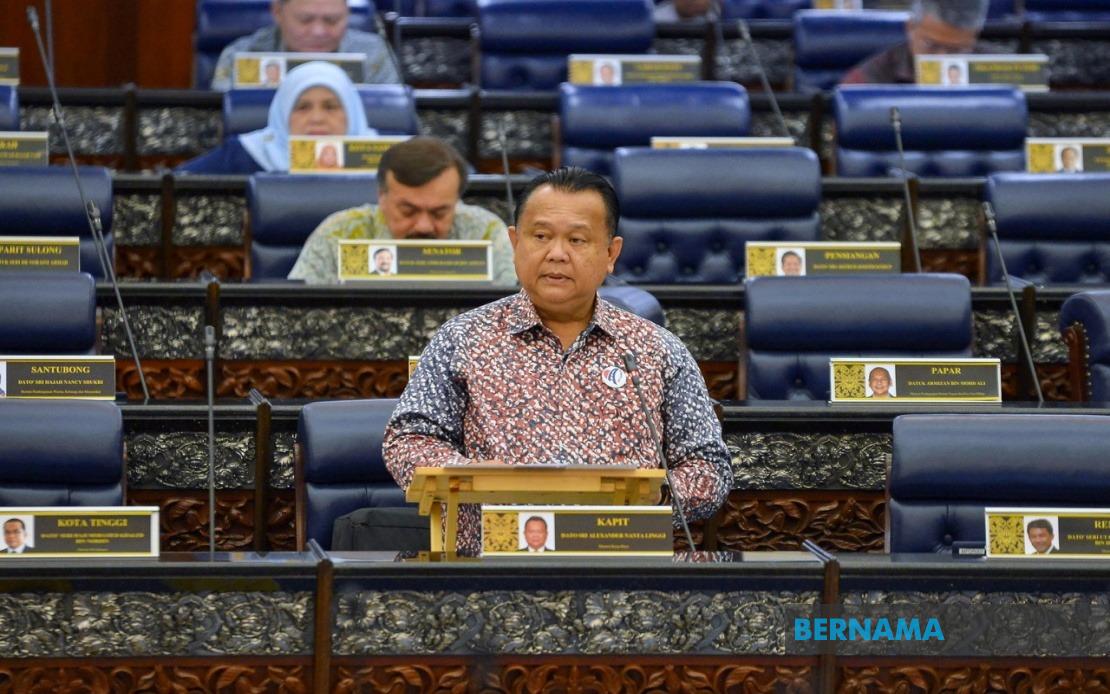
Motorists navigating Malaysia's busiest highways may have noticed smoother traffic flows in recent months, and there is now quantifiable evidence supporting what many commuters have observed. The Smart Lane initiative, which has been operating on selected stretches of the North-South Expressway (PLUS) since 2023, has delivered measurable benefits in reducing congestion during peak travel periods and festival seasons, according to Works Minister Datuk Seri Alexander Nanta Linggi. The minister disclosed these figures during parliamentary proceedings, responding to questions about the safety and effectiveness of the scheme that fundamentally changes how certain highway lanes operate during high-traffic periods.
Data compiled by the Malaysian Highway Authority (LLM) spanning from the initiative's inception through the present reveals that traffic congestion on Smart Lane sections has declined by between 30 and 50 per cent. This range reflects variations across different highway segments and traffic conditions, with the upper end of the improvement more likely during peak periods when the scheme's flexibility matters most. The significant reduction in congestion times carries substantial economic implications for the thousands of commuters and commercial operators who traverse these corridors daily, potentially reducing fuel consumption and vehicle wear while enhancing overall road network efficiency throughout the Klang Valley and beyond.
The inquiry that prompted the minister's disclosure came from Zakri Hassan, the Kangar representative from Perikatan Nasional, who specifically raised concerns about whether the Smart Lane approach adequately prioritised the safety and comfort of motorcyclists. This question reflected broader apprehensions within the motorcycling community about whether flexible lane-sharing mechanisms might compromise rider protection. The concern was particularly pertinent given Malaysia's significant motorcyclist population and the documented vulnerability of two-wheeled vehicle operators on expressways, where speed differentials and lane changes pose inherent risks.
Responding to these safety concerns, Nanta presented accident statistics that appear to vindicate the scheme's implementation. Throughout the first five months of this year, only 36 accident cases occurred across 12 Smart Lane locations during weekday operations. More significantly, the proportion of incidents involving motorcyclists proved lower on Smart Lane sections than comparable stretches without the scheme, a counterintuitive finding that challenges preconceptions about shared-lane safety. The minister attributed this improved safety profile partly to behavioural factors, suggesting that riders demonstrate heightened caution when navigating shared lanes, adopting more defensive riding practices compared to traditional highway conditions.
Accident investigation findings indicate that human factors rather than structural deficiencies drive most incidents within Smart Lane zones. The Malaysian Highway Authority identified the principal causes as user error and non-compliance with posted safety protocols. These violations encompass improper use of emergency lanes before entering or exiting Smart Lane sections, reckless lane-changing manoeuvres, and halting vehicles in inappropriate locations. This diagnostic finding implies that further safety improvements might derive from enhanced driver education and enforcement strategies rather than fundamental scheme redesign, suggesting the initiative's core architecture remains sound.
To strengthen ongoing safety oversight, the LLM has mandated that highway concessionaires engage independent road safety auditors to conduct comprehensive stage 5 road safety evaluations at five-year intervals. These audits examine not merely motorcyclist-specific concerns but encompass the entire safety ecology within Smart Lane environments. The stipulated improvement actions derived from audit findings create a structured feedback mechanism through which identified risks can be systematically addressed. This regulatory framework demonstrates a commitment to continuous refinement based on empirical evidence rather than static implementation of initial designs.
Technological augmentation forms another pillar of the safety and efficiency enhancement strategy. The Malaysian Highway Authority and concessionaires are progressively deploying closed-circuit television cameras integrated with artificial intelligence capabilities throughout Smart Lane sections. These systems function beyond conventional security monitoring, utilising real-time traffic density detection to optimise traffic flow coordination dynamically. The artificial intelligence component enables the infrastructure to adapt lane operations responsively to actual traffic conditions, representing a significant advance beyond earlier highway management approaches that relied on fixed schedules or manual interventions.
The Smart Lane concept itself represents a pragmatic response to Malaysia's infrastructure constraints. Rather than requiring enormous capital investment in additional physical lanes—an economically prohibitive approach—the scheme leverages existing infrastructure through dynamic management. By designating specific lanes for flexible use patterns during peak periods, authorities can effectively expand capacity without construction. This approach proves particularly valuable in established corridors like the North-South Expressway, where land acquisition and physical expansion face substantial obstacles and environmental considerations.
For Malaysian travellers and businesses dependent on highway networks, these congestion reductions translate into tangible benefits. Shortened journey times reduce operational costs for logistics companies, improve reliability for time-sensitive deliveries, and enhance quality of life for daily commuters. The initiative also contributes to broader economic efficiency by reducing the productivity losses associated with vehicle idling and traffic delays. During major holiday periods—critical for Malaysia's retail and services sectors—maintaining reasonable traffic flow facilitates consumer mobility and supports economic activity.
The Smart Lane initiative's success in balancing capacity improvement with safety maintenance offers valuable insights for Malaysia's broader infrastructure development strategy. As urbanisation accelerates and vehicle ownership expands, highway authorities face mounting pressure to enhance network capacity. The Smart Lane experience demonstrates that technological solutions and dynamic management approaches can yield substantial improvements without requiring proportional capital expenditure. This model may prove applicable to other critical routes facing congestion challenges, from secondary expressways to arterial city roads experiencing peak-hour bottlenecks.
Looking forward, continued monitoring and refinement remain essential to sustain the initiative's effectiveness and address emerging challenges. The five-yearly safety audit requirement ensures regular systematic evaluation, while the expanding artificial intelligence camera network promises further optimisation opportunities. Maintaining public confidence requires transparent communication about safety performance and consistent enforcement of user compliance. As Malaysia navigates rapid urbanisation and economic growth, schemes like Smart Lane that leverage existing infrastructure efficiently while maintaining safety standards exemplify pragmatic solutions to contemporary mobility challenges.

