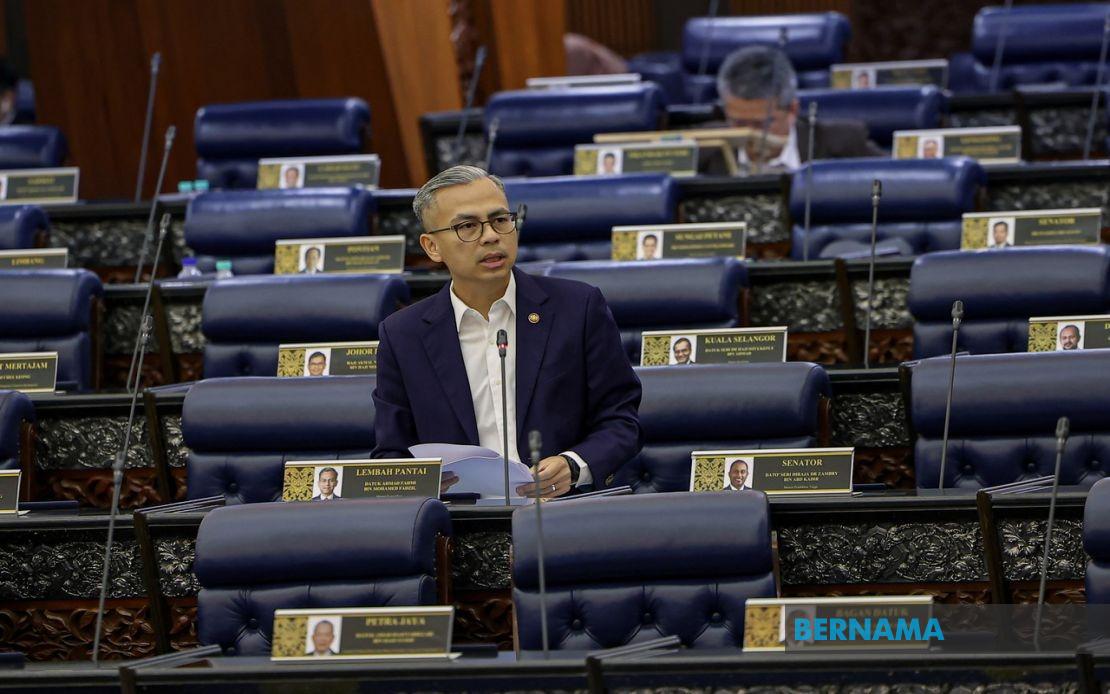
Social media platforms operating in Malaysia face substantial financial consequences if they fail to comply with mandatory age-verification requirements introduced under the Online Safety Act 2025. Communications Minister Datuk Fahmi Fadzil confirmed in Parliament that non-compliant services could incur penalties of up to RM10 million, representing one of the region's strongest enforcement mechanisms for digital safety standards.
The Malaysian Communications and Multimedia Commission possesses the regulatory authority to issue formal notices of non-compliance to any application service provider that breaches obligations outlined in Part III of the legislation. Once such a notice is received, licensed providers must either accept the financial penalty or submit a formal representation to MCMC for review and reconsideration. This two-track approach provides platforms with an opportunity to challenge enforcement action before penalties become final, though the substantial fine amounts signal serious government intent to drive compliance.
Minister Fahmi outlined additional enforcement provisions that significantly strengthen MCMC's hand in overseeing age-verification implementation. Beyond the RM10 million penalty, Section 30 of the Act empowers the commission to issue binding written directives regarding compliance with any provision of the legislation. Failure to adhere to such directives constitutes a criminal offence punishable by fines up to RM1 million, with additional daily fines reaching RM100,000 for each day the violation continues following conviction. This graduated penalty structure creates cumulative financial pressure on platforms that resist compliance.
The government has been actively engaging with social media companies since January through a structured regulatory sandbox initiative designed to facilitate discussion around age-verification implementation mechanisms. Government officials have conducted more than 30 formal engagement sessions with platform operators, conducted either in collective meetings or through individual company discussions. This extended consultation period reflects the complexity of implementing robust age-verification systems while balancing business operations and user experience considerations across diverse platforms operating under different technical architectures.
Each major social media platform operates under distinct business models and technical constraints that complicate uniform age-verification implementation. Minister Fahmi acknowledged these operational realities, noting that companies face varying challenges and objectives that must be reconciled with regulatory requirements. Nonetheless, the government has proceeded with age-verification mandates, positioning Malaysia within a growing international trend where more than 25 countries have already adopted comparable protective measures. This alignment with global best practices suggests that Malaysian authorities view age verification as an established standard rather than an experimental requirement.
The Online Safety Act 2025 represents a comprehensive regulatory framework addressing broader digital safety concerns beyond age verification alone. The legislation's Part III section, which specifically governs age-verification obligations, forms one component of a larger regulatory architecture designed to protect vulnerable users—particularly children—from harmful online content and experiences. By situating age verification within this broader legislative context, Malaysian policymakers signal that digital age controls serve as a foundational element of a multi-layered safety approach.
The timing of these enforcement announcements carries strategic significance as Malaysia positions itself as a regional leader in digital governance. Southeast Asian countries have increasingly prioritised online safety regulations, yet implementation approaches vary considerably. Malaysia's emphasis on substantial penalties combined with extended engagement periods offers a model that balances firm regulatory enforcement with practical accommodation of industry constraints. This positioning may influence how other regional governments approach similar regulatory challenges.
Practical implementation challenges remain substantial despite the clear regulatory framework. Social media platforms must develop or deploy age-verification technologies that balance accuracy, privacy protection, and user experience—a notoriously difficult technical problem that has produced mixed results internationally. Document-based verification may exclude users without formal identification credentials, while facial recognition and biometric approaches raise significant privacy concerns. Platforms must navigate these technical complexities while knowing that non-compliance carries substantial financial risk, creating pressure to implement solutions even where technical reliability remains uncertain.
For Malaysian users and civil society observers, the age-verification mandate raises important questions about data protection and privacy implementation. MCMC will need to establish clear standards governing how platforms collect, store, and protect age-verification data—typically sensitive personal information. The regulatory framework's success ultimately depends not only on platform compliance with verification requirements but also on robust oversight ensuring that platforms handle collected data responsibly and securely.
The enforcement announcement appears designed to accelerate compliance timelines as the initial engagement and negotiation period concludes. By publicly confirming the substantial penalty regime and detailing the criminal provisions for non-compliance, Minister Fahmi has signalled that the government transition from the consultation phase toward active enforcement. Platforms that have not yet implemented compliant age-verification systems face mounting pressure to accelerate deployment or risk incurring the RM10 million penalties and daily fines outlined in the legislation.