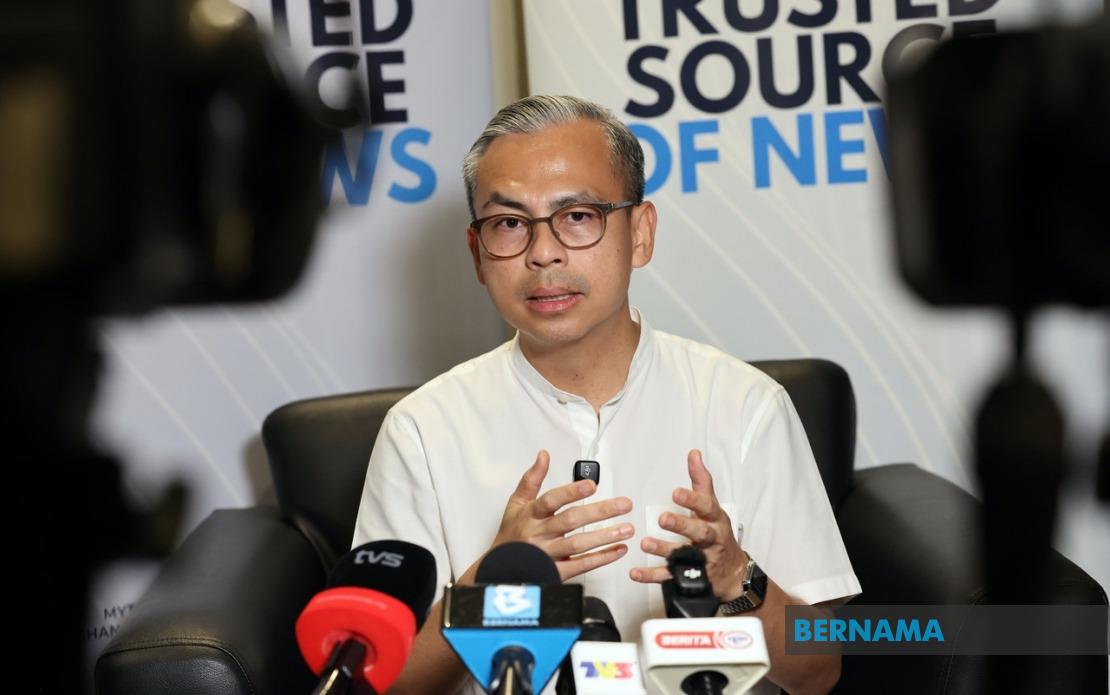
As polling day for the 16th Johor state election approaches, Communications Minister Datuk Fahmi Fadzil has sounded an urgent alarm about the proliferation of false information across social media channels, placing the responsibility squarely on platform providers to intensify their monitoring efforts. Speaking after a visit to the Malaysian National News Agency operations centre here on July 7, Fahmi emphasised that while social media firms maintain policies prohibiting misinformation, the enforcement of these rules remains inadequate and requires immediate strengthening, particularly during the critical hours when results are being announced.
The minister's concerns reflect a mounting anxiety within the MADANI Government about the potential for disinformation to undermine the integrity of the electoral process. Fahmi specifically flagged the risk of false claims about election outcomes or individual seat results spreading rapidly on polling night, which could sow confusion and erode public confidence in the democratic process. Rather than directing blame solely at netizens or casual spreaders of falsehoods, his intervention highlights the systemic responsibility these major platforms bear in curating and filtering content that could damage democratic institutions.
While social media companies maintain policies against disinformation, enforcement mechanisms appear insufficient to address the scale and speed at which misleading content moves across these networks. Fahmi pointed out that detecting and removing false information requires more than passive rule-setting; it demands active, real-time monitoring and swift corrective action. The challenge intensifies during election periods when volumes of content spike dramatically and the stakes of misinformation are highest. What complicates this picture further is that much problematic content does not originate from coordinated campaigns or foreign actors, but rather emerges organically from ordinary citizens who may lack verification skills or deliberately seek to mislead peers.
To address this multi-layered challenge, Fahmi called for closer collaboration between social media platforms and the Malaysian Communications and Multimedia Commission, establishing a formal coordination mechanism rather than leaving each body to operate independently. Previous joint efforts between MCMC and the Malaysian Media Council had focused on combating the misuse of legitimate media logos and graphics to fabricate credible-appearing false reports. However, the minister acknowledged that such measures address only part of the problem. The more substantial challenge involves user-generated content such as digitally manipulated images or text-based claims that lack official logos but nonetheless spread rapidly by virtue of their sensational or emotionally charged nature.
The government's earlier coordination attempts revealed a crucial gap: while authorities can request that platforms remove content that directly plagiarises or impersonates legitimate news sources, they have limited capacity to police the broader ecosystem of citizen-generated misinformation. Fahmi expressed frustration that platform companies have not moved with sufficient speed to action reports of problematic content, suggesting that enforcement timelines remain measured in hours or days when the velocity of viral disinformation operates on a timescale of minutes. This temporal mismatch poses a genuine challenge to maintaining information integrity during elections.
Remarking on the electoral landscape, Fahmi noted that MCMC has received no formal complaints regarding campaign misconduct on social media so far, though this may reflect either admirable conduct by campaigners or simply a lag in reporting mechanisms. He underscored that the Pakatan Harapan coalition remained confident in its campaign strategy heading into the final week of the election campaign, with emphasis on mobilising voters who had travelled outside Johor. The government has been coordinating with transport operators to facilitate the return of these voters, recognising that turnout among this demographic could significantly influence the outcome.
The mobilisation of outstation voters depends partly on practical logistics. Fahmi noted that several bus companies have assembled special packages designed to reduce the cost and inconvenience of returning home to vote. Beyond commercial transport, the government has worked to ensure that students undertaking training at government skills institutes, such as those enrolled at the Youth and Sports Skills Training Institute, would receive permission to travel back for the election. These steps recognise that young voters residing outside the state represent a meaningful constituency that might otherwise be unable to participate.
Equally important, Fahmi called upon employers, particularly those operating in retail and food and beverage sectors where staffing patterns are tight, to demonstrate flexibility in allowing workers time off to exercise their voting rights. This appeal went beyond mere exhortation; it framed voting participation as a civic responsibility deserving accommodation in workplace scheduling practices. The implicit message was that businesses had a stake in fostering robust democratic engagement rather than treating elections as disruptions to normal operations.
Regarding turnout targets, Fahmi expressed hope that more than 60 per cent of registered voters would cast ballots, characterising this threshold as meaningful validation of the electoral process. To achieve this goal, he appealed to parents to encourage children residing elsewhere to return home and vote, emphasising that participating in elections represented both a constitutional duty and a distinctly Johorean expression of agency. This framing attempted to reframe voting as simultaneously a legal obligation, a civic responsibility, and a form of regional identity and belonging.
The broader context for these warnings involves the demonstrated vulnerability of elections worldwide to coordinated disinformation campaigns and the speed at which false narratives can proliferate across social networks. While Malaysia has not experienced the scale of electoral interference seen in some democracies, the underlying risk remains present. Fahmi's intervention signals that the government recognises election security now encompasses not merely physical polling locations and ballot integrity but also the information environment in which voters make decisions and in which results are reported and accepted.
Fahmi's emphasis on platform provider accountability reflects an emerging global consensus that tech companies bear responsibility for curating their networks during periods of heightened democratic importance. His repeated calls for faster action and closer coordination suggest frustration with the pace at which platforms respond to government or regulatory requests. Yet the relationship remains complicated by questions of content moderation authority, free speech principles, and the legitimate role of platforms in shaping information flows during elections. Moving forward, Malaysian regulators appear determined to establish clearer expectations for platform conduct during electoral periods, even as broader questions about platform power and accountability remain contested globally.

