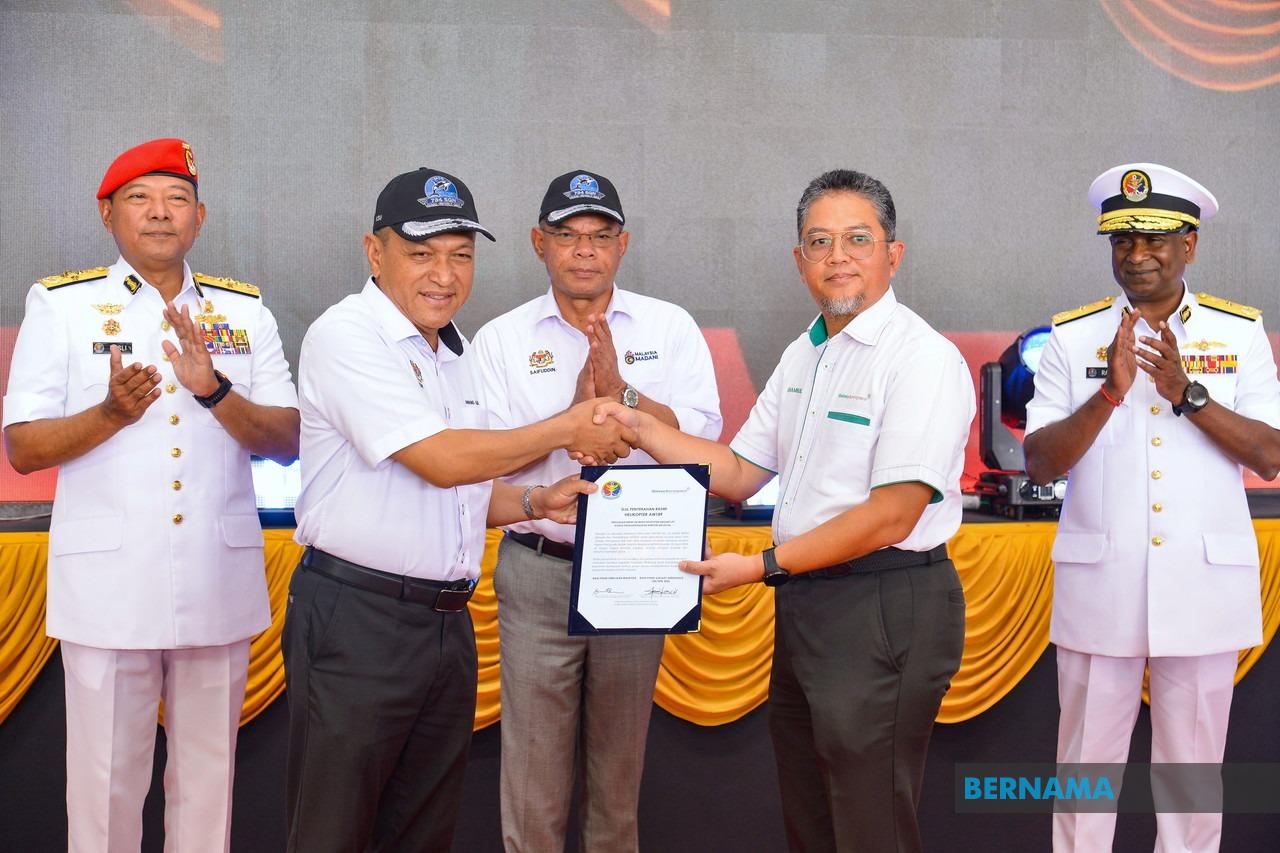
Home Minister Datuk Seri Saifuddin Nasution Ismail has signalled that two major policy areas—the Security Offences (Special Measures) Act 2012 (SOSMA) and the management of refugees—warrant thorough examination to keep them aligned with evolving security threats and humanitarian realities. Speaking after chairing discussions on both matters, Saifuddin stressed that policymaking cannot rely on narrow interpretations or outdated assumptions, but must weigh competing interests in the context of what Malaysia currently faces on the ground.
The Security Offences (Special Measures) Act, introduced over a decade ago to replace the now-repealed Internal Security Act 1960, has become increasingly contentious. Various civil society groups, opposition parties, and international observers have questioned whether its provisions strike the right balance between effective counterterrorism and the protection of fundamental rights. The legislation grants enforcement agencies enhanced powers of arrest, detention, and surveillance—tools that supporters argue are essential for combating terrorism and extremism, yet critics contend can be misused against legitimate dissent and vulnerable populations.
Saifuddin's comments reflect growing recognition within government circles that SOSMA's framework requires recalibration. Since its inception, the law has been invoked in numerous cases, some involving high-profile detentions that attracted international attention and sparked debate about due process safeguards. The minister's call for "in-depth scrutiny" suggests the government is at least willing to entertain the possibility that current implementation may not fully address modern security challenges while simultaneously protecting civil liberties—a tension that legal experts and human rights advocates have repeatedly highlighted.
The refugee question, meanwhile, has become increasingly complex for Malaysia, a non-signatory to the 1951 Refugee Convention. The country hosts approximately 180,000 registered refugees and asylum seekers, with the Myanmar humanitarian crisis having driven a significant portion of this population since 2021. Unlike many developed nations, Malaysia lacks a formal legal framework for recognizing or protecting refugees, instead managing them through ad-hoc policies coordinated with the United Nations High Commissioner for Refugees. This arrangement creates operational and humanitarian challenges that periodically dominate public discourse.
Public concerns about refugee populations centre on three interconnected issues: national security risks from potential infiltration by extremist elements or criminal networks, the strain on public services and infrastructure in communities hosting large refugee concentrations, and Malaysia's capacity to sustain humanitarian responsibilities without compromising citizen welfare. Recent months have seen heightened tension following security incidents and media coverage of refugee-related crimes, prompting calls from political figures for stricter controls and even deportations. Saifuddin's emphasis on examining refugee policy "from multiple angles" appears to acknowledge that purely restrictive approaches may be neither feasible nor defensible on humanitarian grounds.
The Myanmar context adds particular urgency to this policy conversation. Since the military coup in February 2021, tens of thousands of Rohingya, Chin, Karen, and other persecuted groups have sought refuge across South and Southeast Asia. Malaysia, given its geographic proximity and existing refugee population from earlier waves of Rohingya displacement, has absorbed a disproportionate share. The international community has urged ASEAN members, including Malaysia, to maintain some humanitarian posture even as individual governments worry about security vetting, resource allocation, and public acceptance.
Saifuddin's invitation to dialogue reflects an approach that acknowledges complexity where simpler political messaging might favour a hardline stance. By framing both SOSMA and refugee policy as requiring "in-depth scrutiny" rooted in "recent developments, challenges on the ground and possible approaches for the future," the Home Minister appears to be signalling that ad-hoc management and legacy frameworks no longer suffice. This positioning is significant in a Malaysian political context where security concerns often override other considerations, and where humanitarian impulses frequently compete with nationalist sentiment.
For Malaysian policymakers, the challenge lies in crafting security legislation that remains effective against genuine terrorist threats—a category that has evolved substantially since 2012—without inadvertently creating chilling effects on legitimate activism, journalism, and civic participation. The Myanmar crisis and broader regional instability mean that refugee management is unlikely to recede as a policy priority. The question is whether Malaysia will develop coherent, transparent criteria for refugee intake and protection, or continue operating through opaque case-by-case decisions vulnerable to political pressure and changing circumstances.
The timing of Saifuddin's remarks is noteworthy. Malaysia approaches the final stretch of the current parliamentary term with increasing focus on security and stability narratives. A candid review of SOSMA could signal confidence in institutional safeguards and receptiveness to constructive critique. Similarly, articulating a more systematic refugee policy might bolster Malaysia's standing in regional and international forums while addressing legitimate citizen concerns through transparent mechanisms rather than exclusionary rhetoric. However, translating these discussions into concrete legislative or administrative changes will require political will that extends beyond Home Ministry initiatives and depends on broader cabinet consensus and parliamentary appetite for potentially contentious reforms.

