South Africa has escalated its legal offensive against Israel by lodging a substantial filing with the International Court of Justice, accusing the Jewish state of systematically disregarding binding provisional measures issued by the court in a genocide case initiated by Pretoria nearly two years ago. The submission, made under Article 11 of the ICJ's internal procedural rules, represents a significant diplomatic move by the South African government to maintain pressure on Israel through international judicial channels even as the military conflict in Gaza continues to produce mounting civilian casualties.
The Department of International Relations and Cooperation in Cape Town emphasised that the provisional measures handed down by the ICJ carry the full force of international law and are not merely advisory in nature. According to the South African government's position, Israel has repeatedly violated these court-ordered directives, which were specifically designed to protect Palestinian populations from further harm pending the resolution of the substantive genocide case. This distinction matters significantly in international law, as provisional measures represent one of the court's most direct enforcement mechanisms, and their violation suggests either defiance or practical inability to comply on Israel's part.
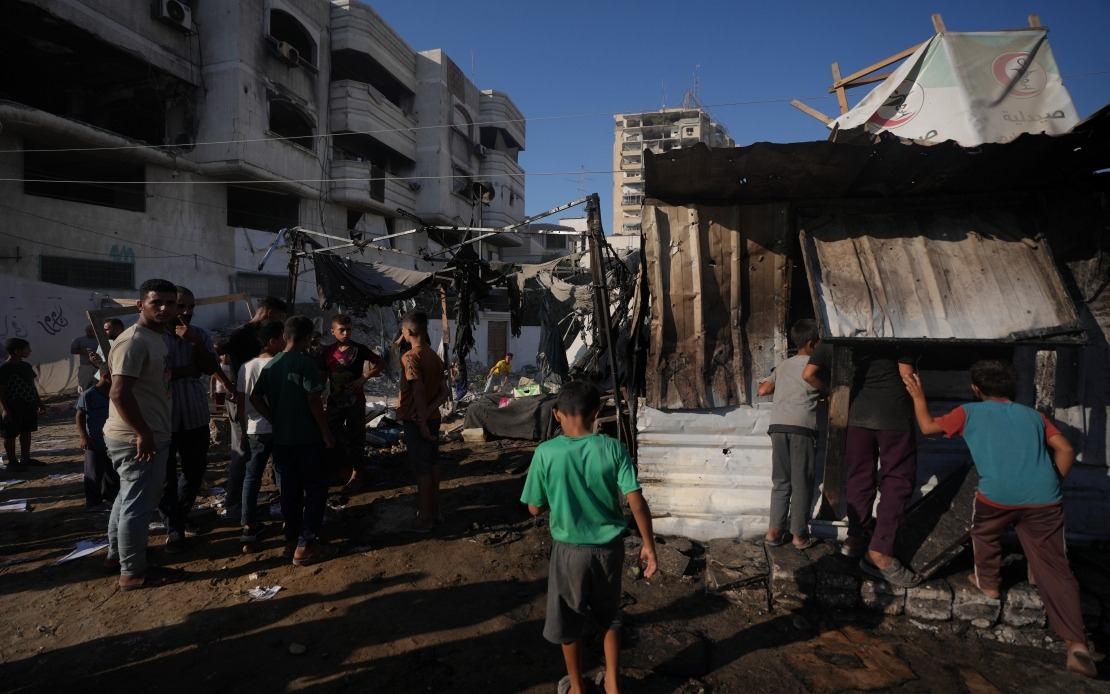
The filing comes amid an ongoing humanitarian crisis in the Gaza Strip, where South Africa argues that Palestinian survivors continue to endure compounding trauma while existing under severely constrained living conditions in territories that have grown progressively smaller through military operations. The South African government contends that the situation on the ground has deteriorated markedly, with civilian populations facing restricted movement, limited access to essential services, and ongoing security threats that contradict the protective intent of the ICJ's orders. This argument attempts to reframe the conflict not primarily as a military matter but as a legal and humanitarian question subject to international oversight.
According to South African sources citing ceasefire violations dating from October 10, 2025, Israeli military operations have resulted in the deaths of more than 1,300 Palestinians and injuries to over 4,330 others since that date alone. Additionally, rescue and recovery teams have retrieved hundreds of bodies from collapsed buildings, adding to the toll of civilian casualties. These figures, presented by South Africa to the ICJ, paint a picture of continued civilian suffering even within the framework of what the South African government characterises as violations of an existing ceasefire agreement.
The broader casualty picture for the Gaza conflict extends far beyond the post-ceasefire period cited in the recent filing. According to data from the Palestinian Health Ministry, the total death toll from the conflict dating back to October 7, 2023, reaches 73,438 Palestinians, with an additional 174,447 wounded. These cumulative statistics underscore the scale of the humanitarian emergency and provide the numerical foundation for South Africa's legal arguments before the ICJ regarding potential violations of the Genocide Convention.
South Africa's legal strategy demonstrates how smaller nations with historical experience of international law can leverage global judicial institutions to maintain pressure on more powerful states. By repeatedly filing compliance complaints and keeping the issue before the court, South Africa keeps the spotlight on Israel's alleged violations while also signalling to other nations that the international legal framework remains a viable avenue for addressing armed conflict. For Southeast Asian countries like Malaysia and others within the Non-Aligned Movement, this approach offers a template for advocating for Palestinian rights through institutional channels when direct diplomatic leverage proves limited.
The original genocide case itself dates to December 29, 2023, when South Africa first presented its accusations to the ICJ, alleging that Israeli military operations in Gaza constitute violations of the 1948 Genocide Convention. The court subsequently issued three separate orders imposing provisional measures in January, March, and May of 2024, each iteration directing Israel to implement comprehensive safeguards preventing acts classified as genocidal under international law. These sequential orders suggest that the court took South Africa's allegations seriously enough to impose interim protections, yet their alleged violation raises questions about enforcement mechanisms in the international legal system.
The provisional measures orders themselves reflect the ICJ's assessment that irreparable harm to Palestinian rights under the Genocide Convention could occur before the court reaches a final judgment on the merits of the case. This legal formulation essentially means the court agreed with South Africa's argument that urgent protective action was necessary to prevent damage that could not be remedied even if South Africa ultimately wins the case. The alleged non-compliance thus strikes at the heart of the provisional measures' purpose—to preserve the legal rights at stake until final judgment can be rendered.
For regional observers in Southeast Asia, the South African filing underscores the growing role of international courts as forums for states to pursue disputes when traditional diplomacy or regional mechanisms prove insufficient. Malaysia and other ASEAN members have periodically supported Palestinian causes through various international bodies, and the South African example demonstrates how persistent legal action can maintain international attention on conflicts even when military operations dominate headlines. The case also illustrates tensions between national military imperatives and international legal obligations that increasingly characterise modern armed conflicts.
South Africa has committed to pursuing all available remedies to secure Israel's compliance with the ICJ rulings, signalling that additional filings and interventions may follow if violations continue. This sustained legal pressure, while unlikely to immediately alter military operations in Gaza, contributes to a broader international legal record that could have implications for future accountability mechanisms or negotiations. The filing also reflects the frustration of nations that view the international legal system as the appropriate forum for addressing allegations of mass atrocities when other diplomatic channels yield limited results.
The case highlights an enduring challenge in international law: the gap between judicial orders and their enforcement, particularly when powerful nations resist compliance. Even as South Africa pursues this legal avenue, questions remain about what mechanisms exist to compel adherence to ICJ rulings beyond international opprobrium and potential long-term consequences for diplomatic standing. For smaller and medium-sized countries in Southeast Asia concerned with maintaining a rules-based international order, the outcome of South Africa's effort to secure compliance carries significance that extends well beyond the immediate Israeli-Palestinian conflict.

