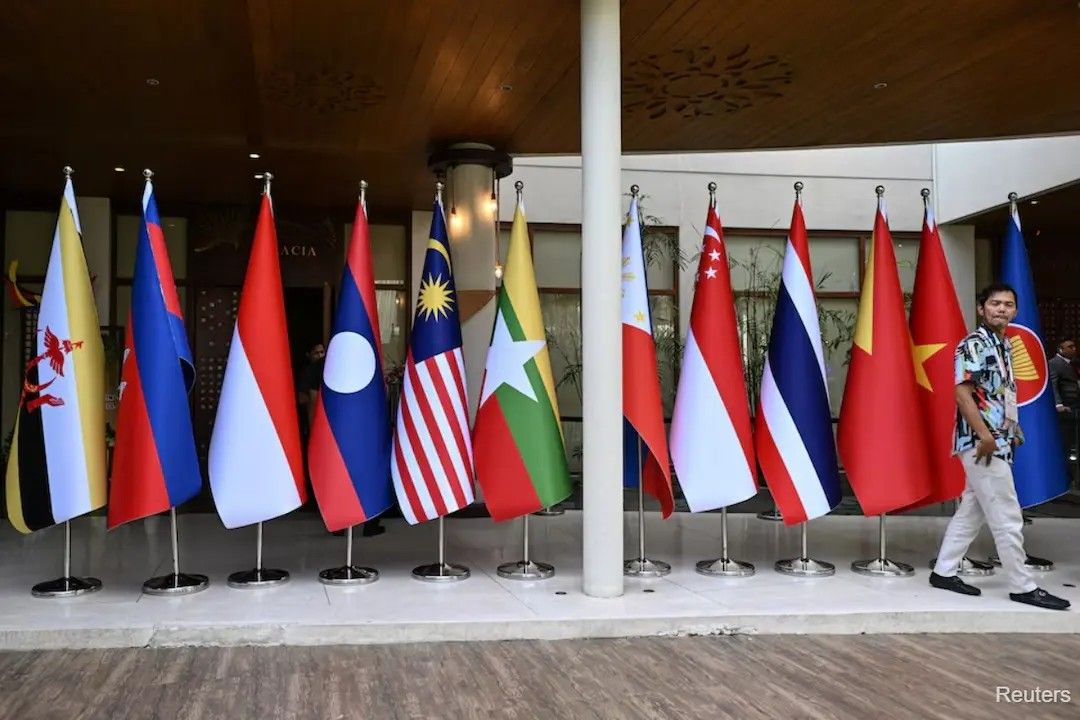
A confrontation between Chinese and Philippine naval forces in the South China Sea has injected fresh volatility into high-level Southeast Asian diplomacy, threatening to overshadow substantive negotiations at this week's ASEAN ministerial gathering in Manila. The timing of the clash at Second Thomas Shoal, occurring just as US Secretary of State Marco Rubio arrived in the Philippines on Tuesday, underscores how friction over the contested waterway continues to complicate broader regional stability efforts. While the specific details remain contested—Manila accusing Chinese Coast Guard personnel of assaulting Filipino sailors near a beached vessel used as a garrison, whilst Beijing counters that Philippines personnel in rubber boats initiated the provocation—the incident marks the most serious seaborne encounter in months and signals deteriorating restraint in what has long been a tinderbox of competing territorial claims.
Rubio's presence at the ASEAN meeting signals Washington's determination to reinforce its strategic engagement with Southeast Asia amid intensifying great power competition. In a published opinion piece circulated Tuesday morning, the Secretary of State articulated the Biden administration's core security message: that freedom of navigation in Southeast Asian waters cannot be taken for granted, and that allowing any single power to monopolise control over this vital global trade corridor would fundamentally reshape regional geopolitics. His reference to using trade as a geopolitical weapon clearly targeted Beijing, whose expansive maritime claims and increasingly assertive actions have alarmed Southeast Asian capitals already worried about economic coercion. The statement reflected Washington's calculation that explicit strategic reassurance, delivered at a moment of heightened tensions, remains necessary to maintain ASEAN confidence in American security commitments.
China's position in the South China Sea rests on sweeping historical claims that contradict established international law. Beijing maintains sovereignty over nearly the entire waterway through the controversial "nine-dash line" demarcation, notwithstanding the 2016 international arbitration ruling that found these claims lack legal foundation under the United Nations Convention on the Law of the Sea. The volume of global trade passing through these waters—estimated at trillions of dollars annually—makes Beijing's assertiveness economically and strategically significant far beyond the region. Southeast Asian nations, many dependent on unimpeded passage for their own export-oriented economies, find themselves in an awkward position: unable to directly challenge Chinese military capabilities, yet increasingly concerned about the trajectory of Beijing's behaviour if left unchecked.
Rubio's openness to a sideline meeting with China's top diplomat Wang Yi, expressed before departing Washington, hints at Washington's simultaneous desire to maintain communication channels even as it condemns specific Chinese actions. This diplomatic duality reflects the uncomfortable reality facing the United States in Southeast Asia: it must appear resolute in defending regional rules and supporting allies, whilst avoiding escalation that could spiral into uncontrolled conflict. The presence of both the American and Chinese foreign ministers in Manila creates an opportunity for high-level engagement, though the recent clash suggests that diplomatic niceties may struggle against operational tensions on the water.
The stalled Code of Conduct negotiations between ASEAN and China illustrate the limits of diplomatic progress when strategic trust has eroded. This long-pursued framework, intended to establish rules governing behaviour in contested waters, has remained frustratingly elusive despite years of discussions. Analysts have repeatedly warned that even if finalised, the resulting document would likely lack enforcement mechanisms and binding commitments—essentially a set of aspirational principles rather than substantive restraint. Recent escalations make the prospect of meaningful progress even dimmer, as each incident hardens positions and reduces space for compromise.
Beyond maritime disputes, the Myanmar question continues to fracture ASEAN consensus and reflect deeper divisions within the bloc about how to respond to democratic backsliding by member states. Since the military junta seized power in February 2021, Myanmar has existed in a peculiar limbo within ASEAN: technically a member, yet effectively excluded from high-level gatherings and decision-making. This May's emotional summit in Cebu, where Philippine President Ferdinand Marcos called for "fine-tuning" the bloc's five-point peace plan, revealed the depth of frustration with stasis. Thailand, burdened by hosting millions of Myanmar refugees and sharing a porous border with the conflict zone, has emerged as the strongest advocate for Myanmar's full reintegration, arguing that engagement offers better prospects than continued isolation.
Thai Foreign Minister Sihasak Phuangketkeow recently suggested that Myanmar's junta leader Min Aung Hlaing might visit Thailand in August, signalling Bangkok's willingness to normalise high-level contact. Sihasak's public framing—"It's best to bring Myanmar back into the fold"—reflects Thailand's pragmatic calculation that five years of exclusion has achieved little except deepening Myanmar's international isolation and forcing the country closer to China. From Bangkok's perspective, dialogue and sustained engagement, despite Myanmar's appalling human rights record, represent the only viable path toward eventual political resolution. This rationale carries weight in Bangkok's strategic calculus, yet it directly collides with principled positions articulated by other member states.
Malaysia's Foreign Minister Mohamad Hasan articulated a competing perspective in May, declaring his country's opposition to high-level engagement whilst "oppression is still taking place" in Myanmar. This position reflects a fundamentally different view of ASEAN's role: rather than pragmatic fence-mending, Malaysia insists on standards-based diplomacy that conditions normalisation on genuine human rights improvements and movement toward democratic restoration. The tension between Bangkok's engagement strategy and Kuala Lumpur's principled stance reveals a deeper fracture within ASEAN about its core identity and values, pitting regional unity against individual members' commitment to democracy and human rights.
The Philippines' energy crisis adds another layer of complexity to this week's discussions, forcing Manila into uncomfortable partnerships and highlighting Southeast Asian vulnerability to external shocks. After declaring a national energy emergency in March, the Philippines has been forced to diversify fuel sources far beyond its traditional suppliers, including controversial purchases from Russia. This desperation underscores how energy security has become inextricably linked with geopolitical alignment in Southeast Asia. The week's agenda accordingly includes renewed emphasis on regional energy cooperation, particularly around ratification of ASEAN's Framework Agreement on Petroleum Security, which would establish a collective fuel-sharing mechanism during supply disruptions.
Russian Foreign Minister Sergei Lavrov's scheduled arrival in Manila on Tuesday adds another geopolitical dimension to proceedings, reflecting Moscow's interest in deepening ties with Southeast Asia as Western sanctions squeeze its economy. For Manila, engaging Lavrov while simultaneously hosting American and Chinese diplomats exemplifies the delicate balancing act Southeast Asian nations perform in the current strategic environment. Each power seeks to deepen its influence, yet the region's smaller states cannot afford to alienate any major player without incurring strategic costs.
The convergence of these multiple crises—South China Sea tensions, Myanmar's unresolved status, energy insecurity, and great power competition—at a single diplomatic gathering illuminates the unprecedented complexity of Southeast Asian statecraft. ASEAN's traditional consensual decision-making model, premised on avoiding explicit confrontation, appears increasingly strained when member states hold divergent views about fundamental questions of democracy, human rights, and strategic alignment. The organisation's effectiveness depends on its ability to manage these tensions without fracturing, a challenge that grows more acute as external powers intensify their courtship of individual members.
This week's Manila meeting will test whether ASEAN can achieve meaningful progress on any substantive issue, or whether competing interests and unresolved tensions will force the bloc toward lowest-common-denominator outcomes that satisfy none. For Malaysia and other Southeast Asian observers, the trajectory of these negotiations signals whether ASEAN retains agency in shaping its own strategic destiny, or whether the region will increasingly become a contested space where external powers pursue interests with minimal regard for collective preferences. The answers emerging from Manila will reverberate across Southeast Asia's strategic calculus for months to come.

