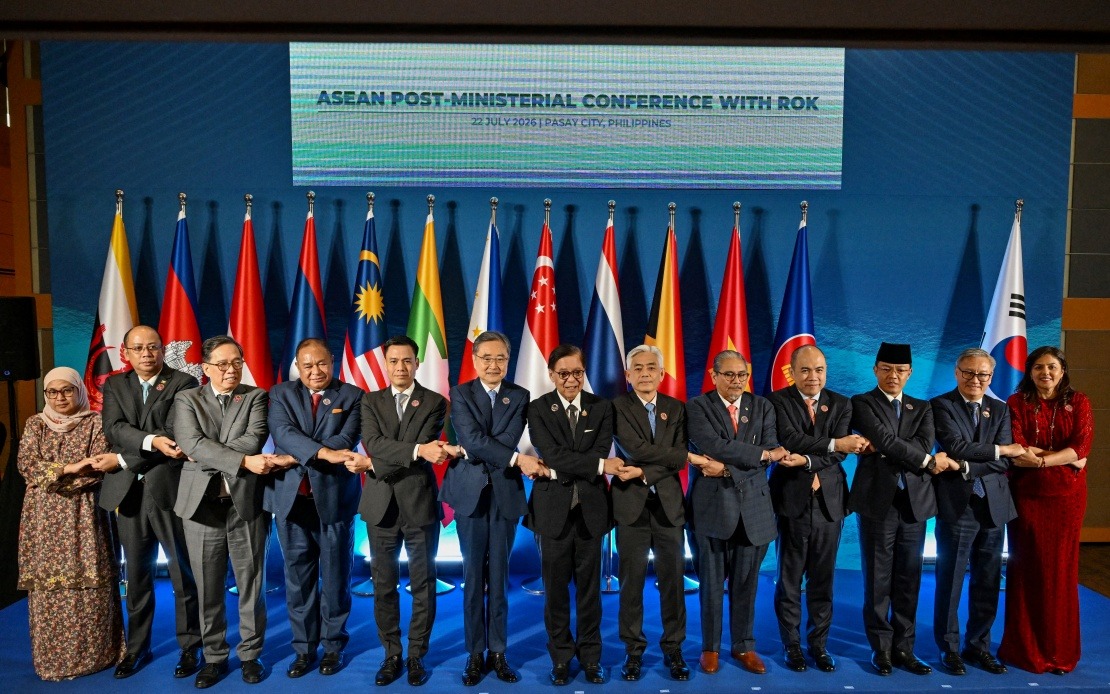
South Korea and the Association of Southeast Asian Nations have signalled their intent to substantially deepen bilateral engagement through a series of coordinated initiatives unveiled this week in Manila. The announcements represent a deliberate effort to anchor cooperation across emerging technological domains and creative sectors, reflecting how both parties view their relationship as pivotal to managing regional transformation. The measures come at a moment when geopolitical and economic currents are reshaping the strategic landscape across East and Southeast Asia, compelling established partners to demonstrate renewed commitment and forward momentum.
Foreign Minister Cho Hyun and his Thai counterpart presided jointly over the Korea-ASEAN foreign ministers' gathering held on the margins of broader ASEAN-related talks in the Philippine capital. Beyond ceremonial reaffirmation, the session produced substantive proposals designed to translate the Comprehensive Strategic Partnership vision—first articulated by South Korean President Lee Jae Myung at last year's Korea-ASEAN summit—into tangible institutional frameworks and collaborative mechanisms. The three conceptual pillars underpinning this vision encompass people-centred cooperation, growth and innovation, and peace and stability, each addressing distinct but interconnected dimensions of bilateral and multilateral prosperity.
Among the concrete outputs from the meeting stands Seoul's introduction of the "Korea-ASEAN AI Partnership Initiative," a structured programme targeting the development of artificial intelligence ecosystems across the region. The initiative extends beyond mere technological transfer or rhetorical commitment; it explicitly encompasses research collaboration, talent development pathways, and frameworks for ensuring safe and ethical deployment of AI technologies. South Korea's positioning of itself as possessing "full-stack AI capabilities" reflects its confidence in leveraging homegrown expertise—spanning hardware, software, and applications—to benefit neighbouring economies still navigating their own AI adoption trajectories. For Malaysian policymakers and enterprises, this partnership offers access to South Korean methodologies and specialists as domestic AI ambitions accelerate.
Parallel to the AI strand, Seoul introduced fresh cultural and creative industry initiatives that acknowledge ASEAN's emerging prominence as a source of content, talent, and consumer markets in these domains. The Korean entertainment and digital creative sectors have already secured substantial footholds across Southeast Asia, but this formal partnership channel suggests both strategic intent to consolidate that presence and recognition that ASEAN nations possess distinctive cultural assets warranting reciprocal investment and promotion. Such cooperation could facilitate co-production arrangements, skills training, and cross-regional marketing ventures that benefit creative professionals in Malaysia and peer economies.
Additional partnership elements unveiled during the meeting included mechanisms to combat online scam operations and the establishment of a joint maritime safety academy. These initiatives respond to genuine security and operational challenges facing the region, from transnational cybercrime networks exploiting digital connectivity to maritime safety imperatives in one of the world's busiest shipping corridors. The maritime academy component is particularly significant for Malaysia given the country's extensive coastlines, substantial shipping traffic, and historical piracy concerns. Structured cooperation in this realm could yield improved incident response, standardised training protocols, and enhanced information-sharing among participating navies and coast guards.
Economic cooperation remains central to the bilateral partnership calculus, with both sides emphasising the need to strengthen existing trade frameworks. South Korea and ASEAN executed an initial free trade agreement targeting goods in 2006, subsequently expanding into services and investment pacts in 2007 and 2009 respectively. Last month, the two parties initiated formal negotiations to upgrade and modernise this foundational agreement, with particular attention to emerging sectors including the digital economy and critical minerals supply chains. These negotiations carry implications well beyond Seoul and Southeast Asian capitals; they reflect broader restructuring of supply chains in response to geopolitical tension and technological competition, challenges that Malaysia's manufacturing and resource sectors must navigate strategically.
The scale of existing economic interdependence underscores why both parties view partnership enhancement as mutually beneficial. South Korea exported approximately US$122.5 billion in goods to ASEAN member states during 2025, positioning the grouping as Seoul's third-largest trading partner globally. This substantial flow of technology, capital goods, and consumer products reflects deeply integrated value chains and manufacturing networks. Enhanced cooperation mechanisms and trade agreement modernisation offer opportunities to reduce friction in these relationships, address non-tariff barriers, and create new avenues for commerce in sectors where both regions possess competitive advantages.
During the ministerial session, Cho additionally solicited ASEAN backing for South Korea's diplomatic approach toward North Korea, emphasising Seoul's pursuit of peaceful coexistence and shared development trajectories. ASEAN member states responded positively, reaffirming their conviction that stability on the Korean Peninsula remains essential to broader regional equilibrium. This alignment on the Korean question illustrates how Southeast Asian nations, while maintaining official non-aligned postures, recognise that peninsular stability serves their security interests. Malaysia and fellow ASEAN members have consistently avoided taking sides in Korean affairs while supporting peace initiatives, and this reiteration of support reflects their pragmatic approach to managing great power competition in East Asia.
Foreign Minister Cho conducted supplementary bilateral discussions with counterparts from the Philippines and Thailand, underscoring that the broader Korea-ASEAN agenda encompasses differentiated relationships tailored to specific national interests and capabilities. Thailand's co-chairmanship of the formal ministerial session reflects its diplomatic standing within ASEAN and its role as an active participant in regional mechanisms. The Philippines, as a major economy and regular host of ASEAN meetings, serves as an important interlocutor for Seoul's regional ambitions. Such bilateral depth complements the multilateral framework, enabling customised arrangements that acknowledge distinct circumstances while advancing overarching partnership objectives.
The initiatives collectively signal that South Korea views ASEAN not as a static collection of developing markets but as a dynamic regional complex offering opportunities in innovation, cultural exchange, and strategic cooperation. For Malaysian observers, the announcements suggest Seoul's serious commitment to Southeast Asian engagement at a moment when regional countries seek to diversify partnerships and secure technology transfer in priority domains. The emphasis on AI, cultural industries, maritime safety, and trade modernisation aligns substantially with Malaysia's own strategic priorities, creating meaningful avenues for cooperation that extend beyond traditional economic ties into emerging domains where technological and creative capabilities increasingly determine competitive position.
Looking forward, successful implementation of these initiatives will depend on sustained political commitment, adequate institutional resourcing, and capacity-building efforts tailored to ASEAN member states' varying levels of technological development and institutional sophistication. Seoul's demonstrated willingness to invest in frameworks addressing contemporary security challenges and emerging opportunities suggests serious intent rather than rhetorical posturing. For Malaysia and fellow ASEAN members, engaging substantively with these initiatives offers concrete pathways to technological advancement, talent development, and economic diversification while reinforcing regional stability through expanded cooperation with a significant Asian partner navigating its own complex strategic environment.

