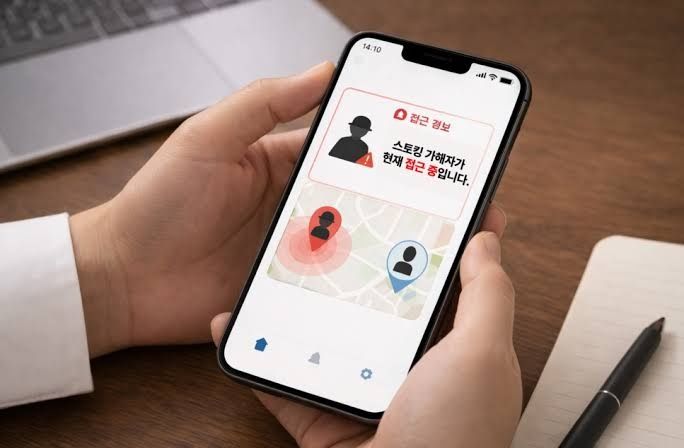
South Korea took a significant step toward strengthening victim protection on June 24 by rolling out a new smartphone-based alert system that grants stalking victims direct access to real-time location data of suspected stalkers. Administered by the Ministry of Justice through a dedicated mobile application, the system represents an escalation in technological intervention aimed at closing critical gaps in the nation's approach to addressing the growing threat of stalking and harassment crimes.
The application functions by displaying the current whereabouts and directional movement of individuals ordered to wear electronic ankle monitors in stalking cases deemed high-risk by the courts. This direct visibility represents a notable departure from South Korea's previous reliance on reactive alert systems, which primarily notified victims only when suspects breached designated exclusion zones. The shift reflects mounting pressure from civil society and victim advocacy groups who have raised serious questions about whether existing protections adequately safeguard those at immediate risk.
The impetus for this technological overhaul stems partly from troubling statistics highlighting the limitations of current measures. Between 2021 and August 2025, at least 23 victims were killed or became targets in attempted murder cases despite already having been issued smartwatch-style emergency alert devices, according to Representative Lee Gwang-hee of the ruling Democratic Party of Korea. These figures underscore a persistent vulnerability in South Korea's victim protection framework and indicate that notification-based systems alone have proven insufficient against determined perpetrators.
Electronic monitoring itself is a relatively recent addition to South Korea's legal arsenal against stalking. Beginning in 2024, courts began ordering ankle monitors in specific high-risk stalking cases, complementing the smartwatch alert devices that victims had previously relied upon for years. However, the introduction of monitoring technology alone did not resolve the fundamental asymmetry between victims' knowledge and suspects' movements, prompting officials to develop systems that would shift informational power directly to those at risk.
The expansion of real-time tracking access raises important questions about the balance between victim safety and suspects' privacy rights, a tension that prompted the Justice Ministry to formally revise regulations governing electronic monitoring in December 2025. These regulatory adjustments were designed to establish clear boundaries around how location data may be collected, stored, and accessed, addressing legitimate concerns that the system could enable abuse or create new vectors for harassment if data safeguards prove inadequate. The ministry's decision to clarify privacy protocols before broad implementation suggests officials recognised the need for careful calibration between protective innovation and civil liberties.
For Malaysian and Southeast Asian observers, South Korea's experience offers instructive lessons about the evolving nature of stalking and harassment in urban societies with high smartphone penetration rates. The problem has become sufficiently entrenched in South Korea that policymakers now regard technological solutions as necessary complements to traditional law enforcement responses. This evolution mirrors broader trends across developed Asian economies, where digital connectivity has both expanded victims' access to support systems and created new avenues through which perpetrators can pursue harassment across physical and virtual domains.
Beyond the immediate alert system, South Korea's Justice Ministry announced plans to introduce a further reform scheduled for April 2027 that would fundamentally alter the legal process for victim protection. Under the new framework, stalking victims will be empowered to petition courts directly for restraining orders, eliminating the requirement that law enforcement agencies serve as mandatory intermediaries in filing such requests. This procedural change addresses another structural vulnerability identified during incidents where victims felt law enforcement response was inadequate or delayed, allowing them to pursue civil remedies independently.
The direct petition mechanism carries significant implications for how victims engage with the justice system. By removing a bureaucratic intermediary, the revised approach recognises that victims often possess the most accurate understanding of the threats they face and the urgency of their circumstances. This shift aligns with international best practices in victim-centred justice, where procedures are designed to maximise victims' agency rather than confining them to passive roles awaiting institutional action.
Implementing these measures across South Korea's police and court infrastructure will require substantial resource allocation and staff training. Officials must ensure that application developers incorporate sufficient security measures to prevent unauthorised access to tracking data, while simultaneously maintaining system responsiveness so that victims can monitor suspects with minimal latency. The April 2027 implementation timeline for the direct petition system suggests officials are taking deliberate steps to coordinate technological and procedural reforms rather than rushing implementation.
The broader strategic approach reflects recognition within South Korean policymaking circles that stalking constitutes a serious threat requiring multi-layered intervention. Rather than relying on any single mechanism, the government has assembled a toolkit combining electronic monitoring, real-time tracking access, emergency alerts, direct court petition rights, and regulatory oversight of data handling. This comprehensive strategy acknowledges that different victims and different threat scenarios may require different combinations of protective tools.
As these systems mature and data on their effectiveness accumulates, neighbouring countries will likely monitor South Korea's progress closely. The approach could inform policy discussions across Southeast Asia, where rapid urbanisation and digital adoption are creating similar environments where stalking has become increasingly prevalent. Whether the system reduces victimisation rates and deters perpetrators will ultimately determine whether other jurisdictions adopt comparable models.

