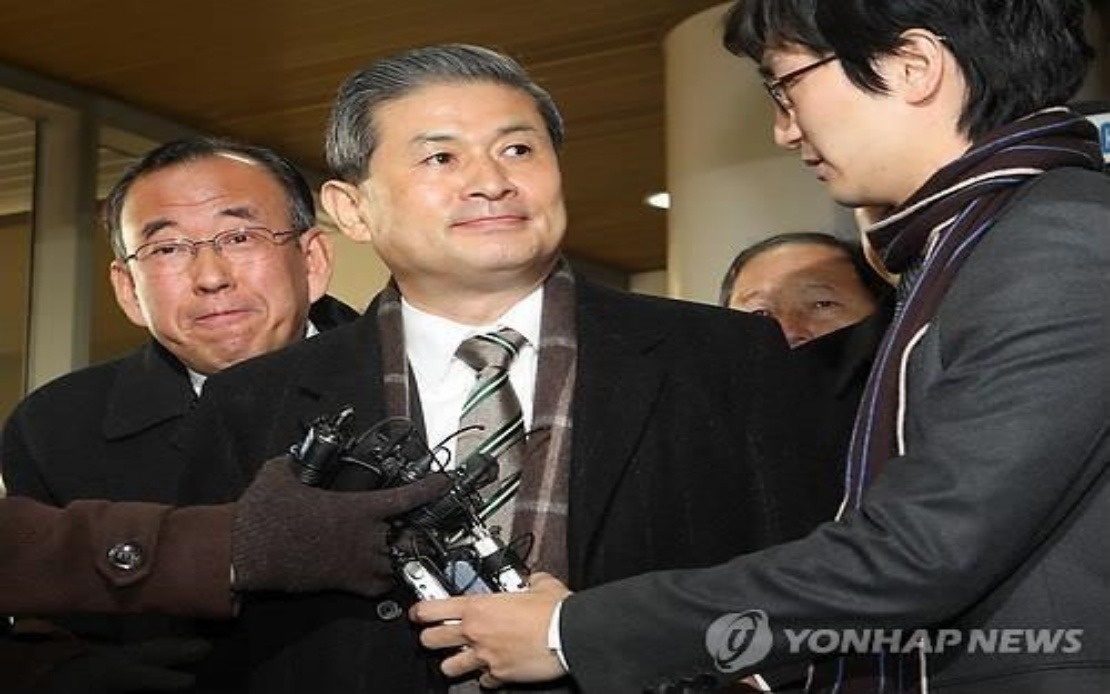
South Korea has completed the formal revocation of its highest science and technology honour from Hwang Woo-suk, the former Seoul National University professor whose 2004 award-winning stem cell research proved to be entirely fabricated. The interior ministry announced the decision this week following presidential approval, marking the culmination of a lengthy process to strip the disgraced scientist of recognition that had stood for more than two decades.
The Top Science and Technology Award represents one of South Korea's most prestigious honours in the fields of science and technology, typically bestowed upon individuals and researchers whose work has materially advanced the nation's scientific capabilities and technological standing. When Hwang received the accolade in 2004 along with a monetary prize of 300 million won—equivalent to approximately US$201,200—the scientific community and government celebrated what appeared to be a landmark achievement in human embryonic stem cell research, positioning South Korea as a global leader in cutting-edge biotechnology.
However, the triumph quickly unraveled. In 2005, just one year after receiving the award, the international scientific community discovered that Hwang had fabricated the data underpinning his most celebrated research claims. The paper asserting that he had successfully created the world's first cloned human embryo was revealed to be based on forged evidence, triggering a dramatic reversal in his fortunes and reputation. The scandal reverberated throughout South Korea's scientific establishment and dealt a significant blow to the nation's credibility in the global research community.
Following the exposure of the fraud, Hwang was dismissed from Seoul National University in 2006, effectively ending his academic career and signaling the institution's decisive action against scientific misconduct. Despite this decisive career-ending response, the formal process of removing his prestigious award languished for years, a situation that reflected both administrative complexity and, perhaps, a reluctance to revisit the embarrassing chapter in South Korea's scientific history.
The science ministry had submitted a formal request to the interior ministry in March requesting revocation of the award, setting in motion the bureaucratic machinery needed to undo the 2004 recognition. This represented the second attempt to strip Hwang of the honour, as the government had previously undertaken a revocation process in 2020. However, that initial effort foundered when a court determined that the revocation had proceeded with procedural irregularities, making the legal action invalid and necessitating a fresh effort to complete the task properly.
On Tuesday of this week, the interior ministry formally sought presidential approval for the revocation, and approval was granted the same day—a relatively swift conclusion after months of administrative preparation. The expedited final approval underscores the government's commitment to completing this overdue correction and avoiding any further legal challenges that might again invalidate the decision on technical grounds.
For Malaysia and other Southeast Asian nations with developing biomedical research sectors, the Hwang case remains a cautionary tale about the risks of prioritizing spectacular breakthroughs over rigorous scientific integrity. The incident prompted widespread reflection across Asian research institutions about the institutional pressures and competitive dynamics that can incentivize researchers to cut corners or, in extreme cases, commit outright fraud. Many countries in the region subsequently strengthened their oversight mechanisms and ethical review processes for high-profile research projects.
The delayed nature of the award revocation also highlights challenges inherent in punishing scientific misconduct at the highest levels, particularly when the wrongdoer held substantial prestige and institutional support. The fact that it required nearly two decades and a second legal attempt underscores how even egregious cases of fraud can become entangled in administrative and judicial complexities. This pattern is not unique to South Korea; research institutions across Asia have grappled with similar difficulties in managing the fall-out from high-profile cases of scientific dishonesty.
Hwang's case has fundamentally reshaped how South Korea's scientific community approaches accountability and verification, contributing to a broader global conversation about reproducibility and transparency in stem cell research specifically. The episode coincided with increased international efforts to establish standardized protocols for validating controversial research claims, particularly in fields like cloning and embryonic stem cells where the scientific and ethical stakes are particularly high.
The revocation serves as a formal acknowledgment that the 2004 award was granted under false pretenses and removes any lingering institutional legitimacy from Hwang's fraudulent work. Beyond the symbolic significance of canceling the honour itself, the decision reinforces the principle that scientific integrity cannot be compromised, regardless of how much time has elapsed or how prominent the scientist may have been at the moment of recognition. For researchers across Southeast Asia and beyond, the finalization of this revocation carries an implicit message about the long-term consequences of scientific fraud and the enduring commitment of governments and institutions to upholding research standards.

