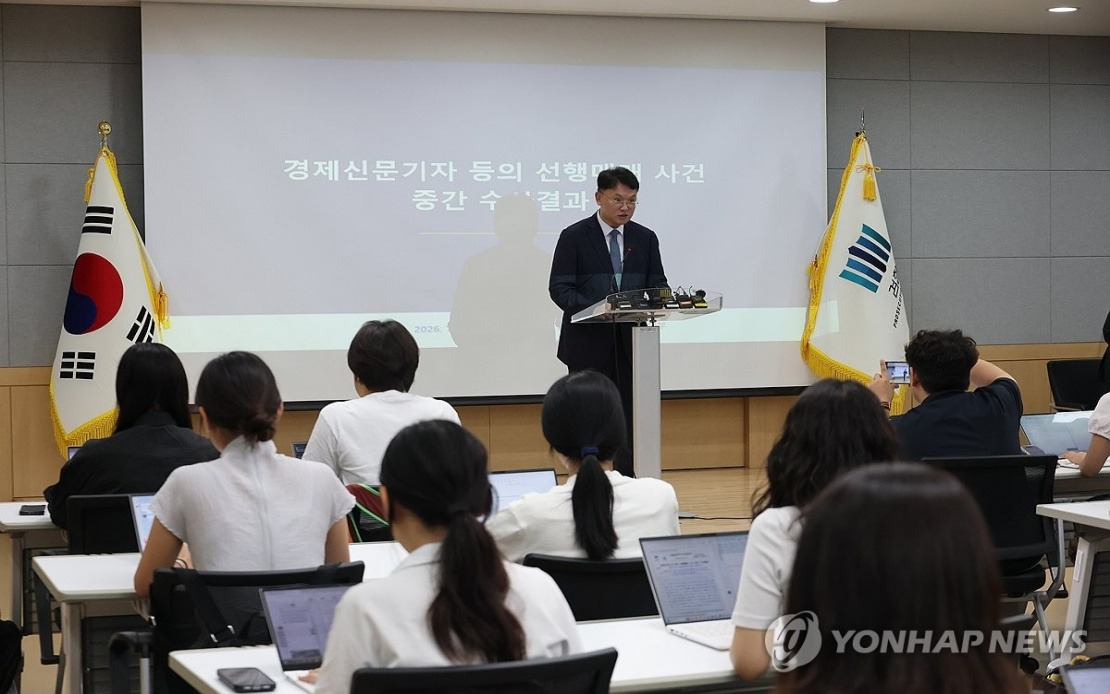
South Korea's prosecution service has brought formal charges against eight individuals, including six journalists employed by a business daily newspaper, for their alleged involvement in a sophisticated stock manipulation racket that authorities say generated illicit profits exceeding 9 billion won, equivalent to approximately US$6.19 million. The case, revealed on Wednesday by the Seoul-based prosecutors, represents a significant breach of financial market integrity and journalistic ethics in one of Asia's most active equity markets.
The scheme operated according to a straightforward but systematic formula: the conspirators would identify stocks trading on low volumes or exhibiting high volatility, then accumulate positions at depressed prices before orchestrating favourable media coverage to artificially inflate valuations. Once prices had risen sufficiently, they would exit their holdings at substantially elevated levels, realising their predetermined profits before the market corrected. This coordinated approach to market manipulation highlights how access to journalistic platforms can be weaponised to distort price discovery mechanisms that millions of retail and institutional investors depend upon for allocation decisions.
The investigation has split the indictment into two distinct criminal enterprises operating under similar modus operandi but at different times. The first group comprised five journalists, one accountant, and one investor who collectively orchestrated approximately 1,800 articles published between October 2020 and June 2023. This initial conspiracy generated combined illegal profits of 8.55 billion won across the group. The financial rewards were distributed unevenly among the participants, with the accountant and investor capturing the bulk of gains while journalists received standardised compensation of 300,000 won per article published—a modest payment that underscores how the reporters were enlisted as hired hands rather than principal architects of the scheme.
Among the five journalists involved in the first operation, three experienced dramatically different levels of financial benefit from their participation, suggesting varying degrees of involvement or duration in the conspiracy. One journalist accumulated approximately 150 million won in illegal proceeds, while another pocketed 160 million won through their participation. A third member of this cohort received substantially less, extracting only 28 million won, indicating either a shorter tenure within the scheme or fewer articles published under the arrangement. These figures suggest the operation ran with sufficient longevity and scale to generate meaningful income for participants, likely making the temptation to participate substantial for journalists facing competitive labour market pressures and stagnant wages in Korea's media sector.
A separate indictment targets an additional journalist who operated a parallel manipulation scheme during a more recent period spanning October 2022 through July 2024. This individual orchestrated roughly 340 articles to artificially support target stocks, generating approximately 740 million won in personal profits. Notably, prosecutors characterised this journalist's conduct as an abuse of institutional authority, suggesting he leveraged his position and editorial discretion in ways that exceeded normal journalistic decision-making. The distinction matters legally and ethically, as it implies deliberate misuse of professional privilege rather than merely compromised editorial judgement.
The mechanics of the scheme reveal vulnerabilities in how information asymmetries and media influence can distort efficient market functioning. By controlling narrative flow through favourable coverage timed to coincide with their equity positions, the conspirators exploited the well-documented phenomenon of stock price responsiveness to media sentiment. For investors accessing information through what they believed were independent editorial judgements, the manipulation represented a fundamental breach of trust. The scale—nearly 1,800 articles in the first conspiracy alone—suggests the operation achieved sufficient normalcy within editorial processes to avoid immediate detection, though this also amplifies questions about editorial oversight and compliance mechanisms at the publication involved.
Prosecutors have signalled an uncompromising stance toward such conduct, with officials stating they would respond severely to activities that destabilise stock market functionality. Beyond securing convictions, authorities have committed to systematic confiscation of all identified criminal proceeds, attempting to eliminate financial incentives and recover ill-gotten gains. This enforcement posture reflects broader concerns across developed and developing markets regarding the integrity of price discovery when market participants possess informational advantages they exploit through controlled communications channels.
The case carries implications extending well beyond South Korea's borders. Across Southeast Asia, where equity market development remains a priority for governments seeking to deepen capital markets and attract institutional investment, this incident illustrates reputational risks and practical vulnerabilities. Journalists in Malaysia, Singapore, Indonesia, and other regional markets operate under scrutiny regarding potential conflicts between financial reporting and advertising revenue, stock tip dissemination, and subtle editorial slants. Regulators in these jurisdictions will likely monitor the South Korean prosecution's progression and any enforcement outcomes to calibrate their own preventative approaches.
The indictments also expose structural questions about incentive alignment and professional accountability within media organisations. Business journalism exists in a perpetually uncomfortable position, dependent on advertiser relationships and subject access from companies whose activities they cover. When individual journalists perceive inadequate compensation or professional recognition, the temptation to monetise informational advantages increases. The involvement of multiple journalists from the same publication suggests either systemic failures in editorial supervision or endemic cultural acceptance of ethical compromises that management failed to address until prosecution commenced.
For markets across the region investing in regulatory infrastructure and institutional development, the case underscores why media participation in financial crime prevention frameworks deserves greater attention. Compliance departments and financial regulators typically focus on broker-dealers, fund managers, and corporate insiders when designing insider trading and market manipulation safeguards. Yet journalists operate simultaneously outside these regulated frameworks while wielding asymmetric information influence. Establishing clear ethical guidelines, implementing disclosure requirements, and creating effective whistleblower mechanisms for news organisations could complement existing regulatory architecture without infringing on editorial independence.
The prosecution's investigation commenced sometime before formal charges, suggesting South Korean authorities possessed sophisticated monitoring capabilities to detect price movements coordinating with article publication patterns. Such forensic approaches to market surveillance—cross-referencing trading data with news archives and byline analysis—represent best practices that regional regulators should consider adopting. The technical capacity to identify suspicious temporal clustering of stock price movements preceding favourable articles has become increasingly sophisticated as computing power enables rapid correlation analysis across massive datasets.
For Malaysian investors and market participants, the case serves as a cautionary reminder regarding information source credibility and the limitations of relying exclusively on media coverage for investment decision-making. Professional portfolio managers typically employ multi-layered verification processes and maintain healthy scepticism toward concentrated positive narratives about lower-volume securities. Retail investors lacking these resources remain more vulnerable to manufactured sentiment, making investor education initiatives and accessible market surveillance tools essential public policy priorities for the Securities Commission Malaysia and Bursa Malaysia.
As the South Korean prosecution pursues these cases, international cooperation frameworks and information-sharing protocols between regional stock exchanges and law enforcement may require strengthening. If similar schemes have operated across borders, exploiting cheaper labour for article production or targeting stocks listed on multiple regional exchanges, cross-border enforcement coordination becomes essential. The case demonstrates that market integrity ultimately depends on professional ethics operating across multiple constituencies simultaneously—a reminder that regulatory frameworks alone cannot substitute for principled conduct by those entrusted with information access and dissemination privileges.

