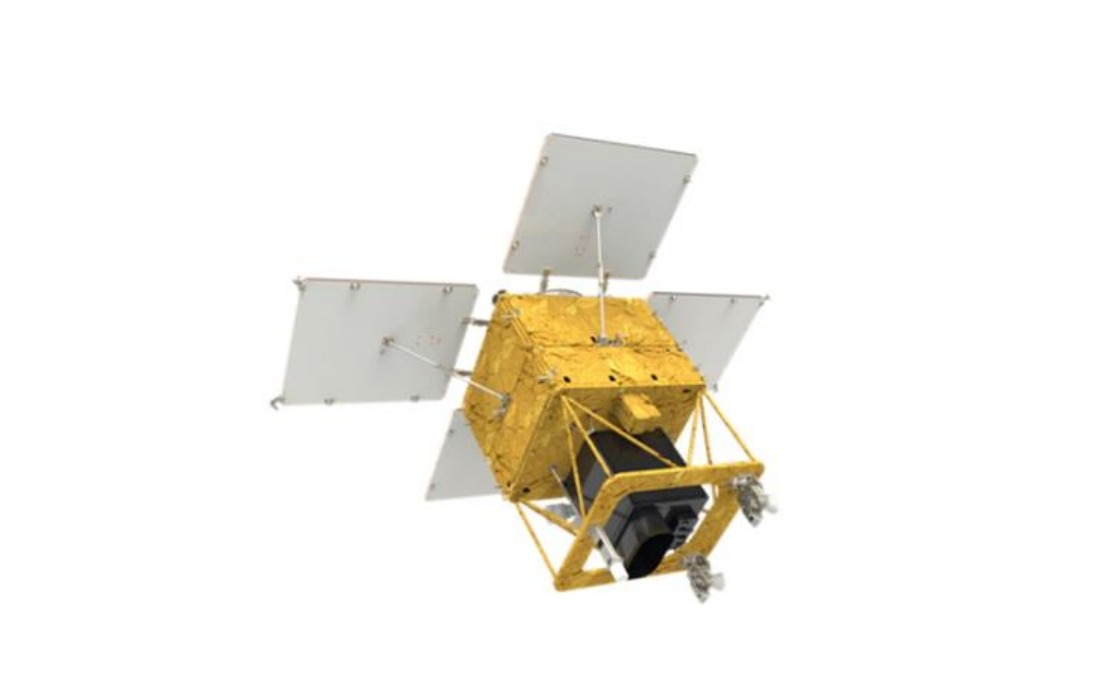
South Korea has successfully deployed its fourth next-generation medium-sized Earth observation satellite into orbit, reinforcing the country's expanding footprint in space technology and regional geospatial intelligence. The 500-kilogramme satellite lifted off aboard a SpaceX Falcon 9 rocket from Vandenberg Space Force Base in California on Tuesday at 4:10 pm Korea time, according to the Korea AeroSpace Administration (KASA). The launch represents a significant step forward in Seoul's long-term strategy to establish an autonomous space-based monitoring infrastructure independent of foreign imagery providers—a capability increasingly vital in an era of regional tensions and climate uncertainty.
The satellite's deployment marks South Korea's commitment to developing homegrown aerospace capabilities. Rather than relying entirely on commercial satellite imagery or international partnerships, the nation has invested heavily in its own constellation of observation platforms. The completed functional inspections and fuel injection procedures conducted over the preceding month ensured the satellite was operationally ready for its journey into the heavens. Within approximately two hours and twenty-two minutes of launch, the satellite was scheduled to separate from the rocket's upper stage and establish its first communication link with ground controllers via the Svalbard station in Norway, a critical checkpoint confirming successful orbital deployment.
Once operational, the satellite will occupy an orbital altitude of roughly 888 kilometres, positioning it to conduct comprehensive Earth observation across the Korean Peninsula and surrounding regions. The instrument payload consists of domestically-manufactured systems, including a specialized observation camera engineered to survey the entire Korean Peninsula once every three days. This imaging frequency strikes a balance between operational necessity and satellite resource management, allowing decision-makers to monitor changes with sufficient temporal resolution while managing power and data transmission constraints inherent to Earth observation platforms.
The applications planned for this satellite extend well beyond conventional military reconnaissance, reflecting a broader governmental vision for space-based services benefiting civilian sectors. South Korean planners envision utilizing the imagery for precision agriculture, enabling farmers to optimize crop management through detailed vegetation monitoring. Forest management authorities can track timber resources and detect unauthorized logging activities across vast territories. The satellite's capabilities also promise enhanced disaster response coordination, particularly crucial in a peninsula prone to flooding, typhoons, and industrial accidents where rapid damage assessment saves lives and accelerates recovery efforts.
Climate change analysis represents another critical application area, allowing environmental scientists to monitor long-term trends in land use, vegetation patterns, and coastal erosion. The data generated will contribute to South Korea's commitments under international climate agreements and inform domestic environmental policy. Public safety enhancement through improved urban planning and infrastructure monitoring also features prominently in official projections, underscoring how space technology increasingly intersects with urban governance and citizen welfare. Such multifaceted civilian applications justify the substantial investment required and demonstrate space programs' relevance beyond traditional security considerations.
The satellite's initial operational phase will unfold over approximately four months of in-orbit commissioning. During this testing period, ground teams will validate instrument performance, calibrate sensors, and confirm the satellite's ability to transmit usable imagery meeting technical specifications. This methodical approach to commissioning prevents premature deployment of substandard products and ensures that when the satellite transitions to full operational status in the first half of 2024, imagery quality meets or exceeds design parameters. The gradual handover from engineering validation to routine mission operations reflects industry best practices and maximizes the satellite's long-term utility throughout its operational lifespan.
For regional observers, particularly those in Southeast Asia, South Korea's expanding satellite constellation carries multiple implications. The technological demonstration reinforces Seoul's technological prowess and industrial capacity in advanced manufacturing and systems integration—capabilities that resonate throughout Asia's technology sector. Additionally, the enhanced Earth observation capacity available to a major regional power potentially shifts the information asymmetry in East Asian geopolitics. Detailed, frequent imagery of peninsula-wide activities provides South Korea with improved situational awareness regarding developments in both Koreas, maritime zones, and neighboring territories.
SpaceX's continued role as a launch service provider underscores broader trends of commercial spaceflight becoming routine infrastructure for national space programs. By outsourcing launch operations to proven commercial providers, South Korea avoids the expense and complexity of maintaining dedicated indigenous launch capability while accelerating satellite deployment timelines. This public-private partnership model, increasingly prevalent among developed and emerging space-faring nations, demonstrates how commercial competition in launch services democratizes access to orbit and enables smaller nations to participate meaningfully in the space economy.
The satellite programme reflects South Korea's strategic determination to reduce technological dependencies in critical areas. Rather than perpetually purchasing satellite imagery from foreign vendors, owning indigenous observation platforms ensures data sovereignty and protects sensitive information flows. In an era of great power competition and technology decoupling, controlling the means of environmental and security observation carries strategic weight. The fourth satellite in this series suggests a programme architecture designed for continuity and redundancy, ensuring uninterrupted observation capability even if individual satellites malfunction or reach end-of-life.
Looking ahead, South Korea's space ambitions extend beyond Earth observation. The successful operational deployment of this satellite strengthens the institutional knowledge and supply chains supporting broader aerospace initiatives, including lunar exploration and advanced satellite systems. Each successful mission accumulates expertise within KASA and the industrial contractors supporting the programme, creating human capital advantages that compound over time. As the nation pursues more ambitious space objectives, such programmes establish the technical and organizational foundations enabling future achievements. The fourth satellite thus represents not merely an isolated achievement but rather a waypoint along a longer trajectory toward comprehensive space independence.

