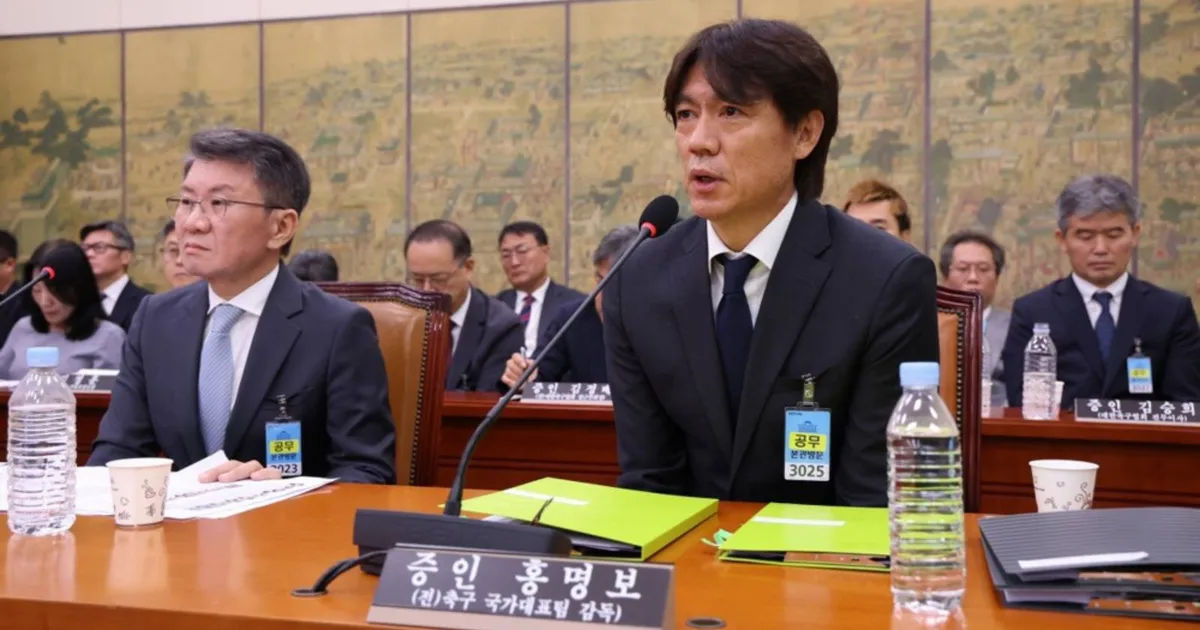
South Korean law enforcement has launched a formal investigation into the football association's appointment of Hong Myung-bo, the national team's newly selected coach, conducting raids on the organisation's premises as part of a probe into allegations of obstruction of business practices. The action comes in the aftermath of a particularly disappointing performance at the World Cup, which has triggered widespread scrutiny of the decision-making processes within the sport's governing body in the country.
The investigation centres on whether proper procedures were followed during the recruitment process that led to Hong Myung-bo taking the helm of one of Asia's most decorated national football teams. Authorities have been examining documentation and communications related to how the position was advertised, evaluated, and ultimately awarded, seeking to establish whether any rules or regulations were violated in the appointment mechanism itself.
Hong Myung-bo, a figure of considerable stature in Korean football circles given his achievements as both a player and previous coaching stint, has found his new position immediately embroiled in controversy despite his pedigree. The timing of his appointment, arriving on the heels of what many analysts and fans regard as an embarrassing World Cup showing, has intensified public and political pressure on football administrators to justify their choice and explain the reasoning behind their decision.
The disappointing World Cup campaign that precipitated this chain of events has left Korean football authorities facing substantial criticism from multiple quarters. The national team's inability to perform at the expected level on the global stage has made the appointment process itself a focal point for investigation, with authorities apparently seeking to determine whether due diligence was properly observed or whether shortcuts were taken that might constitute inappropriate conduct.
For Malaysian and Southeast Asian football followers, this development underscores the intense pressure surrounding national team management in East Asia's footballing nations, where expectations remain extraordinarily high and underperformance triggers immediate institutional scrutiny. The region's traditional powerhouses, including South Korea and Japan, face mounting competition from developing nations, placing immense political and administrative weight on succession planning and coaching selections.
The allegation of obstruction of business suggests investigators suspect that someone within the football association may have improperly influenced the appointment process or circumvented established protocols. This technical charge, common in Korean investigations into corporate and institutional misconduct, allows authorities broad latitude to examine whether normal procedures were disregarded or whether certain parties wielded undue influence over the final decision.
The raids on the association's facilities represent an escalation from initial inquiries and indicate that police believe sufficient evidence exists to warrant direct intervention and physical seizure of records. This hands-on investigative approach reflects the seriousness with which Korean authorities are treating allegations of mismanagement within a major sporting institution, particularly one representing the nation on the international stage.
The controversy extends beyond mere administrative concerns, touching on questions about accountability within Korea's football infrastructure and whether sufficient transparency governs major decisions affecting the national team's future direction. The World Cup's poor showing has created political space for such investigations to proceed, as public dissatisfaction with results has weakened any institutional protection the football association might otherwise enjoy.
For the broader Southeast Asian sporting context, this situation demonstrates how interconnected major football decisions have become with governmental oversight and public accountability mechanisms. Malaysia and regional neighbours frequently observe developments within Korean and Japanese football, as these nations' approaches to institutional reform and governance often influence best practices adopted elsewhere in Asia.
The investigation's outcome will likely carry significant implications for how Korean football administrators approach future high-level appointments and whether additional oversight mechanisms become embedded in their governance structures. If irregularities are substantiated, the findings could prompt systemic reforms across Korean football's administrative hierarchy and potentially influence how other Asian nations structure their own appointment processes.
Hong Myung-bo's situation exemplifies the precarious position of senior coaching appointments in a nation where sporting performance carries profound cultural and political weight. His ability to navigate this controversy while simultaneously building credibility as the national team coach represents a considerable challenge, compounded by the need to restore confidence in both his appointment and the institution that selected him.
As the investigation progresses, stakeholders across Asian football will be watching closely to see whether the process can be resolved swiftly enough to allow the national team to focus fully on upcoming competitive commitments. The uncertainty surrounding the coaching position's legitimacy threatens to undermine squad morale and complicates preparation for international fixtures, creating broader disruption that extends beyond mere administrative concern into competitive disadvantage.

