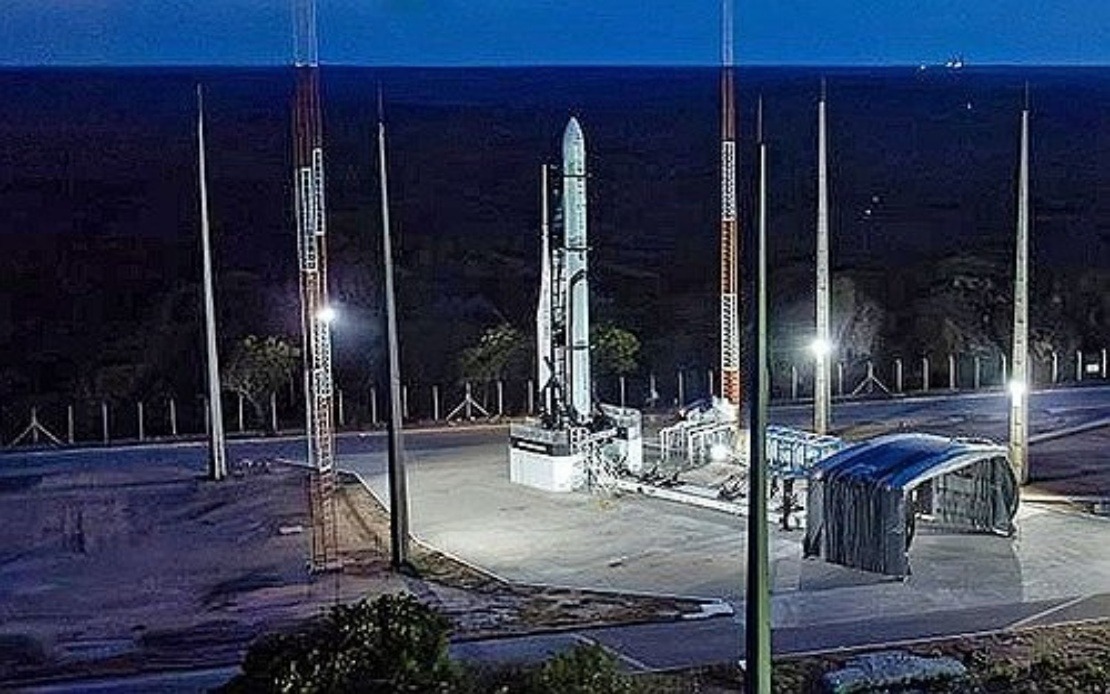
South Korea's defence ministry announced on Tuesday that it is delaying the inaugural flight of its Mir solid-fuel space rocket, citing unspecified safety issues that surfaced during the final stages of pre-launch testing. The vehicle was due to lift off at 2 pm from a sea-based launch platform positioned off the southern coast of Jeju Island, marking a significant milestone in the nation's effort to develop indigenous space capabilities independent of foreign suppliers. The postponement represents a setback to Seoul's ambitious timeline, though officials indicated a fresh launch window would be confirmed following a review of the detected problems.
The cancellation comes at a critical juncture for South Korea's broader strategic objective to reduce its dependence on overseas space infrastructure and intelligence. The Mir programme, which commenced in 2021, represents one component of a dual-track approach to establishing comprehensive satellite surveillance over the Korean peninsula and beyond. Development teams had anticipated this flight would represent a watershed moment, validating the design of a fully integrated four-stage vehicle after years of incremental testing involving partial configurations.
The solid-propellant architecture that underpins the Mir rocket offers distinct operational advantages over liquid-fuelled alternatives commonly used in other space programmes. Solid-fuel systems are inherently less complex in their engineering requirements, require minimal ground infrastructure for deployment, and crucially can remain operational in storage for extended periods without degradation. These characteristics enable rapid-response launch capability, a feature particularly relevant to Seoul's strategic positioning in Northeast Asia where the ability to quickly deploy reconnaissance assets could prove decisive in crisis scenarios.
Prior to this postponement, South Korea had conducted a series of ground tests between 2022 and 2023 that validated components and three-stage configurations of the Mir vehicle. Those earlier evaluations apparently proceeded satisfactorily, building confidence within the defence establishment that progression to the full four-stage system would be straightforward. The fact that previously undetected issues emerged only in final countdown preparations underscores the complexity of space launch operations and the unforgiving nature of the space sector, where marginal defects can cascade into catastrophic failures.
The strategic imperative driving the Mir programme extends beyond simple technological demonstration. South Korea's spy satellite constellation currently comprises five reconnaissance platforms that were successfully positioned into orbit using SpaceX's Falcon 9 rockets, achievements that occurred as recently as November of the previous year. However, reliance on American launch providers, while effective operationally, creates a strategic vulnerability should geopolitical circumstances shift or US policy priorities change. The Mir programme directly addresses this dependency by establishing a domestic launch capability tailored specifically to South Korean requirements.
Under the expanded vision outlined by defence planners, Seoul intends to deploy as many as sixty small observation satellites into low-Earth orbit by 2030, with altitudes below five hundred kilometers. This constellation would function in tandem with the existing larger military reconnaissance satellites, creating a layered surveillance network that dramatically enhances coverage frequency and imaging resolution compared to the current system. The proliferation of smaller, more agile platforms would enable tighter monitoring of adversarial activities while substantially reducing the gap that currently exists between South Korean intelligence gathering and American satellite capabilities upon which Seoul has historically relied.
The immediate focus on North Korean threat assessment reflects geographical realities and decades of peninsula tensions. Modern satellite networks serve as critical early-warning systems for detecting military mobilisations, missile preparations, and other activities that could presage conflict escalation. The ability to maintain persistent, independent surveillance over North Korean territory and military facilities represents a significant strategic advantage, allowing Seoul to validate intelligence assessments without waiting for allied information sharing.
Beyond the immediate security dimension, the Mir programme also reflects broader South Korean aspirations to establish itself as a spacefaring nation capable of autonomous operations in an increasingly contested orbital environment. Regional competitors, particularly China, have demonstrated advanced space capabilities including anti-satellite weapons and rapid launch rates. Japan maintains independent launch systems, while India and other regional players have invested heavily in space infrastructure. Seoul's commitment to developing the Mir rocket positions South Korea alongside these nations as a legitimate player in the space domain rather than merely a consumer of foreign launch services.
The defence ministry's decision to postpone rather than proceed despite detected issues reflects appropriate caution, particularly given the high visibility of space launch failures and the political costs that accompany them. The ministry committed to announcing a revised launch schedule once technical reviews conclude, suggesting confidence that the identified problems are resolvable rather than fundamental design flaws. Engineers and programme managers will likely use the delay to conduct comprehensive analyses of the detected issues and implement corrections, thereby reducing the likelihood of subsequent launch failures that could undermine public and institutional confidence in the programme.
For regional observers, particularly in Malaysia and Southeast Asia, the South Korean approach to space development offers instructive parallels regarding indigenous capability development and risk management. Nations contemplating their own space programmes must balance technological ambition against realistic assessment of technical maturity and available resources. South Korea's willingness to incorporate foreign partnerships, such as continued use of SpaceX rockets for the larger constellation while developing domestic alternatives for smaller platforms, demonstrates pragmatic integration of external resources with long-term independence objectives.
The postponement also highlights the inherent unpredictability of space programmes despite advanced planning and rigorous testing protocols. The defence ministry's identification of issues during final preparations suggests that even the most meticulous preparation cannot entirely eliminate surprises in space operations. This reality underscores why space agencies globally maintain contingency planning and schedule buffers, recognising that technical challenges often emerge when systems are integrated at full scale and subjected to genuine launch conditions.
Looking ahead, the rescheduled Mir launch will attract considerable international attention, particularly from regional security analysts monitoring South Korean technological progress. A successful inaugural flight would validate the solid-fuel rocket design and validate the overall programme strategy, potentially accelerating deployment of the planned satellite constellation. Conversely, technical difficulties during any future launch attempt could trigger programme reviews and potentially require schedule adjustments that would delay the achievement of full independent surveillance capabilities. The stakes surrounding this postponed mission thus extend well beyond a single launch event, encompassing South Korea's broader strategic positioning in an increasingly competitive regional security environment.

