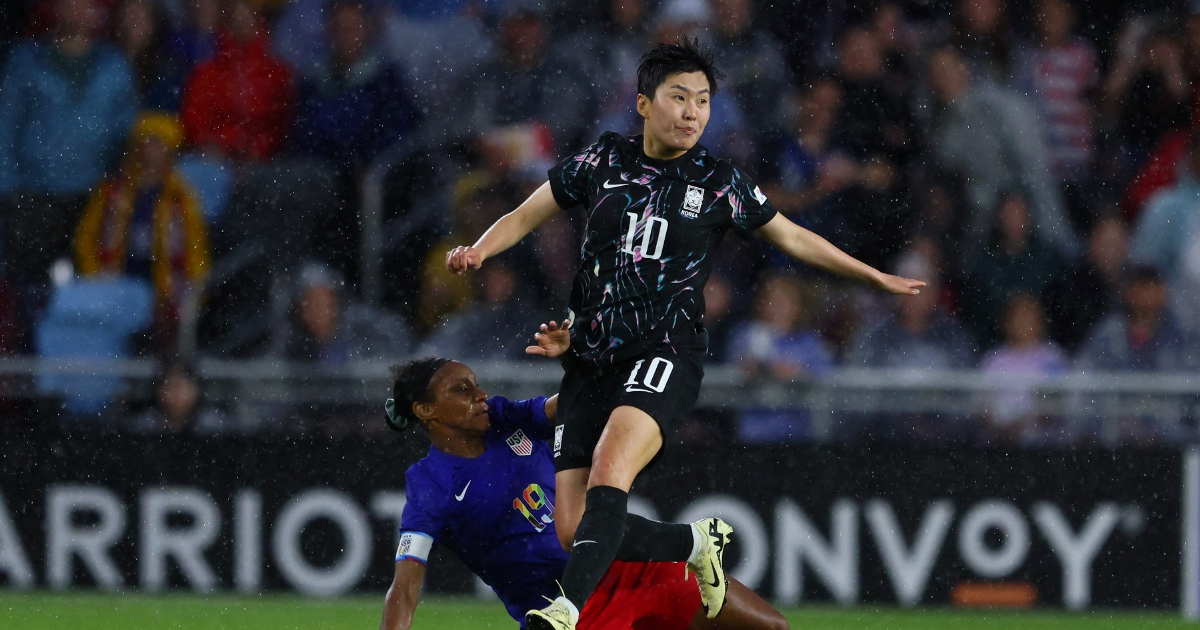
South Korea's women's football federation announced on Monday that it has initiated a formal investigation into allegations that a female referee made an insulting remark about menstruation directed at Ji So-yun, a prominent midfielder who previously played for Chelsea, during a recent domestic league match.
The incident represents a significant moment for professional women's football in South Korea, where gender-related conduct remains an increasingly scrutinised aspect of sport governance. The federation's decision to probe the matter underscores growing pressure on sporting bodies across Asia to maintain standards of respectful treatment and eliminate gender-based harassment from competition environments.
Ji So-yun, who earned international recognition during her tenure at Chelsea in England's Women's Super League, is among South Korea's most accomplished footballers. Her profile and standing in the sport lend considerable prominence to the allegation, drawing attention not only to the specific incident but also to broader questions about professionalism and conduct standards within Korean women's football administration.
The alleged insult is particularly notable because it involved a female referee rather than a male official. This detail complicates narratives around gender dynamics in sports refereeing, suggesting that inappropriate commentary can originate from any source regardless of the referee's own gender. It also raises questions about training and awareness programmes designed to ensure that all officials—regardless of their background—maintain professional boundaries and treat players with appropriate respect.
Investigations of this nature typically examine multiple dimensions: the context of the alleged remark, witness accounts, whether guidelines were violated, and what sanctions might be warranted. The South Korean federation's commitment to examining the matter signals that officials-related misconduct is being taken seriously at institutional levels, a shift that reflects international best practices in sports governance.
For Malaysian and Southeast Asian readers, this situation carries relevance beyond South Korea's domestic football ecosystem. Women's football across the region is experiencing substantial growth in participation and spectator interest, with national leagues in Malaysia, Thailand, Vietnam, and Indonesia expanding their professional structures. Incidents in neighbouring countries regarding player treatment and officiating standards inevitably influence discussions about governance standards that regional federations aspire to maintain.
The investigation also touches on underlying issues of workplace dignity and psychological safety in sports environments. Players at all levels depend on referees to enforce rules fairly and maintain game integrity. When officials allegedly resort to personal comments unrelated to match conduct, they undermine the authority structure that makes sport function smoothly and fairly. Beyond the immediate discomfort such remarks cause, they can affect a player's confidence and performance during competition.
South Korea's women's football has benefited from increasing investment and visibility in recent years, with the national team competing regularly in continental and global tournaments. However, like women's sports in many countries, it continues to navigate challenges around equal treatment, adequate resources, and professional standards across all aspects of the sport—including refereeing corps development and conduct expectations.
The federation's response will likely influence how similar allegations are handled in future. A thorough, transparent investigation demonstrates institutional commitment to maintaining standards, while any leniency or mishandling could signal that such conduct carries minimal consequences. Given the high-profile nature of Ji So-yun's career, the football community across South Korea and beyond will scrutinise both the process and the outcome.
This incident occurs within a broader international context where women's sports are increasingly demanding the same professionalism, dignity, and accountability standards that governing bodies apply to men's competitions. From player conduct to official behaviour, the expectation is that sport operates as a mature institutional environment rather than a space where traditional attitudes toward gender persist unchallenged.
The federation has not yet provided detailed timelines for the investigation or indicated what specific sanction mechanisms might apply if wrongdoing is confirmed. Such information will be crucial for determining whether the body's response matches the gravity of the allegation and whether it sends a clear message about expected conduct standards throughout the women's game.
For athletes like Ji So-yun who have worked to elevate women's football's profile and professionalism, incidents involving disrespectful treatment from officials represent setbacks that extend beyond individual matches. They reflect broader questions about whether women's sports environments are being developed with the same rigour and respect as their male counterparts. South Korea's investigation provides an opportunity to reaffirm that women's football deserves nothing less than a fully professional ecosystem where all participants, including match officials, maintain appropriate standards of conduct.

