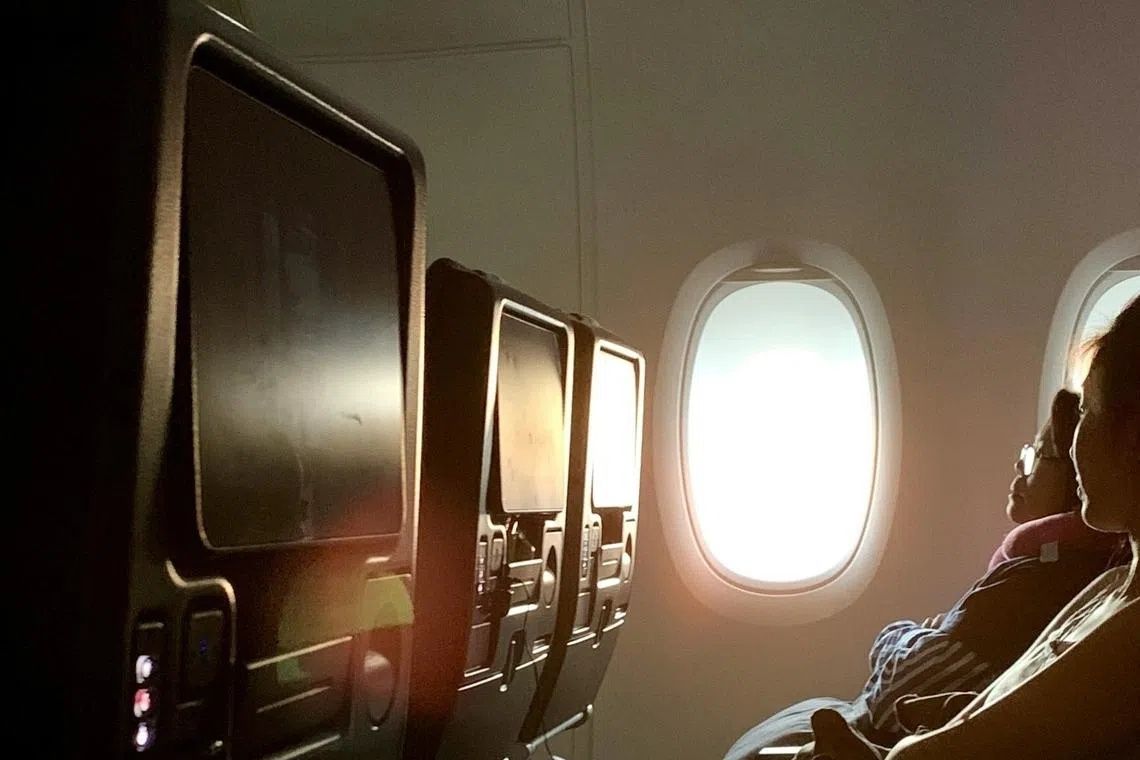
A South Korean teenager has escalated concerns about in-flight entertainment standards by submitting a formal petition to the government, demanding that airlines implement mandatory safeguards to prevent minors from viewing age-inappropriate material during flights. The petitioner, a middle school student, filed the complaint via the Petition 24 platform administered by the Ministry of the Interior and Safety, describing their involuntary exposure to violent and sexually suggestive scenes displayed on seat-back monitors during a recent flight.
The student's account highlights a growing tension between airlines' operational convenience and child protection obligations. According to the teenager's account posted on the government petition website, the content proved impossible to ignore despite efforts to look away, with the disturbing imagery forcing itself into their viewing experience. The complaint gains particular weight from the fact that the petitioner's younger sister, a fourth-grader in primary school, also witnessed the same inappropriate scenes, raising questions about whether airlines adequately consider the presence of children when curating their entertainment libraries.
The teenager's proposal centres on a practical technological solution: mandatory privacy screens or similar physical barriers on seat-back monitors to prevent unintended viewership of content exceeding specified age ratings. This approach reflects broader global discussions about digital content governance in shared public spaces, particularly where vulnerable audiences cannot easily escape or opt out of what is displayed. The suggestion acknowledges that simply requesting passengers avoid watching certain programmes places the burden of responsibility on individuals rather than on the institutions controlling the medium.
The petition explicitly references existing South Korean legislation designed to protect young people from harmful material. Both the Child Welfare Act and the Youth Protection Act contain provisions mandating that children and adolescents be shielded from content deemed unsuitable for their age groups. The teenager's invocation of these laws frames the complaint as a matter of legal compliance rather than mere preference, suggesting that current airline practices may contravene established protective statutes that already bind the aviation industry.
South Korea's two dominant carriers, Korean Air and Asiana Airlines, have historically maintained policies prohibiting the display of films rated for audiences aged 19 and above. Beyond this baseline restriction, both airlines typically utilise edited versions of motion pictures, with production companies removing or altering the most graphic violent, sexual, or otherwise objectionable sequences to meet family-friendly standards. These measures ostensibly create an intermediate layer of protection, yet the teenager's experience suggests that even these curated versions may retain content inappropriate for younger viewers.
The case draws parallels to a previous industry decision that demonstrates the sensitivity surrounding in-flight content standards. In 2020, both Korean Air and Asiana Airlines withdrew the critically acclaimed film Parasite from their entertainment rosters despite its 15-plus age rating in South Korea. The decision reflected concerns about specific violent and sexual sequences within the film, indicating that airlines recognise their responsibility to apply stricter standards than theatrical ratings might suggest when serving captive audiences containing young children. This precedent shows that the carriers possess both the operational capacity and demonstrated willingness to make content decisions based on child protection considerations.
The broader context of this complaint reflects international standards conversations within the aviation industry. Airlines worldwide grapple with balancing passenger preferences for diverse entertainment options against their duty of care toward child travellers. In-flight entertainment systems represent a unique regulatory challenge because viewers occupy confined spaces with limited ability to remove themselves from displays, unlike cinemas where parental discretion guides attendance, or home viewing where parents control access. This captive audience dynamic has prompted ongoing debate about whether traditional film ratings remain appropriate metrics for airline content selection.
For Malaysian and Southeast Asian travellers, the petition carries particular relevance as regional carriers increasingly invest in advanced in-flight entertainment systems. The issues raised by the South Korean teenager—inadequate age-appropriate content curation and insufficient technical safeguards—apply equally to airlines operating throughout the region. Malaysian carriers serving family-heavy routes face comparable pressures to maintain entertainment standards that protect younger passengers while preserving content diversity for adult travellers, making the South Korean experience instructive for policy discussions occurring in local aviation circles.
The petition's progression through South Korea's government system will likely influence industry practices across the region, particularly given Korean airlines' prominent role in regional markets. If the Ministry of the Interior and Safety determines that stronger regulations are warranted, Korean Air and Asiana Airlines would need to implement enhanced monitoring systems, potentially triggering similar obligations for international carriers seeking competitive parity. This cascading effect demonstrates how national regulatory decisions increasingly shape regional aviation standards.
The technological solutions proposed in the petition—such as privacy screens or individual content filtering—represent investments that carriers might initially resist as operationally burdensome. However, the underlying principle gains momentum as governments worldwide recognise that digital platforms operating in shared spaces require governance frameworks beyond marketplace self-regulation. The teenager's complaint thus represents not merely an individual grievance but signals a broader generational expectation that institutions controlling mass media access accept responsibility for protecting vulnerable populations, even in constrained environments like aircraft cabins.
Looking ahead, the petition may catalyse wider conversations across the industry about in-flight content standards. Airlines could respond by implementing age-gating mechanisms on seat-back monitors, reverting to centralised entertainment displays controllable by crew members, or developing sophisticated filtering systems that automatically restrict content access based on passenger profile data. Each option carries different privacy and operational implications, suggesting that whatever regulatory framework emerges will require careful negotiation between child protection advocates, industry stakeholders, and passenger rights organisations.

