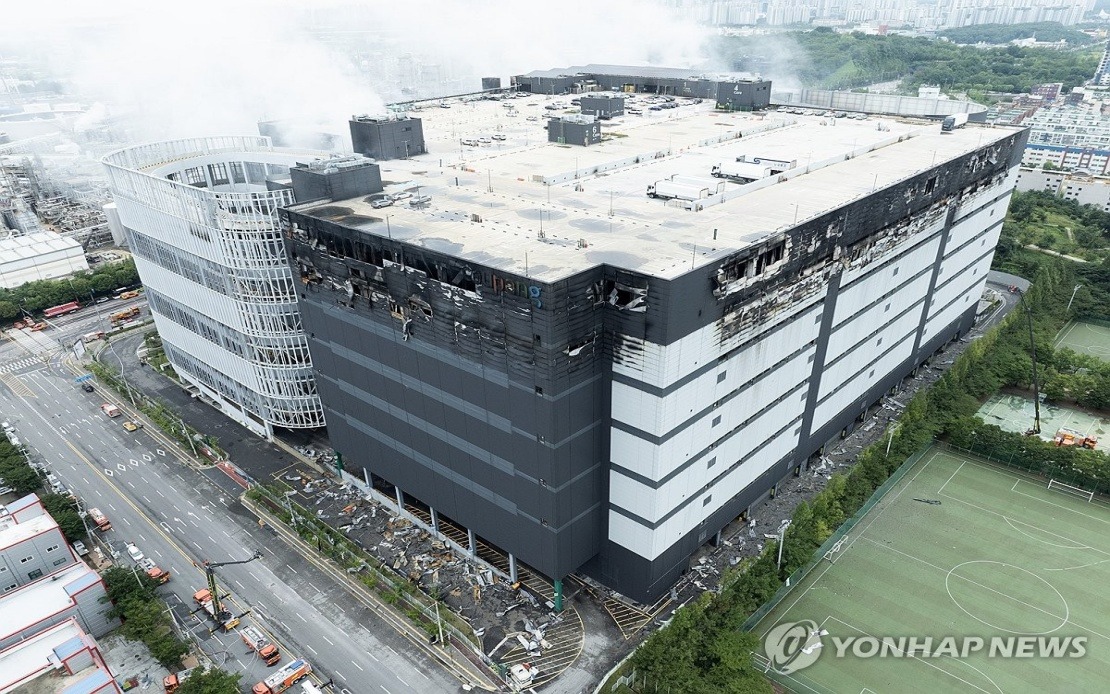
A sprawling fire at a Coupang logistics warehouse in Incheon, located just outside Seoul, has been brought under initial control on Monday evening after consuming the facility for more than two and a half days. Firefighting authorities announced that the blaze, which ignited late Friday, was declared containable at 8 p.m. local time, marking a significant milestone in one of South Korea's most challenging recent firefighting operations.
The magnitude of the response underscores the severity of the incident. National authorities mobilised an unprecedented force of 812 firefighters supplemented by 231 pieces of specialized equipment to combat the inferno. This coordination represented a national-level emergency declaration issued Saturday, reflecting the potential for the fire to spread beyond the immediate warehouse structure and threaten surrounding residential areas.
The structural complexity of the Incheon logistics centre and the vast quantities of combustible merchandise stored within created substantial obstacles for emergency crews throughout the weekend. The warehouse's multi-level design and density of flammable materials meant that traditional firefighting approaches proved time-consuming and resource-intensive. Firefighters faced visibility challenges and heat-related dangers as they worked to suppress flames spreading through different sections of the facility.
Weather conditions provided unexpected relief to exhausted emergency personnel on Monday. Rainfall that began overnight helped reduce ambient temperatures and suppress airborne embers, allowing firefighting teams to make tangible progress in containing the perimeter of the blaze. This natural assistance proved crucial in tipping the balance toward control after three days of intense and often frustrating battle against the advancing flames.
The human toll of the disaster became apparent through evacuation measures enacted by local authorities. Late Sunday evening, officials issued mandatory evacuation orders for all residences and establishments within 116 metres of the warehouse's ramp zone, where the most intense fire activity had concentrated. This precautionary boundary encompassed a significant residential and commercial district surrounding the logistics centre.
Temporary shelter facilities at nearby schools accommodated 178 residents displaced by the evacuation order, many of whom had departed their homes with minimal notice and few possessions. These residents faced uncertainty about when they would be permitted to return, as authorities continued monitoring air quality and structural stability in the surrounding area. The logistics centre's proximity to densely populated neighbourhoods meant that what could have been contained to the warehouse itself presented genuine risk to the broader community.
The impact extended to educational facilities and childcare services across the region. Municipal authorities implemented precautionary closure directives affecting early childhood education throughout Monday. One elementary school and fourteen daycare centres shuttered their operations in response, disrupting routines for hundreds of families dependent on these services. These closures reflected not merely the immediate danger posed by the fire itself, but concerns about smoke dispersal, air quality degradation, and the general disruption to normal civic functioning that such a major incident generates.
For Malaysia and other Southeast Asian nations, the Incheon warehouse fire offers instructive lessons regarding industrial safety and emergency response coordination. Logistics hubs have proliferated across the region as e-commerce platforms expand their distribution networks, creating similar concentration of flammable materials in urban environments. South Korea's rapid mobilisation of 800-plus firefighters and sophisticated equipment demonstrates the resource intensity required to manage such incidents effectively, raising questions about whether comparable Asian nations maintain equivalent emergency response capacity.
The incident also highlights vulnerabilities in supply chain infrastructure increasingly concentrated in massive warehouse complexes serving regional distribution networks. As companies like Coupang expand operations across Asia, the standard warehouse layout—tall, densely packed structures containing diverse merchandise—presents consistent fire hazard patterns. Building codes and fire suppression systems designed for such facilities require continuous refinement and enforcement across different national jurisdictions.
Looking forward, the incident invites examination of how warehouse operators balance efficiency with safety in an intensely competitive logistics environment. The scale of Coupang's Incheon facility reflects the company's strategic importance in South Korea's e-commerce ecosystem, yet size creates corresponding risk. Regional competitors operating similar facilities across Malaysia, Singapore, and Indonesia may face pressure to balance operational expansion against potential catastrophic loss scenarios.

