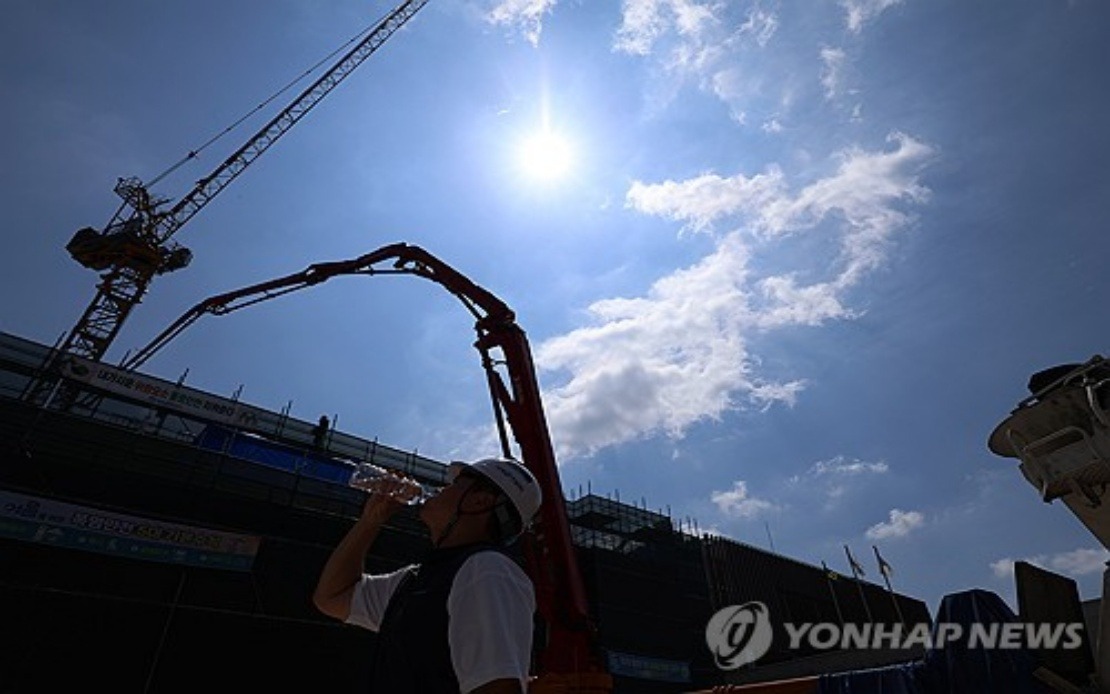
South Korea's meteorological authorities have expanded extreme heat warnings across the capital region to unprecedented levels, with the Korea Meteorological Administration placing nearly half of the greater Seoul area under its most serious alert classification. The directive, which came into force on Wednesday morning, now covers 20 of the 46 weather advisory zones in the densely populated region, underscoring the severity of conditions that have gripped the Korean peninsula throughout the summer season.
The additional warnings extended to southern Incheon and nine municipalities and districts within Gyeonggi Province—namely Gwangmyeong, Yeoncheon, and Hwaseong—at 11 am local time. This represented a significant escalation following Tuesday's historic development, when all of Seoul itself was placed under the highest-tier alert for the first time since the heat wave warning system was formally introduced on June 1. The expansion also marked a critical milestone: the first implementation of the most serious heat designation in South Chungcheong Province, specifically affecting Cheongyang county, demonstrating that the heat crisis has transcended traditional geographic boundaries.
The operational threshold for such warnings is stringent and scientifically defined. According to KMA protocols, authorities trigger the highest alert when apparent temperatures—a measurement that incorporates humidity, wind speed, and solar radiation alongside actual air temperature—are projected to reach 38°C or above. Alternatively, warnings activate when maximum daily temperatures exceed 39°C, provided the region has already experienced sustained heat, specifically an apparent temperature of at least 35°C over two or more consecutive days. These criteria reflect the sophisticated understanding of how various atmospheric factors combine to create genuine public health hazards beyond simple thermometer readings.
The intensity of this summer's conditions has been historically remarkable. In the southeastern city of Yangsan, thermometers recorded 42.5°C, establishing a new benchmark as the highest temperature documented since South Korea began systematic meteorological record-keeping in 1904. This milestone underscores not merely an unusually warm season but rather a potential climate shift that meteorologists and environmental scientists across Asia are monitoring with considerable concern. For Malaysian observers accustomed to tropical heat, the significant disruption caused by these temperatures in a developed nation with sophisticated infrastructure highlights how even economically advanced societies face serious vulnerabilities to extreme weather.
The human toll from this heat emergency has become increasingly alarming. South Korea's Disease Control and Prevention Agency has documented 2,221 individuals requiring hospitalisation for heat-related illnesses during the period from May 15 through the preceding Monday, a figure that reflects the cumulative strain on medical systems. More soberly, 19 deaths have been attributed to heat exposure during this same interval, a grim reminder that extreme temperatures represent not abstract meteorological phenomena but genuine threats to human survival. These numbers, while specific to Korea, resonate across Southeast Asia, where similar heat waves have periodically challenged public health infrastructure in nations like Thailand, Philippines, and Vietnam.
The geographic expansion of these warnings carries particular significance for Seoul's metropolitan region, which encompasses approximately 26 million residents—making it one of the world's most densely populated urban agglomerations. The concentration of so many people in relatively compact urban areas where concrete and asphalt absorb and radiate heat creates additional challenges beyond those experienced in less developed regions. Urban heat island effects, whereby cities experience substantially higher temperatures than surrounding countryside due to reduced vegetation and increased thermal mass, mean that official temperature readings often underestimate the actual conditions experienced by residents in commercial districts and residential neighborhoods.
For Malaysia and other Southeast Asian nations, South Korea's heat crisis offers important lessons regarding climate adaptation and public health preparedness. While tropical countries have historically tolerated higher baseline temperatures, the phenomenon of record-breaking heat waves arriving with increasing frequency suggests that historical temperature ranges no longer represent reliable guides for infrastructure planning or emergency response protocols. Countries throughout the region, already operating near the edge of comfortable human tolerance, face mounting pressure to enhance cooling infrastructure in public spaces, strengthen electrical grids to accommodate surging air-conditioning demand, and develop more sophisticated early warning systems.
The expansion of warnings across the greater Seoul region also reflects evolving scientific understanding of how heat stress propagates through interconnected urban systems. When nearly half of a major metropolitan area faces the highest alert level simultaneously, the cascading effects extend far beyond individual health impacts. Transportation networks experience equipment failures, agricultural production falters, industrial output declines, and energy consumption spikes to levels that can strain power generation capacity. South Korea's experience demonstrates how extreme heat functions as a systemic threat rather than merely a public health challenge affecting isolated vulnerable populations.
The timing of these escalations, concentrated in early August, typically represents the final surge of summer heat before conditions begin gradually moderating. However, climate scientists have noted that the pattern of extreme heat waves has intensified significantly over the past decade, with episodes becoming more frequent, more prolonged, and more intense than historical precedent would suggest. The fact that South Korea's highest heat alert has now been triggered not just once but repeatedly across an extended geographic region raises questions about whether traditional heat response protocols remain adequate for modern climatic conditions.
Looking forward, the continuation of these warnings will test the resilience of South Korea's public health, infrastructure, and social support systems. Elderly residents, outdoor workers, and individuals lacking reliable air-conditioning face elevated mortality risk. The government has mobilised cooling centers and distributed guidance on heat-related illness prevention, but such reactive measures address symptoms rather than underlying vulnerabilities. For the broader Asian region, including Malaysia, these developments underscore the urgency of integrating climate resilience into urban planning, building codes, and public health infrastructure before heat waves of comparable or greater severity arrive at local doorsteps.

