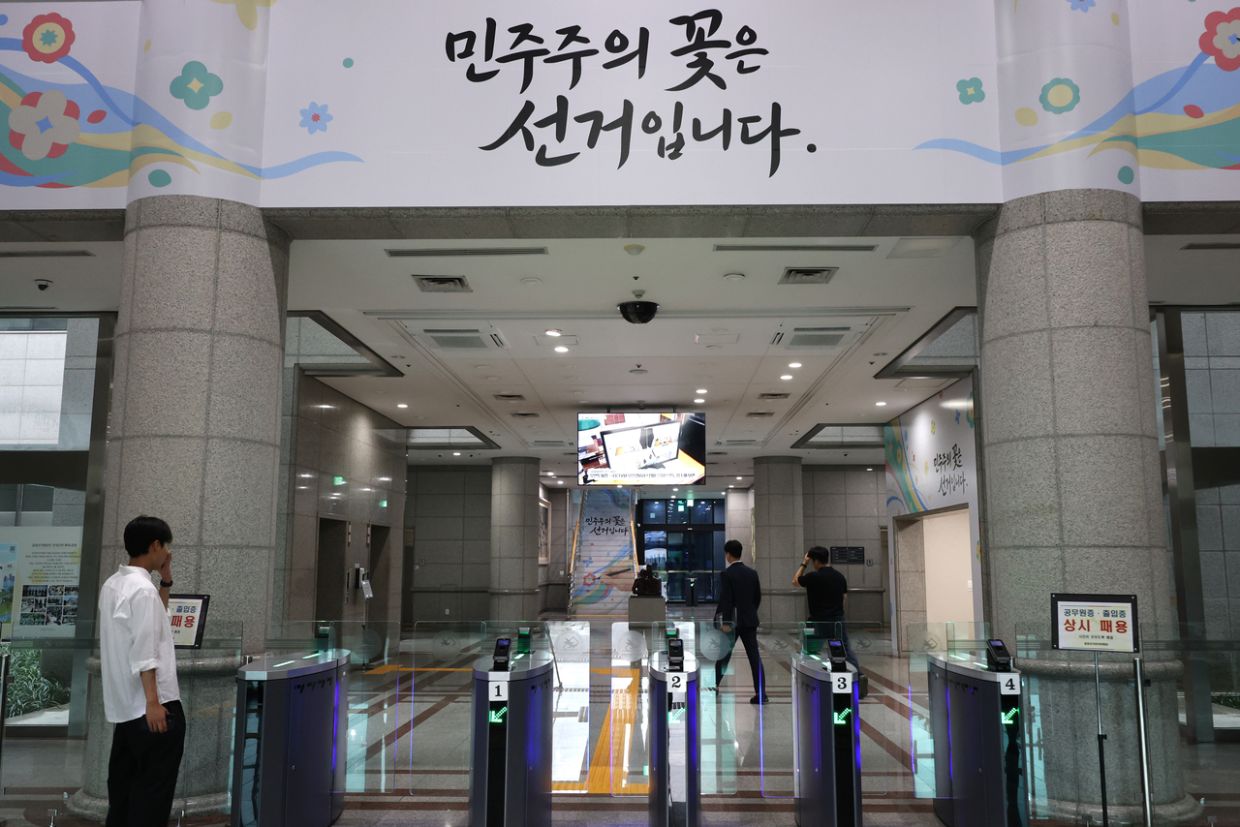
South Korea's electoral oversight body faces serious scrutiny following a raid by prosecutors and police on its Seoul-area headquarters in connection with an expanding investigation into ballot management failures and possible deliberate falsification of records. The joint prosecution-police task force executed a search warrant at the National Election Commission's Gwacheon office, located just south of the capital, to gather evidence relating to the June 3 local elections and allegations that staff members altered statistical information stored on the commission's computer systems.
At the heart of the inquiry lies a troubling operational breakdown that unfolded on election day itself. Multiple polling stations across the country reported critical shortages of ballots, leaving voters unable to exercise their democratic right in what should have been a routine local electoral process. The scale of the problem was significant enough that substantial numbers of citizens were turned away from voting stations and denied the opportunity to cast ballots—a serious failure of basic electoral administration that strikes at the legitimacy of the democratic process.
What has transformed this initial administrative failure into a matter of criminal investigation is evidence that certain National Election Commission employees deliberately manipulated data within their computer system to obscure the extent of the errors in voter tallies. Rather than transparently documenting what went wrong and implementing corrective measures, investigators have uncovered signs that individuals sought to conceal the scope of the irregularities by altering the numerical records. This alleged data manipulation represents a particularly troubling development because it suggests institutional malfeasance beyond simple operational incompetence.
The discovery of this evidence prompted the joint task force—a collaborative structure typically deployed for cases of significant public concern—to move forward with formal investigative action. The execution of the search warrant enables prosecutors and police to secure physical and digital evidence from the commission's facilities before records could potentially be destroyed or further altered. Such raids are typically preceded by careful assessment of the evidence threshold and likelihood that materials relevant to the investigation exist at the targeted location.
For Malaysian observers of regional governance, the South Korean case offers important perspective on electoral integrity challenges that transcend national borders. Democratic institutions across Asia face varying pressures and operational constraints, and the experience of a relatively developed nation's election commission struggling with both logistical execution and institutional transparency serves as a cautionary reminder that electoral systems require constant vigilance and robust oversight mechanisms.
The implications of the investigation extend beyond immediate questions of accountability for specific individuals at the National Election Commission. The incident raises fundamental questions about the adequacy of training, resource allocation, and quality control procedures within the body responsible for administering local elections in a country of South Korea's size and democratic maturity. If systemic failings contributed to ballot shortages at multiple locations, institutional reforms may be warranted to prevent recurrence.
Moreover, the apparent attempt to obscure voting irregularities through data manipulation strikes at public confidence in electoral administration itself. Citizens across all democracies must trust that election officials will honestly report what occurred, whether the news is favourable or embarrassing. When officials allegedly respond to discovered problems by altering records rather than transparently addressing them, the reputational damage to the institution exceeds the harm caused by the original operational failures.
The investigation reflects a broader pattern in contemporary democracies where electoral authorities face intensifying scrutiny from both civil society and formal oversight mechanisms. Competition over electoral outcomes has grown fiercer even in stable democracies, and stakeholders increasingly demand full transparency and accountability regarding how elections are administered. The National Election Commission's autonomy and credibility—essential assets for any such body—will likely be affected by the findings of this investigation.
Prospects for reform will depend significantly on the investigation's conclusions. Should prosecutors determine that the data manipulation was isolated to lower-level staff acting without institutional knowledge, remedial measures might focus on personnel changes and improved supervision. However, if evidence emerges that manipulation occurred at higher levels of the organization, more substantial institutional restructuring could follow. Either way, the commission will face pressure to demonstrate that election administration processes are secure, transparent, and oriented toward serving the public interest rather than protecting institutional reputation.
The timing of these investigative actions also warrants attention, as subsequent electoral campaigns and local processes in South Korea will proceed under the shadow of these revelations. Voters and political candidates alike may scrutinize the commission's operations more carefully, and the agency will need to demonstrate convincingly that election administration has been reformed and secured.

