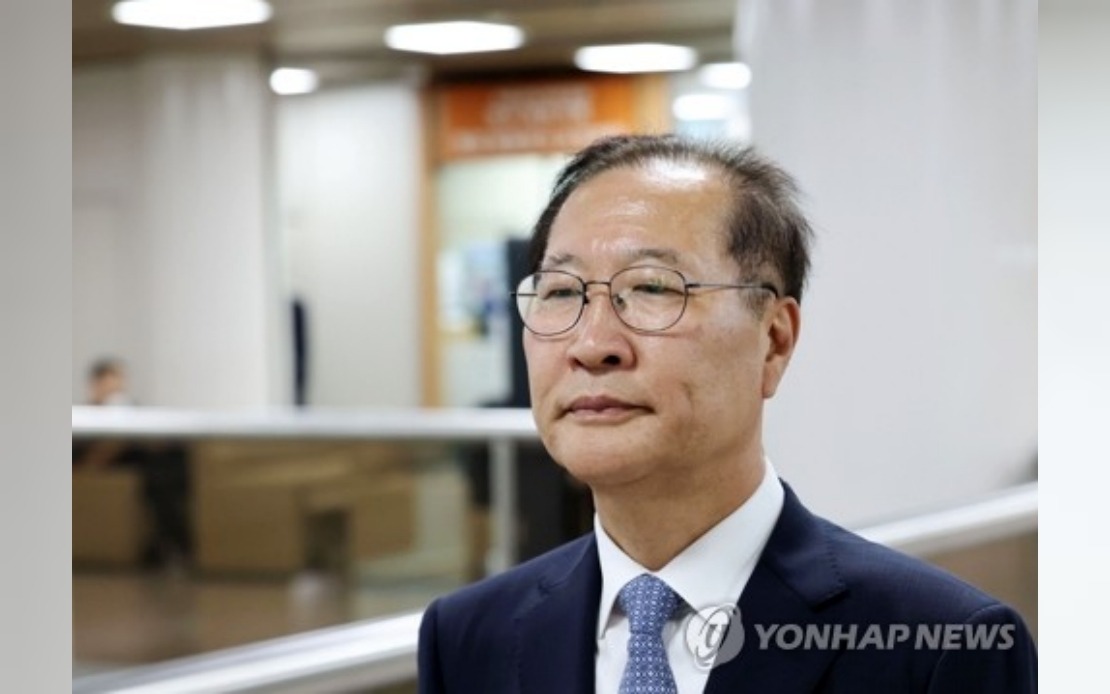
South Korea's judicial system has delivered another significant blow to the administration of former President Yoon Suk Yeol, with the Seoul Central District Court sentencing ex-Justice Minister Park Sung-jae to 25 years in prison on Monday. The conviction centres on Park's alleged pivotal role in orchestrating governmental support for an unconstitutional martial law declaration that triggered a major constitutional crisis in the East Asian nation. The judge's decision to impose a term exceeding the 20-year recommendation from special counsel Cho Eun-suk's team underscores the gravity with which South Korea's judiciary is treating those accused of participating in this attempted seizure of power.
Park was immediately remanded into custody following the verdict, as the court determined substantial risk existed that he might tamper with or destroy evidence related to the broader investigation. This precautionary measure reflects judicial concerns about the seriousness of charges involving threats to constitutional governance, a matter that resonates across democratic nations in Southeast Asia and beyond. The decision to bypass bail underlines the court's assessment that Park represented an active obstruction risk to ongoing proceedings in what has become South Korea's most significant constitutional crisis in recent decades.
The former Justice Minister faced twin accusations of orchestrating an insurrection and abusing governmental authority. Prosecutors had outlined in their indictment how Park convened a gathering of senior ministry officials immediately following Yoon's martial law proclamation on December 3, 2024. According to the prosecution's theory, this gathering was not ceremonial but strategically designed to mobilise governmental machinery in support of the extraconstitutional power grab. The court accepted these characterisations, finding that Park deliberately positioned the justice ministry to facilitate the implementation of martial law operations.
Court documents revealed the specific nature of Park's alleged machinations. Prosecutors contended that Park orchestrated discussions about deploying prosecutors to bodies established to support martial law governance, directed assessments of correctional facility capacity for anticipated mass arrests of political figures, and issued instructions to officials responsible for implementing travel restrictions on targeted individuals. Each element pointed to a coordinated effort to transform the justice ministry from guardian of constitutional order into an instrument of authoritarian consolidation. The Seoul court found these activities sufficiently established to sustain conviction on both the insurrection and abuse-of-power charges.
In its judicial pronouncement, the court articulated a principle fundamental to democratic governance. The bench stated that Park had fundamentally betrayed his constitutional duty to defend the legal framework binding the nation together. Instead of resisting what the court characterised as an illegal power seizure, Park chose participation, apparently calculating that the martial law enterprise would ultimately prevail. This framing carries particular relevance for other democratic societies in Asia confronting similar challenges regarding institutional integrity and the personal choices made by officials when constitutional order faces challenge.
Park's conviction represents the latest in an expanding circle of former officials receiving judicial consequences for their martial law involvement. Former Prime Minister Han Duck-soo and former Defence Minister Kim Yong-hyun have similarly been convicted of playing instrumental roles in supporting the insurrection. Most significantly, former President Yoon himself received a life sentence in February for orchestrating the martial law declaration. Yoon has contested his conviction through the appeals process, leaving the ultimate constitutional question unresolved as South Korea's higher courts prepare to review these extraordinary cases.
The court rejected supplementary charges against Park involving alleged violations of anti-corruption statutes, determining these matters fell beyond the special counsel team's authorised investigative scope. Those charges had originated from an accusation that Park had responded to a request from Yoon's wife, Kim Keon Hee, in May 2024 by issuing inappropriate directives to subordinates. The request allegedly aimed to obtain information regarding prosecution investigations into corruption allegations against the former first lady. By limiting its decision to the primary charges, the court delineated boundaries around the special counsel's mandate while nevertheless sustaining the core insurrection convictions.
Park's legal team indicated intention to immediately challenge the verdict through appeals, characterising the court's reasoning as fundamentally disconnected from factual evidence and legitimate legal reasoning. This response reflects standard appellate procedure, yet the strength of the trial court's convictions—coupled with the severity of the imposed sentence—suggests Park faces substantial obstacles in securing reversal. The defence strategy will likely centre on attacking specific factual determinations about Park's state of mind and the precise nature of his organisational role during the martial law period.
Conversely, the special counsel team signalled reluctance to initiate appeal proceedings, viewing the court's articulation of justice ministers' constitutional duties as appropriately establishing legal principles governing such situations. This prosecutorial stance implies confidence in the conviction's durability and suggests prosecutors consider the core objectives of their investigation substantially achieved through the conviction. The absence of prosecutorial appeal signals that South Korea's judicial process, from the special counsel's perspective, has functioned adequately in holding Park accountable.
For observers across Southeast Asia monitoring South Korea's institutional responses to constitutional threats, Park's conviction carries instructive dimensions. The case demonstrates how democratic judiciaries can function even under extraordinary circumstances, maintaining sufficient independence to convict powerful governmental figures despite potential political pressures. Simultaneously, the severity of sentences being imposed—extending beyond prosecution recommendations—raises questions about the outer boundaries of judicial discretion when addressing threats to constitutional order. These questions remain especially pertinent for Asian democracies navigating similar tensions between institutional stability and accountability for extraordinary governmental actions.
The broader implications extend to understanding how rule-of-law systems respond when governmental officials actively participate in unconstitutional power consolidation. Park's case illustrates that proximity to executive authority offers no immunity from judicial accountability when constitutional integrity is compromised. This principle, embedded now in South Korea's judicial record through multiple convictions of high-ranking former officials, may influence how future governmental crises are managed across the region. The message to public servants is unambiguous: participation in unconstitutional governmental actions, regardless of official rank, exposes individuals to substantial criminal liability.