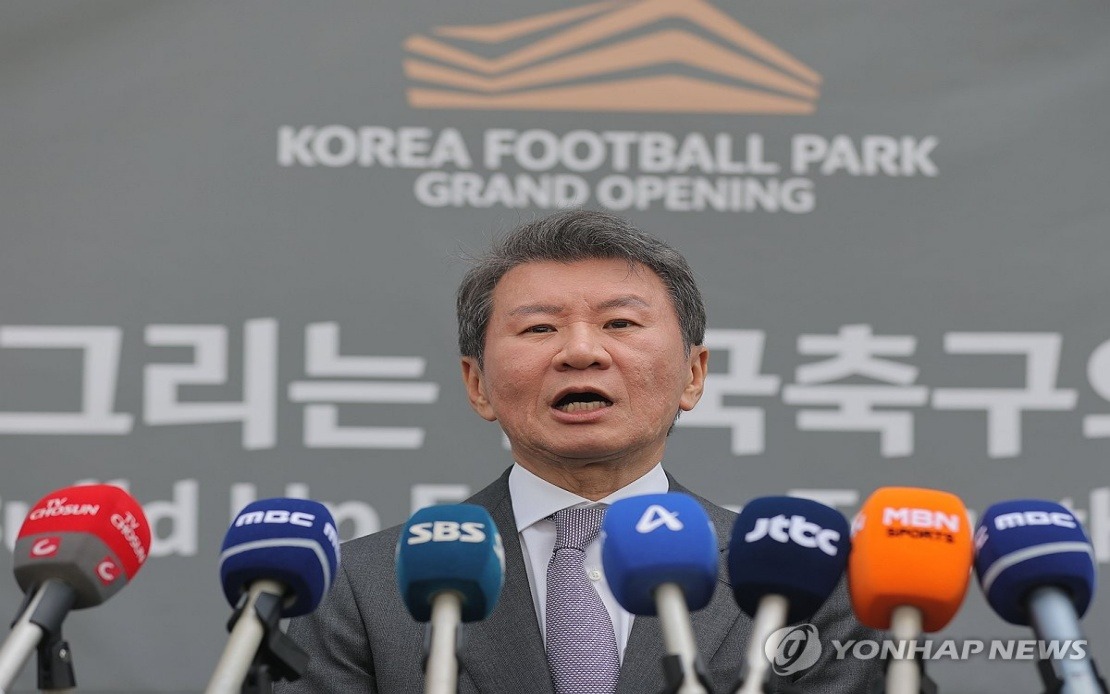
Chung Mong-gyu, president of the Korea Football Association, formally stepped down from his role on Monday, bringing an end to his tenure two weeks before the FIFA World Cup concludes on July 20 South Korean time. The decision follows mounting pressure on the organisation after the national team's disappointing group-stage elimination, a result that triggered immediate resignations from both the federation's leadership and coaching staff. Chung had earlier signalled his intention to leave the post in May, though he accelerated his departure in response to the sporting debacle that left South Korean football fans searching for answers about systemic failures within the sport's governance.
South Korea's performance at the World Cup fell significantly short of expectations, finishing third in Group A with just three points accumulated from a single victory and two defeats. The result meant the team could not advance to the knockout stages, even as one of the tournament's eight best third-place finishers. Hong Myung-bo, the national team coach, resigned immediately after the elimination was mathematically confirmed, leaving the federation to grapple with the fallout. By stepping down two weeks early, Chung accepted personal responsibility for the organisational circumstances that contributed to the national team's failure, effectively taking the fall for a crisis that extended beyond purely sporting considerations.
Chung's decision to resign did not emerge in a vacuum. For months, his leadership had drawn criticism centred on the opacity surrounding the appointment of coach Hong Myung-bo in July 2024. The process raised concerns among observers about whether the selection procedure met appropriate standards of transparency and merit-based evaluation. These concerns gained official traction when South Korea's Ministry of Culture, Sports and Tourism launched a comprehensive investigation into KFA operations throughout that year. The ministry's findings proved damaging, concluding that Chung and other senior KFA officials required disciplinary action over multiple irregularities discovered within the organisation.
The relationship between the football federation and the ministry has deteriorated considerably, with both sides now engaged in legal proceedings. The ministry has signalled its intention to conduct a further audit of the KFA, using the World Cup failure as justification for renewed scrutiny. This escalating conflict reflects deeper institutional tensions about how Korean football is administered and raises questions about the balance between sports autonomy and government oversight—tensions that resonate across Southeast Asian football federations grappling with similar governance challenges.
Under KFA regulations, one of the organisation's four vice presidents will assume interim leadership pending a formal election process. Notably, Chung possessed nearly three years remaining in his fourth term, meaning his successor must face election within 60 days rather than waiting for natural term expiration. This compressed timeline places the KFA under pressure to stabilise its governance quickly. The electoral process itself involves members of an electoral college comprising heads of regional football associations, chief executives of K League clubs, professional players, coaches, and referees. Last year's presidential election drew participation from 183 out of 192 eligible voters, indicating relatively robust engagement with the formal democratic process, though questions persist about whether the electoral framework adequately serves the broader interests of Korean football.
Minister Chae Hwi-young has intimated that significant reform may be forthcoming. In recent statements, the minister acknowledged widespread public concern regarding the KFA's election methodology, while adding a pointed observation: if the association's leadership truly grasps the collective disappointment felt by South Koreans following the World Cup debacle, the federation cannot justify maintaining its existing electoral procedures unchanged. This political pressure signals that the World Cup failure may catalyse structural reforms to how the KFA selects its leaders, potentially fundamentally altering the balance of power within South Korean football governance.
The Korean Sport and Olympic Committee, the nation's overarching sports authority, is positioned to drive these reforms. The KSOC has scheduled a general meeting for July 16 to amend election rules governing its member associations, including the KFA. Among the possibilities under consideration are extending the 60-day window for successor elections and introducing a direct election system in place of the existing electoral college model. These changes could represent the most significant institutional restructuring of Korean football leadership selection in recent memory, with implications for how other sports bodies within South Korea conduct their own governance processes.
Direct elections for sports federation presidents remain relatively uncommon in Asia, and any South Korean shift toward this model could influence governance practices throughout the region. For Malaysian sports administrators watching from afar, the KFA episode illustrates how World Cup disappointments can trigger demands for accountability extending well beyond coaching decisions into fundamental questions of organisational legitimacy and democratic legitimacy. The tension between sport autonomy and public accountability—particularly when national teams underperform—represents a universal challenge for sports bodies across Southeast Asia.
In his resignation statement, Chung acknowledged the duality of his tenure, expressing gratitude for moments when the KFA exceeded expectations while accepting responsibility for periods of failure. He attributed collective successes to players and supporters while shouldering personal blame for shortcomings, framing his departure as necessary for Korean football's continued development. The philosophical distinction Chung drew between shared victories and singular accountability reflects the weight placed on sports federation presidents in Korean society, where football occupies substantial cultural and political significance. His closing assertion that South Korean football will overcome adversity and return to former heights attempted to project confidence while acknowledging deep institutional challenges requiring urgent attention.

