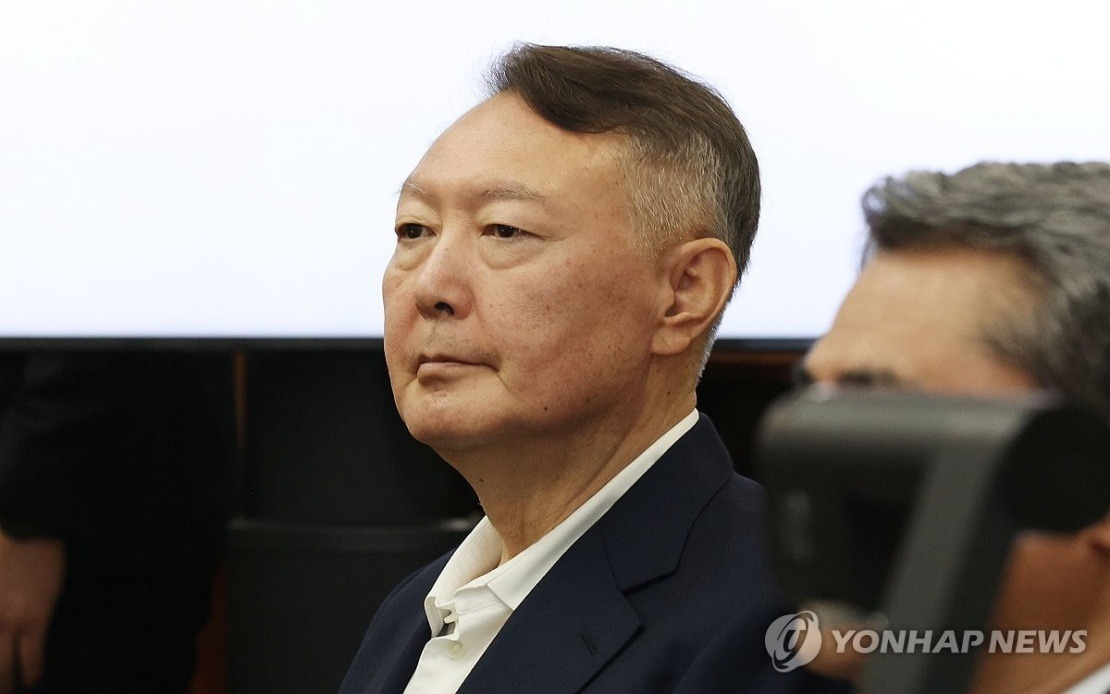
Former South Korean President Yoon Suk Yeol faces another significant legal setback following a Seoul Central District Court ruling on Monday that sentenced him to two years in prison for accepting prohibited political contributions. The court determined that Yoon had violated the country's Political Funds Act by receiving complimentary polling services from Myung Tae-kyun, a politically connected businessman, between April 2021 and March 2022. This conviction carries particular weight as it demonstrates the judiciary's willingness to hold even former heads of state accountable for campaign finance violations, a principle that carries important lessons for democratic accountability across the region.
The specifics of the case centre on Myung's provision of opinion polling services valued at approximately 270 million won, equivalent to roughly US$180,100, which prosecutors contended constituted unlawful financial support for Yoon's political activities. Rather than accepting all of the state counsel team's allegations, the court found Yoon guilty of accepting fourteen of the contested polls rather than the full amount prosecutors had documented. This partial conviction reflects the court's application of careful evidentiary standards, suggesting that judges assessed which particular polling arrangements crossed the threshold from legitimate political consultation into illegal campaign finance. The court consequently ordered Yoon to forfeit 13.96 million won in addition to his imprisonment sentence.
Central to the prosecution's case was the allegation that Yoon had leveraged his political influence to reciprocate Myung's support. Specifically, prosecutors argued that the former president had promised to endorse former Representative Kim Young-sun as a parliamentary candidate for the conservative People Power Party during June 2022 by-elections, thereby creating a quid pro quo arrangement underpinning the opinion poll transfers. The Seoul court acknowledged this prosecutorial argument in its findings, essentially determining that Yoon's political patronage constituted adequate consideration for receiving valuable polling data without monetary payment. Such arrangements, which blur the line between legitimate political networking and corrupt influence-peddling, represent precisely the kind of financial opacity that campaign finance regulations internationally seek to prevent.
The sentencing of Myung Tae-kyun to eighteen months imprisonment alongside Yoon underscores that both parties to such arrangements face legal consequences. The special counsel team, led by Min Joong-ki, had originally sought substantially harsher penalties, requesting a four-year sentence for the former president and a three-year term for Myung. The court's decision to impose notably lighter sentences suggests either that judges found mitigating circumstances or that the evidence, while sufficient for conviction, did not rise to the severity prosecutors had argued. This gap between prosecution requests and judicial outcomes offers insight into how South Korean courts calibrate sentences in politically sensitive cases.
Perhaps most intriguingly, this conviction diverges sharply from a separate acquittal involving Yoon's wife, former First Lady Kim Keon Hee, on virtually identical charges. In April, the Seoul High Court ruled that Kim could not be held culpable for receiving similar polling services from Myung because the businessman had distributed such polls to other recipients as well, suggesting no discriminatory benefit accrued to the first lady personally. This reasoning—that broadly distributed services do not constitute private benefit—appears inconsistent with the court's approach toward Yoon's situation, where the former president's quid pro quo political commitment seemingly transformed the polling into an illegal contribution. The divergence has prompted Min's team to appeal Kim's acquittal, setting up continued litigation over what exactly constitutes illegal campaign finance in the context of in-kind contributions.
Yoon's conviction in this opinion polls matter represents merely the latest chapter in an extraordinary legal reckoning following his departure from office. In February, he was sentenced to life imprisonment on far more serious charges related to his brief and disastrous attempt to impose martial law in December 2024, an act prosecutors successfully characterized as an insurrection against constitutional governance. That separate conviction on the gravest possible charges has already overshadowed his entire presidency, transforming Yoon's legacy from a five-year tenure to an extended criminal prosecution. The accumulation of multiple convictions across different legal proceedings suggests that South Korean institutions are methodically processing various alleged violations separately rather than consolidating charges, potentially extending his legal jeopardy over years.
For Malaysian and Southeast Asian observers, Yoon's cases offer instructive perspectives on democratic fragility and institutional resilience. South Korea's willingness to prosecute a former head of state, including on fundamental constitutional charges, demonstrates that democratic systems can maintain accountability mechanisms even when applied to the most powerful figures. However, the complexity and duration of these proceedings also illustrate how politically charged such prosecutions become, with questions inevitably arising about whether legal proceedings are motivated by genuine wrongdoing or partisan revenge. The divergent outcomes in Yoon's and his wife's trials further highlight how subtle judicial interpretations of identical facts can produce contradictory results, creating perceptions of inconsistency even within functioning court systems.
The campaign finance dimension of this case, while less dramatic than constitutional insurrection, speaks to systemic vulnerabilities affecting democracies globally. Opinion polling, market research, and data analytics services represent increasingly valuable political commodities that operate in grey areas between legitimate campaign support and illegal financial contributions. The challenge of distinguishing between a political leader accepting research services as part of normal political networking versus accepting them as disguised campaign bribes reflects broader difficulties in regulating modern political financing. As political campaigns become increasingly data-driven across Southeast Asia, similar questions about polling, analytics, and opposition research will likely generate their own prosecutions and legal disputes.
Yoon's sentencing to two years imprisonment, combined with his life sentence on martial law charges, creates profound uncertainty about his future. Whether he will actually serve these sentences, whether appeals courts might reduce or eliminate them, and how South Korea's political system processes the unprecedented spectacle of a former president in prison all remain open questions. The case demonstrates that political consequences for constitutional violations and campaign finance breaches can extend far beyond electoral defeat, encompassing actual incarceration. Yet it simultaneously illustrates how protracted and complicated criminal accountability for political leaders becomes, with multiple trials, appeals, and divergent outcomes creating a legal morass that both vindicates rule of law principles and raises concerns about their consistency and predictability.

