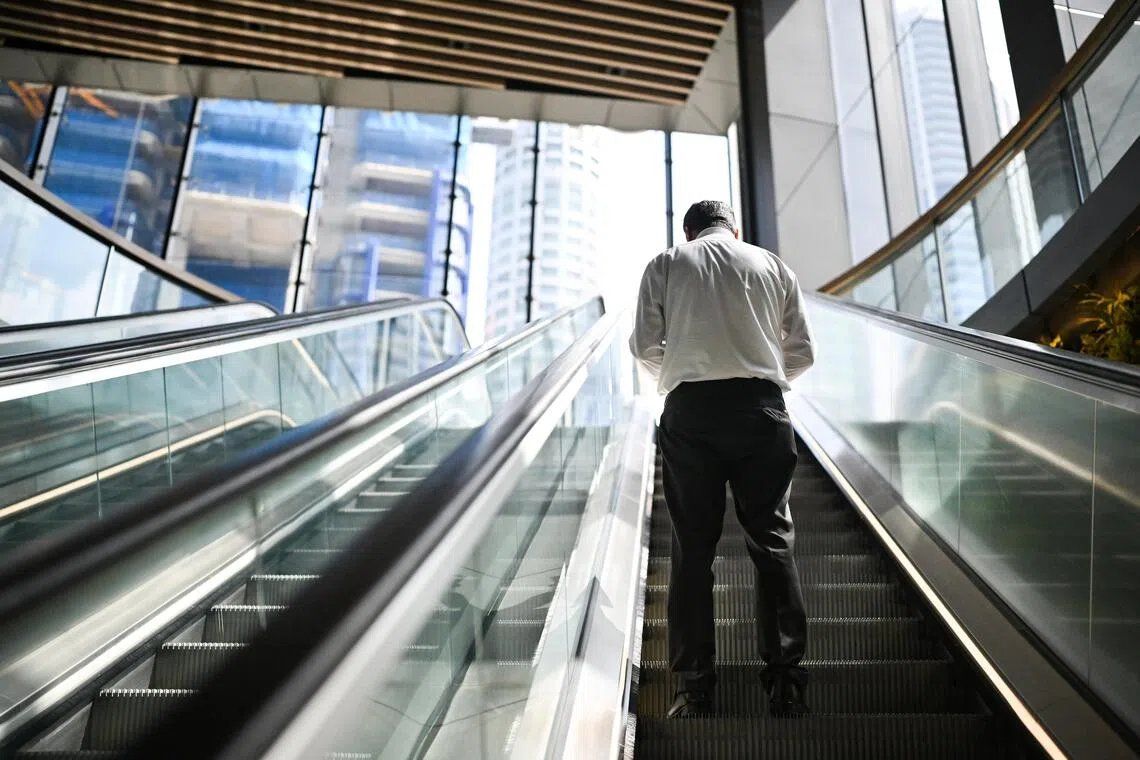
South Korean commuters find themselves deeply divided over an issue that seems mundane but carries significant practical implications: the proper way to use an escalator. A government survey encompassing 1,000 adults across seven major cities revealed an almost perfectly even split in preferences, with 50.1 per cent advocating for standing on one side while leaving the other open for those in a hurry, while the remaining 49.9 per cent believe passengers should remain stationary across both lanes. This razor-thin margin has resurfaced one of the country's longest-running transportation debates, one that challenges long-held assumptions about efficiency and raises new questions about safety and wear on infrastructure.
The depth of this disagreement became evident when Seoul hosted a forum on August 29 bringing together approximately 200 citizens and experts to examine whether escalators function more safely and efficiently when everyone stands motionless or when one lane remains available for pedestrians. The forum underscored a more fundamental issue than simple etiquette: the debate touches on competing priorities and competing definitions of what constitutes effective public space management. Jang Gye-ryeon, a public administration researcher at the Korea Institute of Industrial Relations, articulated this complexity by noting that the discussion cannot be reduced to identifying a single correct answer. Instead, stakeholders must grapple with whose needs take priority and how circumstances at different locations and times might warrant different approaches.
From a pure efficiency standpoint, the calculations prove counterintuitive. An individual moving in a hurry clearly saves time by walking up a stationary escalator rather than standing still. However, when considering the aggregate movement of all passengers waiting to board, research suggests that utilizing both sides may transport significantly more people during equivalent periods. Jang referenced a controlled experiment conducted at a congested British rail station that demonstrated passenger throughput increased between 25 and 30 per cent when commuters occupied both sides instead of maintaining a walking lane. A smaller-scale trial at Guri Station near Seoul produced comparable findings, with 190 people using an escalator during the period when both sides were occupied, compared with 164 when only one side was utilized. Researchers emphasised the experimental limitations and cautioned against drawing definitive conclusions from such restricted datasets.
The safety dimension introduces another layer of complexity that cannot be dismissed. Sensor-based testing of escalator steps revealed that downward walking generated impacts equivalent to approximately 2.01 times an individual's body weight, while ascending movement produced roughly 1.54 times body weight. These repeated mechanical stresses, combined with the uneven loading that occurs when passengers stand exclusively on one side, accumulate over time. Heo Yun-seop, a professor at Korea Lift College, explained that such repeated impacts and asymmetrical weight distribution may accelerate deterioration and increase maintenance expenses, though insufficient evidence currently establishes a direct causal link between one-sided standing and equipment failure. The potential economic implications extend beyond individual accidents to encompass system-wide operational costs.
South Korea's evolving approach to this question reflects how policy responses have swung between competing priorities. Beginning in 1998, authorities actively promoted one-side standing throughout the nation, a practice that gained momentum ahead of the 2002 FIFA World Cup as a mechanism to accommodate hurried passengers. However, as accident rates climbed and maintenance concerns intensified, the government reversed course between 2009 and 2014, vigorously encouraging two-line standing instead. Since 2015, officials adopted a neutral stance, declining to prescribe which configuration commuters should adopt. The government instead emphasised three fundamental safety guidelines: maintain contact with the handrail, refrain from walking or running, and remain within designated safety markings. This oscillating policy history helps illuminate why contemporary commuters remain so evenly divided—decades of contradictory official messaging have left the public uncertain about best practices.
Accident statistics underscore why authorities continue revisiting this contentious issue. Data compiled between 1993 and 2025 attributed 72.3 per cent of escalator accidents to user behaviour rather than mechanical failure, representing a human factor that remains difficult to control. Furthermore, people aged 60 and older represented 53.3 per cent of all accident victims, indicating that demographic considerations should inform any policy prescription. As South Korea's population ages, this vulnerability assumes greater significance for public health and infrastructure planning. The concentration of incidents among older commuters suggests that blanket policies lacking nuance may inadvertently increase risk for the most vulnerable segments of society.
The August 29 forum generated unexpected shifts in participant opinion that complicate rather than clarify an obvious resolution. Before attending the discussion, 45.9 per cent of participants favoured the two-line standing approach, while only 13.4 per cent supported leaving one side open for pedestrians. Following extensive deliberation, support for one-side standing nearly doubled to 29.9 per cent, though endorsement for two-line standing declined to 31.4 per cent. Most revealing was the emergence of a plurality preferring flexibility: 38.1 per cent ultimately favoured context-dependent rules that would vary according to location and crowd density. This outcome demonstrates how exposure to research, testimony from experts, and consideration of competing values can dissolve apparent consensus and yield more sophisticated appreciation for the problem's complexity.
The forum's inconclusive outcome reflects the legitimate tensions underlying this debate. Implementing uniform policy neglects genuine differences in how escalators function during peak versus off-peak periods, in stations designed for rapid transfers versus those serving residential areas, and in systems serving diverse age demographics. A single prescriptive rule necessarily disadvantages particular user populations or contexts. Conversely, site-by-site customisation creates confusion and requires extensive public education to ensure compliance and safety. Interior Minister Yun Ho-jung's commitment to incorporate forum insights into future escalator safety initiatives acknowledges that resolution requires moving beyond simplistic dichotomies toward evidence-based solutions accounting for operational realities.
For Malaysian and Southeast Asian readers, South Korea's escalator dilemma offers instructive lessons about the challenges inherent in establishing norms for shared public spaces. As rapid urbanisation expands public transit systems throughout the region, questions about how commuters should behave on moving walkways, escalators, and other infrastructure will intensify. South Korea's experience demonstrates that policies reflecting genuine research, safety testing, and demographic consideration prove more durable and effective than those based on casual assumptions or convenience. Furthermore, the willingness to acknowledge that different contexts may warrant different approaches represents practical wisdom that balances efficiency, safety, and equity. As Southeast Asian cities design and refine their own transit systems, examining how larger neighbours address these quotidian but consequential questions about shared space usage can inform more thoughtful planning.

