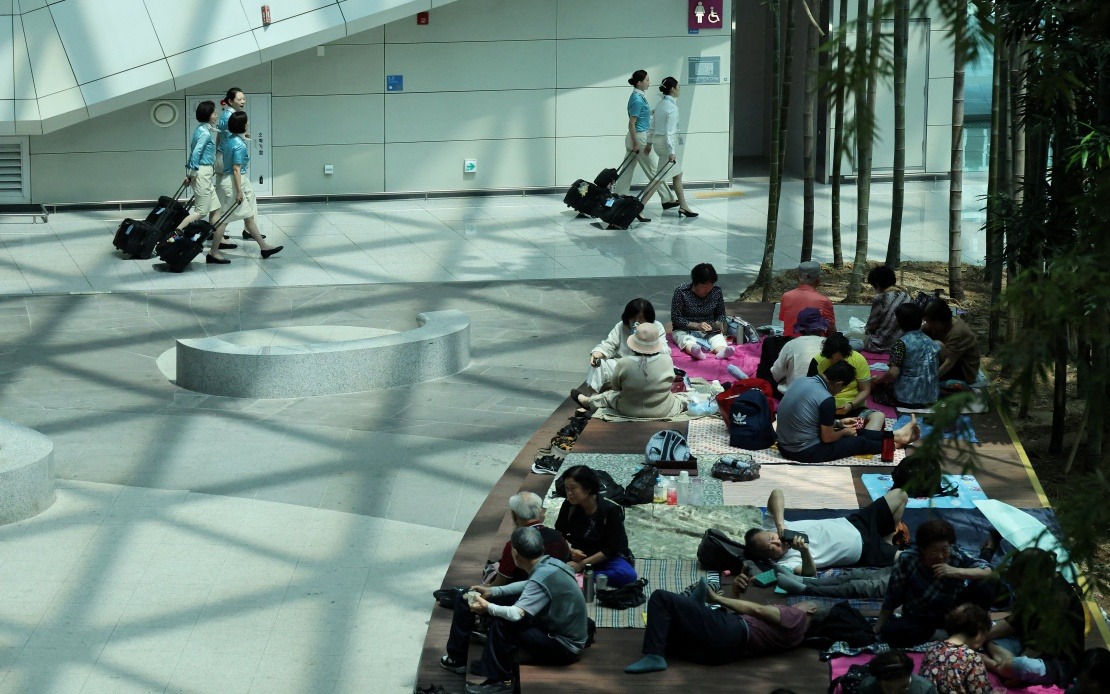
South Korea is confronting an escalating public health challenge as heat-related illness cases have nearly tripled over the past ten years, according to government analysis released this week. Data from the Korea Disease Control and Prevention Agency reveals a troubling trajectory that underscores how climate pressures are reshaping disease patterns across East Asia, with implications for other rapidly developing nations in the region facing similar environmental shifts.
The scale of the transformation becomes evident when comparing successive five-year periods. During the 2011-2015 interval, the nation recorded an annual average of only 215 heat-related patients in the late summer months—specifically from ipchu, the traditional calendar date marking autumn's arrival typically falling around August 7, through the end of August. This baseline figure has since skyrocketed dramatically. The 2016-2020 period showed an annual average of 658 cases, representing roughly a threefold increase. More recent years have proven similarly concerning, with the 2021-2025 average holding steady at 638 cases annually, suggesting the surge has plateaued at historically elevated levels rather than continuing to climb.
Mortality figures paint an even grimmer picture of the mounting toll. Deaths attributable to heat-related conditions numbered just 3.3 annually during 2012-2015, but this figure has risen to over four deaths per year across the decade from 2016 to 2025. The 2024 summer season alone illustrated the severity of the current environment, with 1,299 individuals suffering heat-related illnesses and twelve fatalities recorded between ipchu and late August. This single-year toll demonstrates that South Korea's medical infrastructure, despite decades of development, is straining under the weight of climate-driven health emergencies.
The immediacy of the crisis became evident on Friday alone, when 202 people required emergency room treatment nationwide for heat-related conditions, with three dying. These daily figures highlight how heat stress has become not merely a summer inconvenience but a genuine emergency medicine challenge requiring constant vigilance and resource allocation. For Malaysian healthcare administrators, South Korea's experience offers a cautionary framework—as a tropical nation already accustomed to persistent heat, Malaysia must consider whether developing nations in the region are adequately preparing for further intensification of thermal stress.
Government response mechanisms have evolved substantially since the initial health warnings of the 2010s. South Korea implemented a dedicated heat-related illness monitoring system commencing May 15 each year, creating systematic surveillance that enables rapid intervention. Under this framework, authorities have documented 3,089 heat-related illness cases this year to date, with 26 attributed deaths. This organized tracking system represents a crucial institutional adaptation, though the persistence of substantial numbers despite intervention suggests the fundamental challenge—extreme temperatures themselves—remains largely beyond direct control through conventional public health measures.
Metereological forecasts indicate that oppressive conditions will persist throughout late August, with daytime highs expected to oscillate between 31 and 35 degrees Celsius nationwide. For Southeast Asian observers, these temperature ranges are unremarkable; however, South Korea's infrastructure, urban design, and population demographics have evolved under cooler historical conditions. The nation's aging population, concentrated in high-density urban environments with significant heat island effects, creates particular vulnerability. Building stock designed for temperate climates may lack adequate cooling capacity, and elderly residents—who comprise a growing share of the population—face heightened physiological risk during extended heat exposure.
The timing of these illnesses during the late summer period carries cultural significance in South Korea's traditional calendar. Ipchu marks the theoretical transition into autumn, yet meteorologically the hottest and most humid conditions often occur precisely during this interval. This disconnect between traditional seasonal markers and actual climatic reality reflects a broader adaptation challenge facing East Asian societies—established cultural rhythms and institutional planning cycles must accommodate climate patterns that no longer align with historical norms. For Malaysia, where the tropical climate is comparatively stable, this represents a different dynamic, yet sustained heat intensification could similarly strain systems built upon centuries of climatic assumptions.
The research institute operating under South Korea's interior ministry that conducted this analysis represents the type of institutional capacity required to track and respond to climate health emergencies. Regular publication of comparative data across five-year intervals enables identification of trends and justification for resource allocation. Malaysian health authorities and policymakers might examine whether similar systematic monitoring exists for heat-related conditions in tropical Southeast Asia, where comprehensive data collection could reveal emerging patterns before they become acute crises.
The implications of South Korea's experience extend beyond immediate mortality statistics. Heat-related illnesses encompass a spectrum from heat exhaustion to heat stroke, with less severe cases potentially producing lasting physiological damage. Repeated exposure may compromise physical capacity and cognitive function, particularly among workers in outdoor sectors and vulnerable populations. As Southeast Asian economies continue expanding manufacturing, agriculture, and construction sectors, protecting workers from thermal stress becomes an economic productivity issue alongside a humanitarian concern. South Korea's experience suggests that awareness campaigns and emergency response protocols, while necessary, remain insufficient without broader environmental and urban planning interventions.
Looking forward, South Korea's trajectory indicates that heat-related illness will likely persist as a significant public health challenge regardless of short-term temperature fluctuations. The institutional, demographic, and climatic factors driving the tripling of cases over a decade appear structural rather than episodic. For Malaysia and Southeast Asia, this sobering precedent suggests that adaptation must become embedded within broader development strategies—from building codes incorporating passive cooling to occupational health standards reflecting actual thermal conditions, rather than treating heat stress as a peripheral summer concern.

