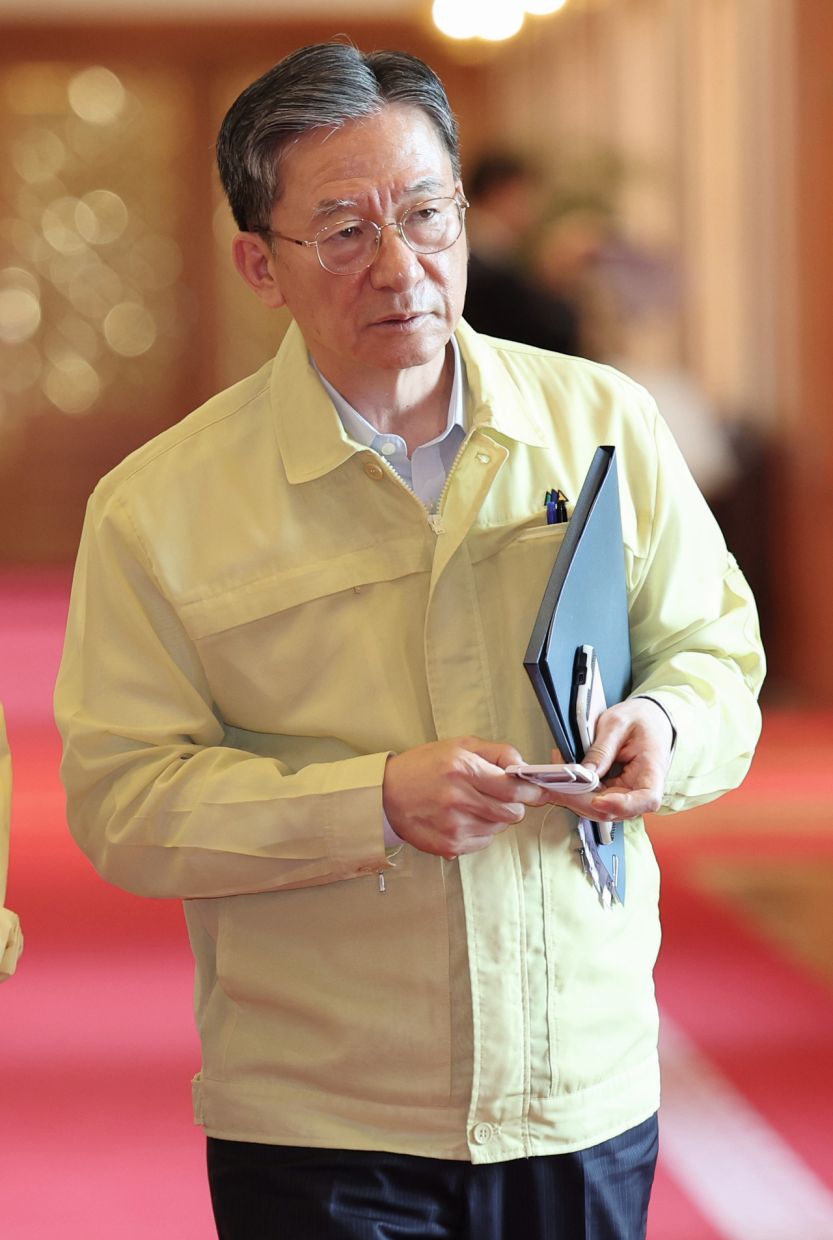
South Korea's Justice Minister Jung Sung-ho has stepped down from his position, triggering a leadership transition at a critical juncture in the country's overhaul of its criminal justice system. Jung submitted his resignation on Tuesday afternoon, citing health concerns as the primary reason for his departure, though observers note the timing aligns closely with escalating tensions between his ministry and the ruling Democratic Party over the future scope of prosecutorial authority.
The resignation centres on a fundamental philosophical disagreement about how South Korea should restructure its investigative and prosecutorial functions. Jung had expressed reservations about eliminating prosecutors' supplementary investigation powers—a mechanism that has historically allowed prosecutors to independently investigate cases when they believe police investigations have been inadequate. The ruling Democratic Party, by contrast, has championed a comprehensive separation of these functions, arguing that concentrating both investigative and prosecutorial responsibilities within the prosecution has created dangerous power imbalances within the justice system.
Under current procedures, prosecutors retain the right to conduct supplementary investigations after reviewing police work on a case. This power has been a cornerstone of South Korea's prosecutorial system, allowing the prosecution to fill perceived gaps in investigation quality and ensure thorough case preparation before charging decisions. However, critics have long contended that this arrangement enables prosecutors to effectively conduct independent investigations parallel to police work, giving the prosecution excessive control over criminal matters and potentially compromising investigative independence.
The Democratic Party's proposed reforms aim to fundamentally restructure this relationship through changes enshrined in a revised Criminal Procedure Act scheduled to take effect on October 2. Under the new framework, prosecutors will lose their unilateral right to conduct supplementary investigations. Instead, the prosecution's role will be confined to reviewing the investigative conclusions submitted by police, making determinations about whether to pursue charges, and managing cases through the judicial process. This represents a significant narrowing of prosecutorial discretion and a deliberate shift toward a model where police investigation and prosecution function as distinct, sequential phases rather than parallel or overlapping operations.
Jung's opposition to these changes reflects concerns held by segments of South Korea's legal establishment who argue that removing prosecutorial investigation powers could compromise case quality and public safety. Proponents of maintaining such powers contend that experienced prosecutors bring valuable expertise to investigations and can identify evidentiary gaps that might otherwise go undetected. They worry that strictly separating these functions could result in inadequately investigated cases reaching the charging stage, potentially undermining the integrity of prosecutions and complicating courtroom proceedings.
The Justice Minister's resignation statement, according to reports from Yonhap News Agency and other local media outlets, included the observation that completing South Korea's new criminal justice system "would be desirable under new leadership." This phrasing suggests Jung recognised that his philosophical differences with the Democratic Party on this core issue had become untenable within his current position. Rather than preside over the implementation of reforms he had questioned, Jung chose to relinquish the role to someone whose vision might align more closely with the ruling party's direction.
Vice Justice Minister Lee Jin-soo will assume acting leadership of the ministry following Jung's departure, maintaining operational continuity during what may prove to be a transitional period. The timing of the resignation places the acting minister in the position of overseeing the final preparations for October 2's implementation of the revised Criminal Procedure Act, including necessary procedural adjustments, staff reorientation, and institutional recalibration that the new system will demand.
South Korea's push to restructure prosecutorial powers reflects broader regional trends toward limiting prosecutorial discretion and enhancing checks and balances within judicial systems. The Democratic Party's initiative aligns with reform movements elsewhere in Asia, where questions about prosecutorial independence and accountability have prompted similar institutional adjustments. Whether South Korea's model proves successful will likely influence debates in neighbouring countries wrestling with comparable governance questions.
The dispute underlying Jung's resignation also illuminates continuing tensions within South Korean governance around executive power and institutional balance. Prosecutors in South Korea have historically wielded considerable influence in political and economic investigations, handling high-profile cases involving corruption, financial crimes, and national security matters. Curtailing their investigative independence represents a significant recalibration of state power and reflects concerns that prosecutorial authority had drifted beyond appropriate bounds.
For Malaysian observers, South Korea's institutional recalibration offers instructive parallels. Like South Korea, Malaysia has grappled with questions about prosecutorial independence, investigative integrity, and the appropriate boundaries of prosecutorial power. The Democratic Party's emphasis on functional separation between investigation and prosecution echoes principles that various Southeast Asian countries have incorporated into their own justice reforms. Understanding how South Korea's system operates post-October 2 may provide valuable lessons for jurisdictions considering similar institutional redesigns.
The successful implementation of South Korea's criminal justice reforms will require careful coordination between prosecution and police, clear procedural guidelines, and institutional cultures willing to embrace their new, more limited roles. Jung's departure removes one potential source of institutional resistance to these changes, though the deeper challenge of ensuring the new system functions effectively remains. The coming months will test whether separating investigative and prosecutorial functions genuinely serves justice or creates new complications that stakeholders must address through further refinement.

