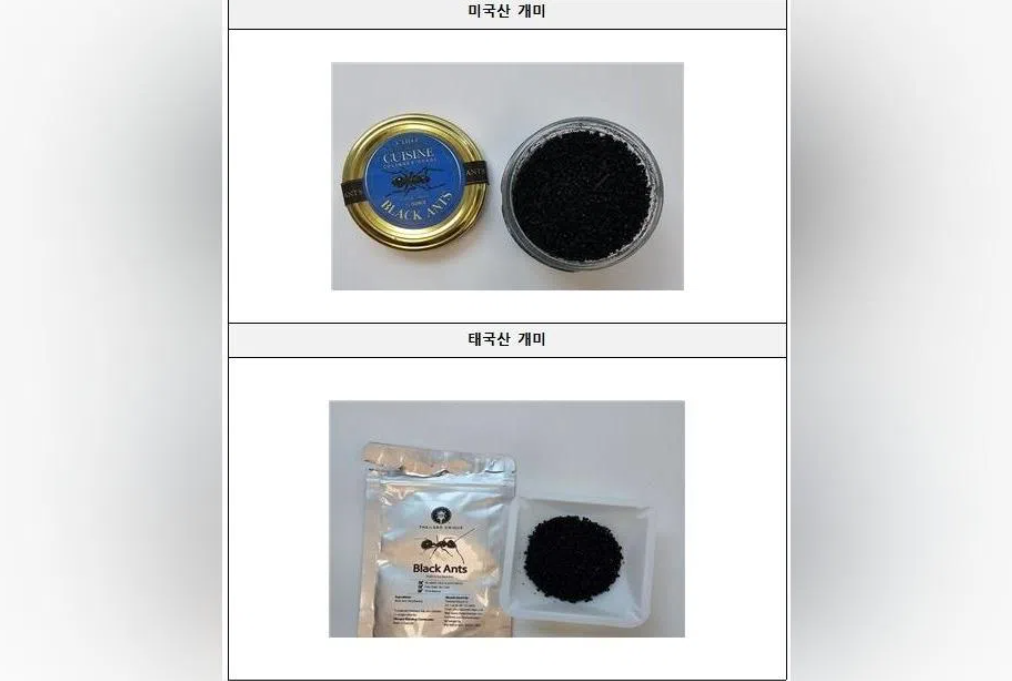
A two-star Michelin restaurant operator in Seoul has become embroiled in a significant food safety violation case after prosecutors pursued criminal charges for illegally incorporating black ants into dessert presentations. The unapproved insect species were used atop palate-cleansing sorbets, allegedly to impart a sour flavour to the frozen confection. During Monday's court proceedings, prosecutors requested a one-year prison sentence alongside a 20 million won financial penalty, marking an unusually stringent response to what might otherwise be dismissed as culinary experimentation.
South Korea maintains a tightly regulated framework governing which creatures may be used in food preparation. The legislation currently permits only ten designated insect varieties for human consumption, with grasshoppers and brown mealworm larvae among the sanctioned options. This restrictive approach reflects broader food safety protocols designed to protect consumers and maintain quality standards across the hospitality sector. The black ants in question, sourced from Thailand and the United States, fell entirely outside this permitted category, rendering their use fundamentally unlawful regardless of the chef's creative intentions.
The enforcement action commenced following a formal investigation by food safety authorities, who discovered evidence of this practice spanning nearly four years until January 2025. Over this extended period, the establishment generated approximately 12,000 transactions totalling 120 million won through serving these ant-garnished desserts. Ministry documentation presented photographic evidence of containers labelled "Cuisine Black Ants" retained within the restaurant's premises, establishing clear knowledge of the ingredient's identity and sourcing. The scale of the operation suggests this was not an isolated incident but rather an established component of the establishment's culinary offerings.
The defendant's legal representatives adopted a defensive posture by asserting that the ant-topped confections were presented exclusively to patrons who had granted explicit prior consent. This argument, while attempting to position the violation as a consensual gastronomic adventure between willing participants, fundamentally misses the regulatory point. South Korean food safety law prohibits the use of unapproved insect species irrespective of customer awareness or agreement, reflecting a paternalistic legislative approach that prioritises state-mandated safety standards over individual consumer choice. The consent argument therefore carries minimal legal weight within the existing regulatory framework.
During closing statements, the chef expressed remorse for the transgression, attributing the violation to insufficient comprehension of applicable regulations. This acknowledgment suggests either negligence in understanding the law or a calculated underestimation of potential consequences. For a two-star Michelin establishment, whose operators presumably maintain sophisticated understanding of international culinary practices and regulatory environments, the claim of regulatory ignorance strains credibility. The incident raises questions about whether high-end chefs sometimes proceed with unconventional ingredients based on assumptions that their elite status or customers' presumed sophistication might provide protection from enforcement action.
The case carries broader implications for the restaurant industry across East Asia and Southeast Asia, where regulatory bodies are increasingly scrutinising novel ingredient use and unconventional food preparation methods. Thailand and Vietnam, major exporters of insect protein products, have established their own consumption frameworks, yet exporters occasionally encounter resistance from importing nations with stricter approval processes. This Seoul incident illustrates how culinary innovation can collide with regulatory conservatism, particularly when premium establishments attempt to source exotic ingredients without securing proper authorisation. The prosecutorial response signals that no establishment, regardless of prestige or Michelin recognition, receives exemption from food safety compliance.
Michelin-starred establishments in South Korea and the region may face scrutiny intensifying around ingredient sourcing and verification procedures. The fine of 20 million won, while substantial for most restaurants, represents a relatively modest sum for a two-star venue generating 120 million won in ant-related revenue alone. However, the potential imprisonment of an owner constitutes a far more serious deterrent than financial penalties, suggesting prosecutors view this as warranting criminal culpability rather than mere administrative violation. This escalation reflects growing intolerance for safety regulatory breaches, even when consumers may have knowingly participated.
The September ruling will establish important precedent regarding how Korean courts balance regulatory compliance against culinary creativity and informed consumer autonomy. The judgment will likely influence how other establishments calibrate risk when considering unconventional ingredients or preparation methods. Additionally, it may prompt regulatory bodies throughout Southeast Asia to clarify boundaries around novel foods and insects, particularly given the growing commercial interest in insect protein as a sustainable alternative to conventional animal sources. Regional food safety agencies may accelerate harmonisation efforts around approved insect species to prevent similar grey-zone situations.
This incident ultimately reflects the tension between progressive culinary culture and cautious regulatory governance. While the chef's innovation—using insects to create specific flavour profiles—demonstrates gastronomic sophistication, the underlying violation of South Korea's food safety framework remains indefensible within existing legal structures. For Malaysian and regional food industry stakeholders, the case underscores the imperative to thoroughly understand local regulatory environments before implementing novel ingredient strategies, particularly when sourcing from international suppliers. The severity of the prosecution suggests that Asian regulatory bodies will not tolerate ingredient shortcuts, even when presented as consensual culinary experiences.

