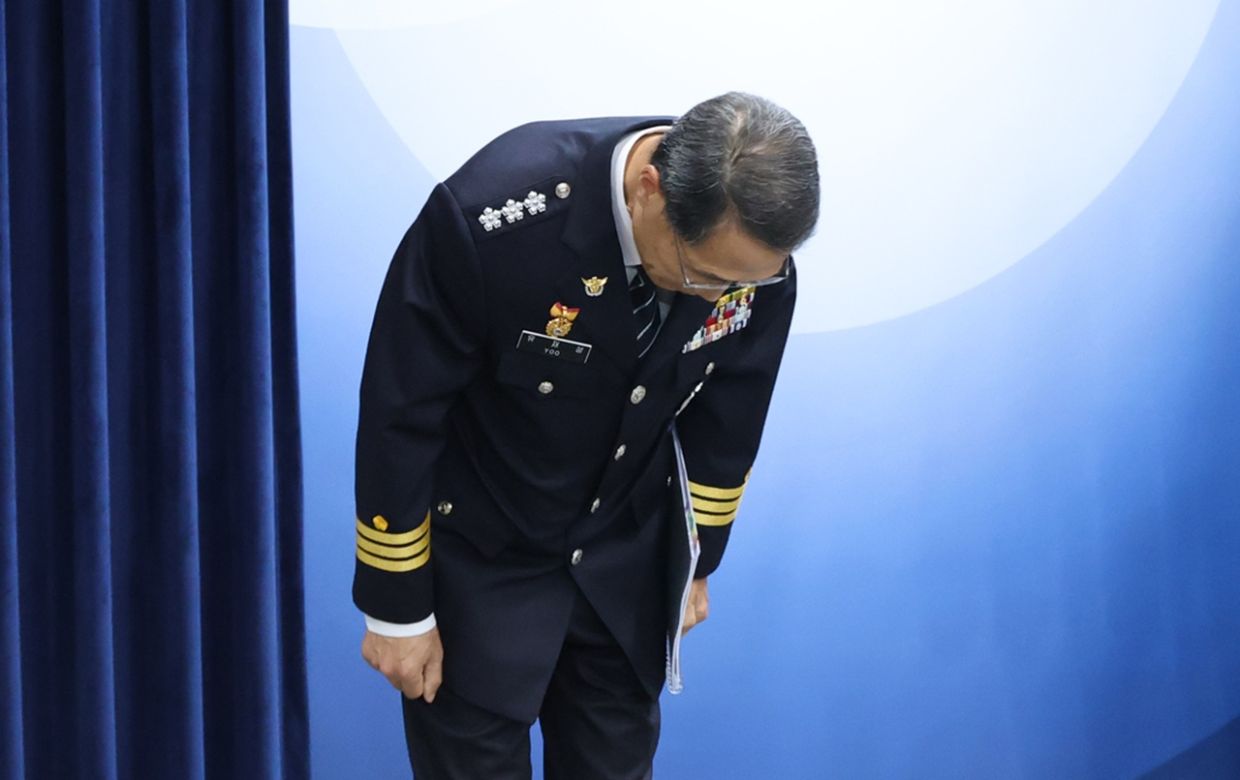
South Korea's acting National Police Agency Commissioner General Yoo Jae-sung unveiled an ambitious reform agenda on Monday as the country grapples with a widening scandal involving accusations of investigative misconduct and internal collusion. The announcement came during a press briefing at Seoul's Government Complex, where Yoo acknowledged that public confidence in the police had been severely undermined by the handling of a high-profile case centred on suspect Jang Yoon-gi, who faces charges related to the death of a teenage girl in Gwangju in May.
The scandal at the heart of this institutional crisis centres on allegations that investigating officers leaked sensitive information about their inquiry to Jang's father, himself a serving police officer, while simultaneously failing to properly preserve crucial evidence. Such accusations have triggered intense scrutiny of the police force's internal culture and raised troubling questions about whether personal or professional relationships can compromise the integrity of criminal investigations. For Malaysian observers, the case offers an uncomfortable reminder that institutional accountability challenges transcend borders and that even well-resourced developed nations must continually battle entrenched problems within law enforcement hierarchies.
Yoo's response includes the creation of an investigative reform task force to be operational by the end of July, structured to incorporate substantial outside expertise. The proposed panel will comprise between seven and ten members, with independent experts and civilians constituting more than half of its composition. This design reflects international best practices in police reform, where external perspectives have proven valuable in breaking institutional resistance to change. The task force will focus on two interconnected problems: first, dismantling improper networks between officers and their communities that enable conflicts of interest, and second, establishing better protocols for handling cases involving vulnerable populations such as minors.
The reform architecture extends beyond internal restructuring to include external oversight mechanisms. An internal affairs investigation unit operating under the National Office of Investigation will soon commence operations with a clear mandate to scrutinise serious criminal conduct by police personnel regardless of their rank or seniority. This development marks a significant shift toward meritocratic accountability within hierarchical police structures that traditionally sheltered senior officials from meaningful investigation. Additionally, the government plans to establish a civilian oversight body under the Korean National Police Commission, a 100-member panel of civilian investigators tasked with examining alleged human rights violations and misconduct within police investigations. Such civilian-led accountability mirrors models adopted in progressive democracies and represents a tacit admission that internal policing mechanisms alone cannot rebuild public trust.
Realising this expanded oversight structure requires legislative amendments to the Police Act, a process already underway in South Korea's National Assembly. Yoo emphasised that the government would actively participate in legislative deliberations to ensure the new body possesses sufficient authority to generate recommendations leading to personnel changes or disciplinary action. Without such enforcement powers, civilian oversight becomes merely performative, a point that South Korean policymakers appear to understand. For regional democracies wrestling with police accountability, this insistence on meaningful enforcement powers provides a model worth studying.
Beyond oversight, Yoo addressed a contentious operational issue within the police force: the nationwide rotation system designed to prevent officers from becoming too entrenched in particular regions. Currently, superintendents rotate systematically, and some senior inspectors participate in the scheme, but extending this practice across all ranks presents formidable practical obstacles. Expanding rotations to junior officers would necessitate providing official residences to a vastly larger cohort, straining budgets significantly while raising fairness concerns. Yoo acknowledged these constraints and committed to consulting with rank-and-file officers before implementing changes, recognising that successful reform requires institutional buy-in rather than top-down imposition.
The police chief's acknowledgment that comprehensive rotation policies would impose substantial burdens on field officers reveals the tension between institutional reform and operational capacity. Southeast Asian police forces facing similar dilemmas might note that sustainable reform requires balancing idealistic goals with pragmatic recognition of resource limitations and workforce morale. Yoo proposed implementing readily achievable measures promptly while reserving more complex structural changes for the reform task force's detailed examination. This phased approach, while potentially slower than comprehensive reform advocates might prefer, may prove more durable because it avoids generating officer backlash that could undermine implementation.
Regarding the specific investigation into Jang's father and allegations of information leakage, Yoo indicated that the police would defer final conclusions until the special investigation team completes its analysis. This measured stance avoids premature judgment while maintaining transparency about the inquiry's ongoing status. The decision reflects appropriate institutional restraint but also underscores how the collusion scandal has prompted the police to subject its own members to external scrutiny more readily than might have occurred in less fraught circumstances.
Yoo repeatedly stressed his personal commitment to implementing reforms without clinging to his position, language suggesting awareness that the acting commissioner's tenure carries provisional status and that genuine reform requires leadership willing to accept accountability. This framing acknowledges that in the context of institutional scandal, executives must credibly signal their personal investment in change rather than assuming stakeholders will trust officials tied to problematic predecessors. For police forces globally, this principle remains vital: reform announcements carry little weight unless leaders visibly demonstrate commitment through their actions and willingness to accept personal consequences.
The South Korean police reform initiative reflects broader democratic expectations that state institutions must actively restore public confidence following scandals through structural changes, not merely procedural adjustments. The emphasis on civilian participation, external expertise, and enforcement mechanisms indicates recognition that public trust requires genuine power-sharing between police leadership and civilian society. As Malaysia and other Southeast Asian nations navigate their own police accountability challenges, South Korea's experience—flawed implementation notwithstanding—offers instructive lessons about the magnitude of institutional change required when corruption and collusion erode public confidence.
The timeline for these reforms, with task force establishment by month's end and legislative amendments proceeding through the National Assembly, suggests South Korean authorities recognise the political imperative for visible progress. However, implementation challenges will ultimately determine whether these initiatives constitute transformative reform or merely performative responses to public pressure. The coming months will reveal whether the police force can genuinely institutionalise the cultural and procedural changes Yoo has outlined or whether organisational resistance will water down ambitious plans.

