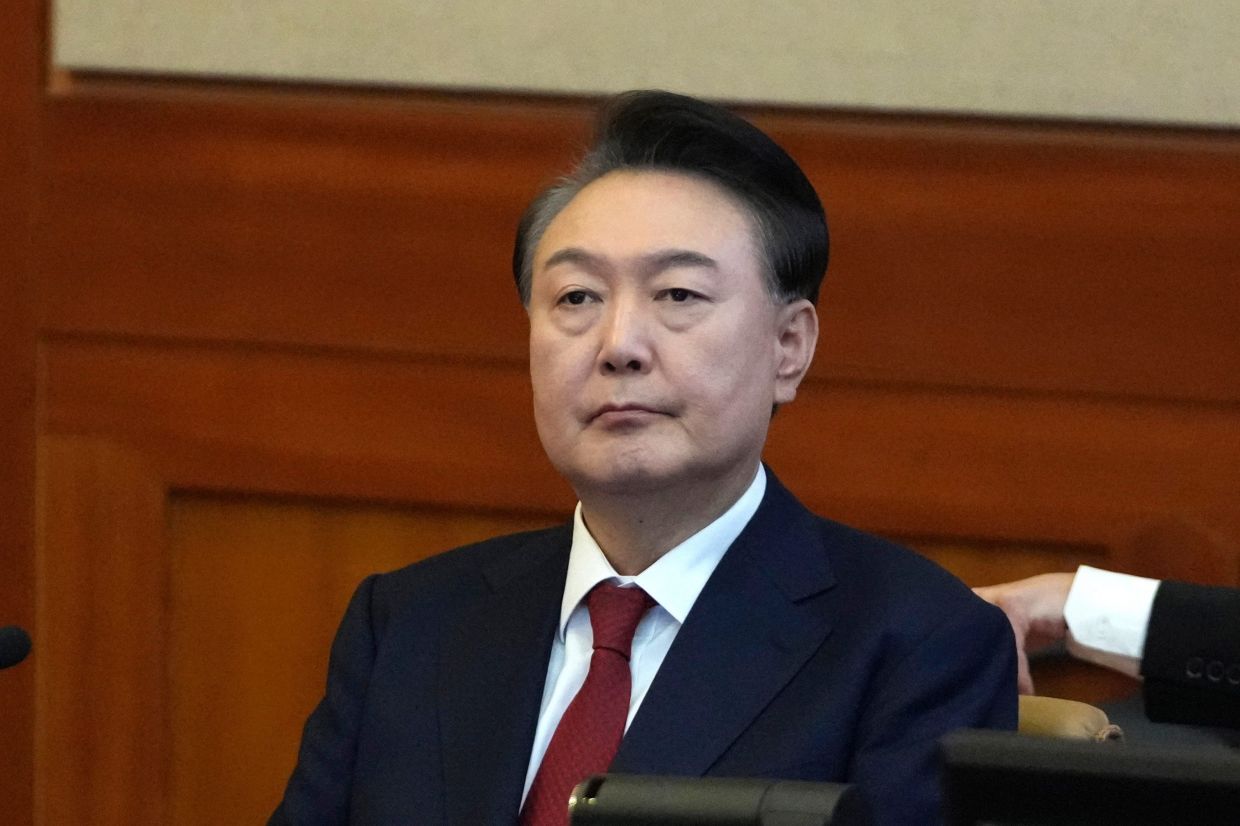
South Korea's highest court has finalized a seven-year prison sentence against former president Yoon Suk Yeol, rejecting appeals from both prosecutors and the ex-leader's legal team in connection with his aborted martial law declaration of December 2024. The Supreme Court ruling on Thursday marks the conclusive end to litigation over the dramatic incident that shook the country's political establishment and prompted an emergency parliamentary response, though Yoon faces additional separate convictions and sentences stemming from the same episode.
The charges underlying the seven-year sentence encompassed a range of allegations demonstrating how the former president allegedly manipulated state institutions to advance the martial law declaration. Prosecutors contended that Yoon obstructed proper cabinet deliberation by summoning only a select group of ministers to a pre-martial law meeting, effectively circumventing wider governmental consultation. The indictment further alleged that he authorised the creation and subsequent destruction of a martial law decree document that bore forged signatures of the prime minister, a deception designed to lend false legitimacy to the extraordinary measure.
Beyond those core allegations, investigators charged Yoon with orchestrating a campaign of misdirection targeting foreign media, ordering officials to circulate a misleading press release internationally to shape international perception of events. Military authorities also fell under his direction in this scheme, with prosecutors alleging that Yoon instructed an army commander to delete sensitive records stored on secure military communication systems. These ancillary charges painted a picture of systematic efforts to conceal or distort the truth surrounding the martial law action, suggesting a calculated attempt to manage its narrative across domestic and international audiences.
After Yoon's dramatic late-night televised address declaring martial law in December 2024, he demonstrated further alleged illegality by mobilising presidential security personnel to physically obstruct his own arrest after parliament had nullified the declaration. This obstruction of justice charge underscored how the crisis extended beyond the initial declaration itself, encompassing Yoon's subsequent attempts to resist accountability. The martial law order itself lasted merely six hours before lawmakers convened in emergency session and voted decisively to rescind it, yet its reverberations continued to dominate South Korean political discourse for months.
The Supreme Court's dismissal of all appeals carries particular significance given that South Korea's judiciary operates under a system where the nation's highest court pronouncements are definitive and unreversable through normal legal channels. When the presiding judge announced on Thursday that "all appeals are dismissed" while asserting that the lower court's judgement "contained no errors," the statement functioned as a legal end point to ordinary litigation. Yoon's defence team responded by expressing "deep regret" and levelling criticism at the Supreme Court for allegedly conducting the case "without sufficient deliberation," though they signalled intentions to pursue constitutional challenges as an alternative avenue.
Yoon's legal representatives have articulated plans to contest the ruling on constitutional grounds, suggesting they may argue that the proceedings themselves violated fundamental rights or constitutional principles. The team also indicated they would lodge formal complaints through other mechanisms, though such moves typically represent efforts to pursue exceptional remedies rather than genuine reversals of the sentence. Meanwhile, Yoon remains incarcerated while pursuing separate appeals against a distinct life sentence imposed for his role in leading what prosecutors characterised as an insurrection through the martial law declaration itself.
The broader context illuminates how Yoon's legal predicament reflects deep fractures within South Korean society and governance. The martial law declaration stunned the nation and caught even close allies like the United States off-guard, triggering massive street protests against the measure and precipitating a sharp downturn in stock market valuations. Yoon's justification for the extraordinary action—that he acted "solely for the sake of the nation" and deemed it necessary to neutralise purported "anti-state forces" and counter alleged threats from North Korea—resonated with some supporters but failed to persuade the judiciary or the broader political establishment.
In yet another development complicating Yoon's legal position, a separate court proceeding resulted in a thirty-year prison sentence for the former president in connection with allegations that he deployed unmanned drones across the inter-Korean border into North Korean airspace. Prosecutors characterised this action as a deliberate attempt to "manufacture" a crisis atmosphere that would presumably strengthen justification for his martial law initiative. The accumulation of multiple sentences across different cases, each addressing distinct criminal allegations emerging from the martial law episode and its surrounding circumstances, underscores the severity with which the South Korean judicial system has treated Yoon's conduct.
Yoon's removal from office occurred in April 2025, though the exact timeline and mechanism of his departure reflected the political turbulence his actions had unleashed. The subsequent presidential election elevated Lee Jae Myung of the centre-left Democratic Party to the presidency, signalling a decisive voter rejection of the political trajectory that Yoon had charted. For Malaysian and regional observers, the South Korean case demonstrates how even established democracies with entrenched constitutional frameworks remain vulnerable to extraordinary executive overreach, and how judicial systems—when functioning properly—can provide decisive check on such actions through prosecution and imprisonment.
The implications of Yoon's conviction extend beyond individual accountability to encompass broader questions about democratic resilience, institutional checks and balances, and the limits of executive power in modern democracies. South Korea's response through parliamentary nullification of the martial law declaration, followed by comprehensive legal proceedings across multiple courts, illustrates how institutional safeguards can function to constrain extraconstitutional exercises of state authority. The Supreme Court's final confirmation of the seven-year sentence, despite prosecutors initially seeking a decade-long term, suggests the judiciary sought to balance severity with proportionality while declining any leniency toward the former president's actions.
As Yoon contemplates his legal future across multiple convictions, his case reverberates as a cautionary example within East Asian political contexts where questions of executive authority and democratic constraints remain periodically contentious. The finality of the Supreme Court ruling removes any prospect of ordinary legal reversal, leaving Yoon's defenders to pursue exceptional constitutional remedies or to await potential clemency or pardon from future political authorities—possibilities that remain uncertain and contingent on evolving political calculations within South Korean society.

