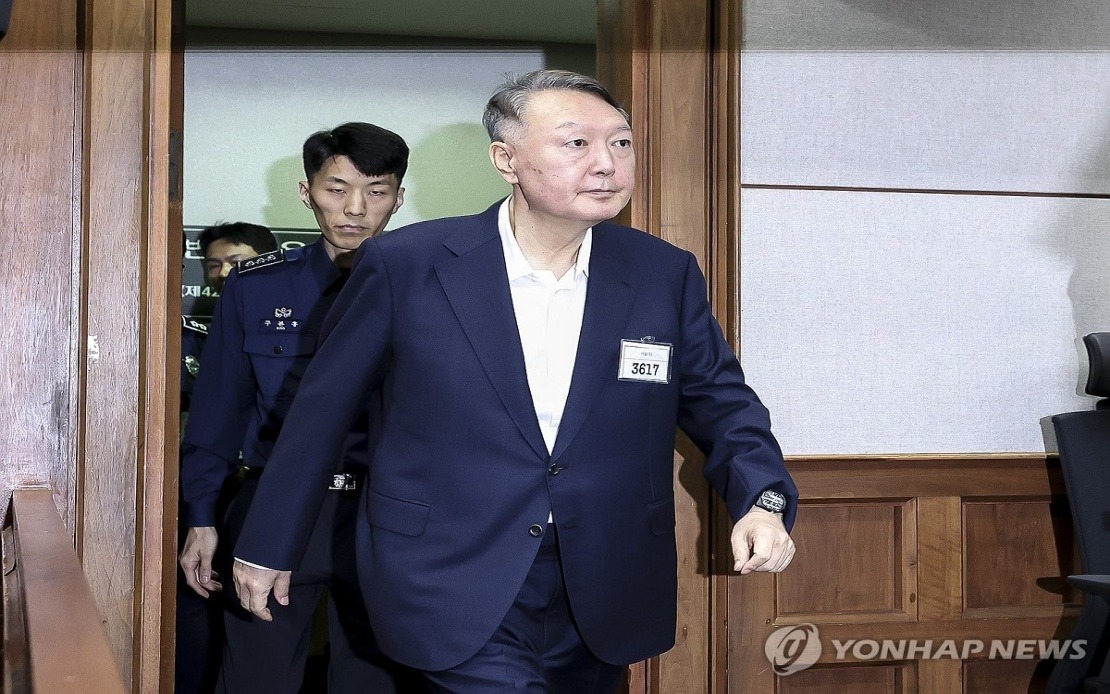
South Korea's Supreme Court has cleared the way for a live broadcast of its verdict in the obstruction of justice case against former President Yoon Suk Yeol, marking a rare transparency move in high-profile political prosecution. The court announced on Tuesday that it will permit broadcasters to transmit the ruling directly from the bench on Thursday afternoon at 2 pm, using footage captured by the court's own cameras. This decision represents the first Supreme Court judgment in a series of charges arising from Yoon's failed attempt to impose martial law in December 2024, an incident that has thrust South Korean politics into unprecedented turbulence and triggered intense constitutional debate about presidential powers.
Yoon's defence team had vigorously opposed the live broadcast proposal, filed last week by Special Counsel Cho Eun-suk's office, contending that permitting media transmission of courtroom proceedings could inflict lasting damage to his prospects for a fair hearing. The defence argued that allowing such coverage would jeopardise both his personal rights and public reputation, potentially prejudicing the outcome before evidence could be properly weighed. However, the Supreme Court rejected these concerns, determining that the public interest in witnessing the proceedings outweighed the risks identified by the accused. This determination signals the judiciary's commitment to maintaining transparency in cases involving figures of supreme political importance, a principle that carries particular weight in democracies confronting questions about accountability and the rule of law.
The obstruction of justice charges centre on alleged actions Yoon undertook to prevent law enforcement from executing an arrest warrant against him in January 2025. According to prosecutors, he instructed his presidential security detail to physically block investigators attempting to apprehend him, thereby obstructing the administration of justice at a critical juncture. Beyond this core charge, Yoon faces multiple allegations of administrative misconduct and falsification of official documents. Specifically, he is accused of denying nine Cabinet ministers the opportunity to participate in preliminary discussions about his martial law declaration, thereby violating their procedural rights. Additionally, prosecutors claim he altered the proclamation itself after martial law was rescinded, seemingly to disguise structural and procedural defects in how the emergency decree had been formulated and executed, then subsequently destroyed evidence.
The April decision from an appellate court provides important context for the Supreme Court proceedings. In that ruling, judges convicted Yoon of the obstruction charges and sentenced him to seven years imprisonment, representing a significant escalation from the lower court's initial five-year term but substantially below the ten-year penalty sought by the special counsel team. This middle-ground sentence suggested judicial ambivalence about the seriousness of the infractions, or alternatively, recognition that while the allegations held merit, aggravating factors warranted moderation. The Supreme Court's final judgment will determine whether this sentence stands, undergoes further reduction, or faces enhancement, setting the precedent for how presidential misconduct will be legally treated in South Korean jurisprudence.
Simultaneously, Yoon faces a far more serious proceeding in a separate appellate court examining whether his martial law proclamation constituted an insurrection. In the initial lower court determination of that case, he received a life sentence, indicating judicial assessment that his actions represented a fundamental threat to constitutional order. The interplay between these two simultaneous legal tracks—the obstruction case moving toward Supreme Court resolution and the insurrection case still in appellate review—creates an unusually complex and consequential moment for South Korean constitutional law. The outcomes will establish binding interpretations about the limits of emergency executive authority and the mechanisms for prosecuting senior officials accused of abusing such powers.
The decision to broadcast the obstruction verdict live deserves examination within Southeast Asia's broader context of political accountability and institutional independence. Malaysia and other regional democracies have grappled with comparable questions about how to prosecute former leaders while maintaining public confidence in judicial processes. The transparency model that South Korea has adopted—permitting direct public observation of landmark proceedings—represents one approach to addressing concerns about selective or politically motivated justice. However, critics worry that live coverage might introduce theatrical elements into solemn legal proceedings or inadvertently sway judicial thinking through awareness of public reaction. The South Korean Supreme Court's determination suggests confidence that judicial professionalism can withstand such pressures.
Yoon's legal predicament stems directly from his December 3, 2024 declaration of martial law, an emergency action he justified on grounds of political dysfunction and alleged communist infiltration. Within hours, opposition-controlled parliament voted to rescind the decree, and military units were deployed to enforce the cancellation. The episode exposed tensions between presidential emergency powers and legislative oversight mechanisms embedded in South Korea's constitutional framework. Yoon's subsequent attempts to obstruct investigation—particularly his alleged instructions to security personnel to prevent his arrest—transformed what might have been a politically controversial but ultimately manageable constitutional dispute into a potential criminal liability matter. This escalation underscores how procedural defiance can compound initial legal jeopardy.
For Malaysian observers, the case carries instructive lessons about institutional resilience and the role of courts in checking executive overreach. South Korea's judiciary, despite political pressures and polarised public opinion, has proceeded methodically through multiple proceedings against a former president, suggesting institutional independence is viable even in contentious circumstances. The live broadcast decision further signals that transparency, rather than secrecy, can bolster public confidence in judicial outcomes. By contrast, jurisdictions that conduct high-profile political trials behind closed doors or limit media access often find that secrecy fuels suspicions of bias or predetermined verdicts, ultimately weakening rather than protecting judicial legitimacy.
The Supreme Court's Thursday verdict will also resonate across Southeast Asia's legal and political communities because it involves questions about presidential immunities and post-tenure accountability. Several regional governments have confronted comparable dilemmas when attempting to prosecute former leaders after they leave office. The South Korean precedent—a Supreme Court willing to uphold convictions, permit live broadcast transparency, and potentially affirm substantial prison sentences for a former head of state—demonstrates that senior accountability is achievable within democratic frameworks, though requiring institutional fortitude and public acceptance of uncomfortable outcomes. Whether South Korea's model proves replicable or sustainable in jurisdictions with weaker judicial independence remains an open question that will dominate regional discussion following Thursday's verdict.

