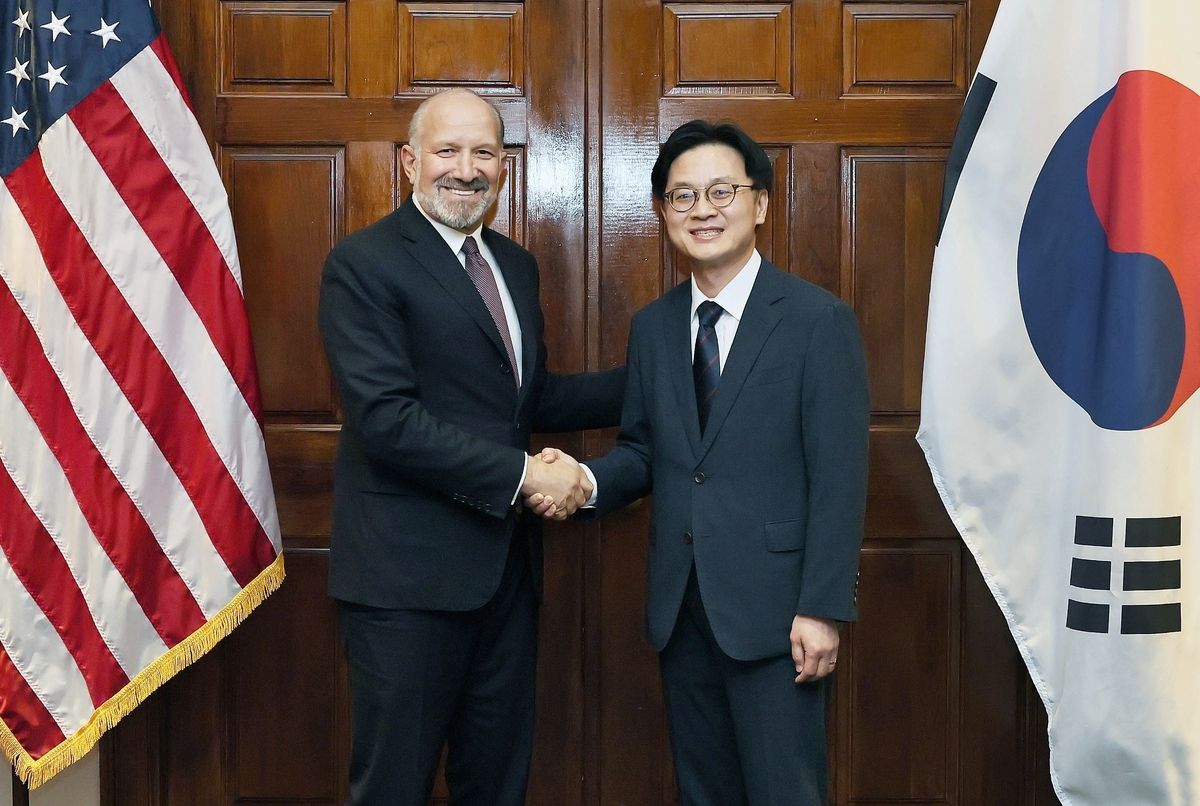
South Korea's Industry Minister Kim Jung-kwan departed for Washington on Wednesday to engage in critical bilateral discussions with top American officials, a move that underscores Seoul's urgency in managing deepening trade tensions. The visit, scheduled to run from July 22 to 25, arrives at a particularly delicate moment as the United States prepares to announce additional tariffs under Section 301 of the Trade Act, a development that has prompted Seoul to shift into diplomatic overdrive.
The timing of Kim's mission reflects the precarious position South Korea finds itself in as a significant trading partner of the United States. An anticipated American decision on an investigation into trade practices connected to forced labour allegations could trigger substantial tariff increases targeting South Korean exports, according to local media assessments. This investigation, which has lingered in the background of bilateral relations, now appears poised to move into implementation phase, leaving Seoul with a narrow window to negotiate protective measures or mitigating arrangements.
During his four-day Washington visit, Kim plans to meet U.S. Commerce Secretary Howard Lutnick to explore avenues for expanding strategic South Korean investment in American infrastructure and industrial sectors. These discussions will likely centre on how Seoul can position itself as a valuable economic partner deserving of preferential treatment even as broader protectionist currents sweep through American trade policy. The emphasis on investment cooperation signals Seoul's strategy of appealing to American economic self-interest rather than simply seeking tariff exemptions.
The ministerial agenda extends beyond commerce into the energy and resources sectors, with Kim scheduled to meet U.S. Energy Secretary Chris Wright. This dimension of the talks carries significant implications for both nations' long-term strategic positioning, particularly given global competition for critical minerals and clean energy supply chains. South Korean companies have become increasingly important suppliers of advanced technologies and materials essential to America's own industrial and energy ambitions, a reality that may prove advantageous in tariff negotiations.
Outreach to Congressional members forms another critical component of Kim's Washington visit. By engaging directly with lawmakers across both chambers, the South Korean government aims to build support for its position on trade matters and to ensure that any tariff decisions are made with full awareness of potential consequences for American businesses dependent on South Korean inputs and partnerships. This grassroots legislative engagement often proves more effective than official channel communications alone.
A central highlight of the visit involves the opening ceremony for a new South Korea-U.S. Shipbuilding Partnership Center scheduled for Thursday. This facility, established following a bilateral agreement signed in May between Seoul's trade ministry and the U.S. Commerce Department, will serve as the institutional foundation for ongoing cooperation between shipbuilders from both nations. Kim has emphasized that the centre will provide formal mechanisms for collaboration that could potentially insulate the shipbuilding sector from broader tariff pressures by demonstrating mutual dependency and strategic alignment.
The shipbuilding partnership initiative carries particular weight given the strategic importance of naval and commercial vessel construction to both countries' defence and economic interests. By formalizing this cooperation through a dedicated Washington-based centre, South Korea seeks to create institutional relationships that transcend temporary political fluctuations and tariff disputes. Such arrangements often prove difficult to unwind once established, potentially providing longer-term protection for the sector.
Beyond the shipbuilding initiative, Kim intends to advance implementation of a South Korean law that entered effect in June designed to incentivize and support strategic investments by Korean companies in the United States. This legislation reflects Seoul's proactive approach to deepening economic integration with America, offering financial and regulatory incentives for Korean firms to establish manufacturing facilities, research centres, and other operations on American soil. By increasing South Korean presence and employment in the US economy, Seoul calculates that political resistance to tariffs on Korean goods will naturally rise from American business constituencies.
The minister has signalled that Seoul remains committed to honouring existing tariff agreements with Washington while simultaneously working to stabilize bilateral trade relations amid current uncertainties. This measured rhetorical approach attempts to position South Korea as a reliable, rules-based partner even as the American administration pursues what many characterize as unilateral trade actions.
For Malaysian observers and regional stakeholders, South Korea's diplomatic scramble carries important lessons about navigating an increasingly unpredictable American trade environment. As a fellow export-dependent economy with significant bilateral trade exposure to the United States, Malaysia faces analogous pressures and must consider comparable strategies for investment diversification and strategic partnership cultivation. The outcome of Kim's Washington visit may establish precedents that ripple across Southeast Asian capitals grappling with similar tariff uncertainties and the need to demonstrate strategic value to American policymakers.

