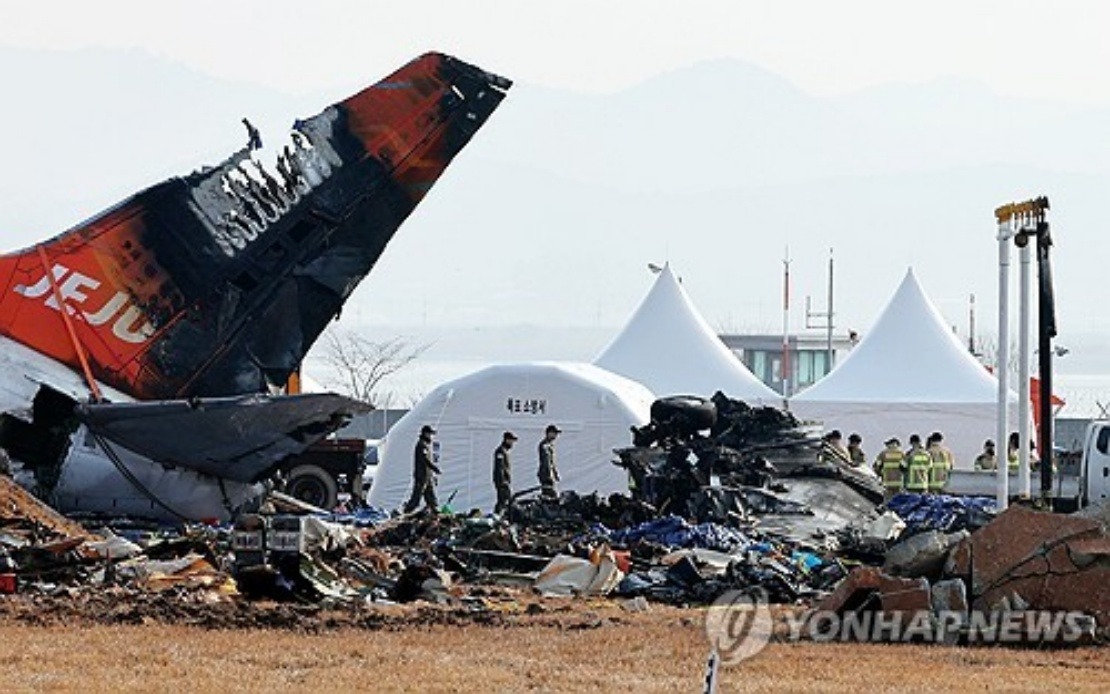
Seven officials working within South Korea's transport ministry have been referred to prosecution following allegations that they deliberately misrepresented the safety compliance status of critical airport equipment involved in one of the nation's deadliest aviation disasters. The Seoul police investigation team submitted the referral on Tuesday, marking a significant escalation in accountability measures surrounding the December 29, 2024 Jeju Air crash that claimed 179 lives at Muan International Airport, approximately 290 kilometres south of the capital.
The tragic incident unfolded when a Jeju Air passenger jet, unable to land normally due to a reported bird strike, was forced to make an emergency belly landing at the airport. During this desperate manoeuvre, the aircraft collided with a concrete structure housing a localiser—a sophisticated navigation system designed to guide aircraft precisely during landing procedures. The impact with this reinforced installation proved catastrophic, with investigators and accident analysts subsequently questioning whether the equipment's placement had exacerbated the casualty toll.
According to the special police investigation unit, the seven officials are accused of preparing and distributing official press statements asserting that the localiser installation fully adhered to international and domestic aviation safety regulations. However, investigators established that these officials possessed internal knowledge contradicting their public assertions, knowing that the system did not fully meet the required technical and safety standards. This apparent disconnect between what authorities publicly communicated and what they privately knew has become central to the criminal investigation.
The revelation of potential institutional dishonesty in the aftermath of a national tragedy has triggered broader scrutiny into South Korea's aviation safety oversight mechanisms and regulatory accountability. Questions have emerged regarding how a navigation system that did not fully comply with established safety protocols could remain operational at a major international airport serving millions of annual passengers. The case raises uncomfortable issues about communication failures, institutional responsibility, and whether bureaucratic concerns about regulatory liability may have influenced the decision to misrepresent the equipment's status.
For Malaysian and Southeast Asian aviation stakeholders, this development carries significant implications. The region's airports and airlines operate within a complex regulatory environment where multiple nations and international bodies establish safety standards. The Jeju Air situation illustrates how institutional pressures and bureaucratic dynamics can potentially compromise transparent safety reporting, a concern that transcends national borders. If officials at a developed nation's airport can allegedly obscure safety information about critical navigation equipment, the incident serves as a cautionary tale about the importance of independent safety auditing and whistleblower protections across the region.
The Jeju Air tragedy represented South Korea's worst aviation accident in more than a decade, generating intense public scrutiny and demands for accountability at multiple levels. While the pilots' emergency response and the aircraft's structural integrity prevented even greater loss of life, the collision with the localiser structure became a focal point for understanding how various contributing factors aligned catastrophically. The subsequent investigation has revealed multiple aspects requiring examination, from maintenance protocols to regulatory oversight to institutional communication practices.
The referral of seven officials specifically for their roles in allegedly drafting misleading public statements suggests that prosecutors and investigators view the cover-up as a distinct crime separate from any potential negligence in the original installation or maintenance of the equipment. This prosecutorial strategy indicates an intention to establish that knowing misrepresentation occurred at a sufficiently high institutional level to warrant individual criminal accountability. The decision to refer multiple officials rather than a single individual suggests a coordinated effort to manage public messaging around the safety issue.
Regulatory bodies throughout Southeast Asia might examine whether their own institutional practices create similar vulnerabilities. The tendency to protect regulatory reputations through selective communication, rather than transparent acknowledgment of safety shortfalls, can undermine public confidence and delay necessary corrective measures. Malaysia's aviation sector, which operates regionally significant hubs like Kuala Lumpur International Airport, depends fundamentally on maintaining the highest standards of safety compliance and institutional integrity in reporting potential deficiencies.
The investigation's progression from determining the crash's technical causes to examining post-incident institutional conduct reflects an evolving understanding that aviation safety depends not merely on equipment and training but also on honest regulatory frameworks. When officials allegedly prioritize protecting regulatory credibility over acknowledging legitimate safety concerns, they potentially compromise the very oversight mechanisms designed to prevent future tragedies. This dimension of the investigation may prove as consequential as determining exactly how the localiser's placement contributed to the high casualty count.
As the prosecution phase begins, South Korean authorities will need to establish not only that officials knew the localiser did not fully comply with safety standards but that they deliberately drafted false statements with knowledge of this deficiency. The burden of proof in such cases typically requires demonstrating intent and consciousness of wrongdoing, standards that are particularly stringent in criminal proceedings. The coming months will reveal whether evidence supports these serious allegations and what consequences may follow for those found culpable.
The incident has prompted broader institutional reflection within South Korea's aviation and transport sectors regarding communication protocols, regulatory transparency, and the mechanisms through which safety concerns are escalated and addressed. Similar examinations should occur throughout the region, as the Jeju Air tragedy demonstrates that technical excellence in aircraft design and operation means little if systemic failures in oversight and institutional honesty create dangerous conditions. For Malaysia and its neighbours, the case underscores the necessity of robust, independent safety verification and a regulatory culture where identifying and addressing deficiencies is valued above protecting institutional reputations.

