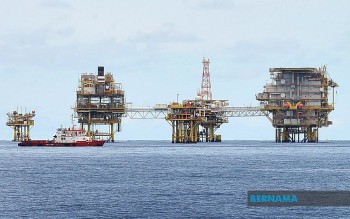
The Asia Pacific offshore energy sector has demonstrated resilience in the face of persistent West Asian instability, with Southeast Asia emerging as a growth epicentre for capital-intensive infrastructure projects. Regional investment banks are forecasting a substantial 12 per cent surge in greenfield capital expenditure across Southeast Asia, pushing total spending above US$100 billion as developers shift focus toward launching new offshore developments rather than merely sustaining existing operations. This bullish outlook reflects growing confidence among energy majors and regional operators that geopolitical tensions, whilst not entirely resolved, are heading toward manageable equilibrium, permitting long-term strategic investments to proceed.
The improvement in the regional investment climate becomes more evident when examined alongside concurrent trends in brownfield expenditure, where established assets continue attracting significant capital allocation. South Asian markets are projected to increase brownfield spending by 23 per cent, whilst Southeast Asia itself is targeting a 3 per cent rise, demonstrating that operators remain committed to maintaining production reliability and supporting near-term energy supply security. This dual-track investment approach—simultaneously developing new capacity whilst strengthening existing infrastructure—underscores the sector's confidence in the region's long-term energy demand trajectory and the viability of offshore operations despite intermittent disruptions.
The stabilisation narrative gained credence following the July signing of a 14-point memorandum of understanding between the United States and Iran, which investment analysts view as a potential watershed moment in West Asian geopolitical de-escalation. Whilst the ceasefire accord remains fragile and subject to reversal, the diplomatic framework has already produced tangible economic consequences: traffic through the Strait of Hormuz, one of the world's most critical energy chokepoints, has visibly recovered from conflict-induced lows. However, satellite imagery suggests the recovery may be understating actual vessel movements, as many tankers have reportedly switched off automatic identification systems, indicating lingering caution among shipowners navigating the passage.
Malaysia and the broader Southeast Asian region stand to benefit substantially from a broader energy security recalibration that prioritises inventory management alongside production resilience. Investment strategists at Hong Leong Investment Bank have identified two pivotal themes likely to drive the sector forward: first, whether international actors ultimately achieve consensus on energy security protocols and elevated strategic reserves, which would benefit pipeline operators and storage terminal providers across the region; second, the prospect of Petronas embarking on a significant capital expenditure cycle beginning in 2027, which would cascade benefits throughout Malaysia's domestic oil and gas services ecosystem.
Petronas' anticipated investment surge holds particular significance for Malaysian stakeholders, as it would funnel substantial contracts toward domestic service providers specialising in upstream field development, hook-up and commissioning operations, maintenance services, marine support logistics, fabrication work, and pipeline infrastructure. These downstream industries, many concentrated in Peninsular Malaysia and Sarawak, depend on major operator capital deployment to sustain employment and generate export revenues. The timing of this prospective capex cycle aligns conveniently with anticipated global energy market stabilisation, suggesting that regional supply chain participants should begin positioning themselves for elevated demand commencing in the latter half of the decade.
Pricing assumptions underpinning these investment projections have undergone significant revision, reflecting both structural uncertainties and emerging consensus regarding longer-term energy market dynamics. Hong Leong Investment Bank has reduced its 2026 Brent crude forecast to US$80 per barrel from a previous projection of US$90, whilst maintaining a US$75 per barrel assumption for 2025. These downward adjustments account for anticipated inventory accumulation as global supply normalises following the West Asian disruptions, though the bank emphasises that oil prices are unlikely to return to pre-conflict lows given persistent structural changes in energy security consciousness among consuming nations.
International inventory dynamics will prove critical in determining price trajectories over the medium term. Data from the United States Energy Information Administration's June outlook projects a sharp reduction in OECD commercial inventories, with available supply declining to merely 50 days by late 2026, substantially below the pre-conflict benchmark of over 60 days. This inventory depletion trajectory implies sustained upward pressure on crude prices, as global markets seek to rebuild strategic reserves to historically normal levels. Investment analysts anticipate Brent crude could remain supported above US$75 per barrel into early 2027 should inventory rebuilding extend beyond 60 days of supply, reflecting heightened emphasis on energy security buffers among consuming economies.
Production recovery timelines present an additional variable likely to sustain elevated pricing throughout the forecast period. Total production shut-ins across the Strait of Hormuz region surged from 35 per cent in March 2026 to 45 per cent by May, creating a substantial lagged adjustment period as operators gradually restore capacity. This protracted supply recovery cycle suggests that even modest demand growth could maintain price discipline at elevated levels, preventing the precipitous declines that major consuming nations and energy-intensive industries would welcome. The combination of depleted inventories, extended production recovery, and geopolitical premium factors could sustain Brent pricing in a relatively narrow band between US$75 and US$80 per barrel over the next 18 months.
Current market conditions have already begun reshaping economic calculations across energy-dependent sectors. As of the time of reporting, Brent crude was trading at US$69.17 per barrel with a marginal 0.90 per cent daily gain, whilst West Texas Intermediate crude stood at US$72.67 per barrel, up 0.94 per cent. These prices represent substantial retreats from recent peaks, with crude having stabilised within the US$70–75 per barrel range that increasingly dominates analyst commentary. Independent economists observe that this price plateau, should it persist through coming months, would substantially improve operating environments for energy-intensive manufacturers by reducing input costs and enhancing cost predictability for capital planning exercises.
The macroeconomic implications of stabilised crude pricing extend beyond the energy sector itself, encompassing broader inflation dynamics and monetary policy flexibility across the region. Sustained crude prices within the US$70–75 per barrel range would measurably diminish cost-push inflation pressures besetting consumer economies, thereby supporting business capital investment decisions and strengthening household purchasing power. Central banks throughout Southeast Asia would gain additional policy flexibility, potentially maintaining accommodative monetary settings that reinforce economic recovery momentum. For Malaysia specifically, this environment could prove particularly propitious, as domestic industries ranging from petrochemicals to tourism would benefit from lower energy input costs whilst simultaneously enjoying favourable financing conditions.
The outlook for Southeast Asian offshore energy investment ultimately reflects a calibrated assessment of geopolitical risk rather than optimistic dismissal of underlying tensions. Investment strategists acknowledge that West Asian fragility remains elevated and that escalation scenarios remain plausible, yet have concluded that regional energy infrastructure development should proceed under the assumption of managed coexistence with existing tensions. This pragmatic positioning aligns with broader market behaviour, wherein traders and operators have internalised geopolitical risk premia rather than maintaining crisis-mode hedging postures. For Malaysian policymakers and industry participants, the expanding investment cycle presents a discrete window of opportunity to strengthen domestic capabilities, position service providers for elevated demand, and secure long-term contracts before competition intensifies across the broader APAC region.

