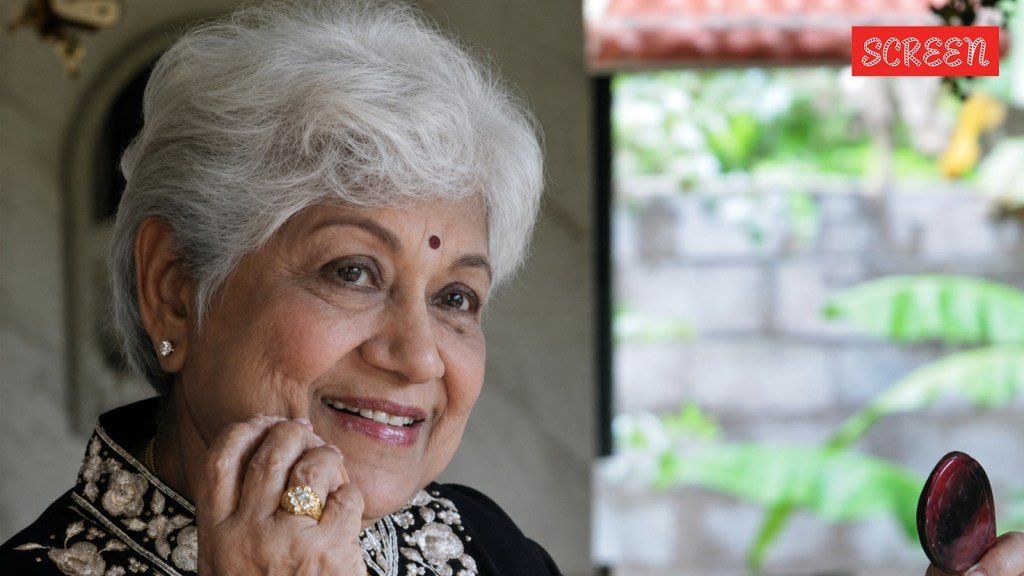
The curtain has fallen on one of South Indian cinema's most enduring careers. Sowcar Janaki, the legendary actress who became synonymous with maternal roles and graceful performances across multiple film industries, died on Friday in Chennai at the age of 94. Her passing followed a brief stay in intensive care at a private hospital in the Tamil Nadu capital, where she was treated for age-related illness. The announcement came from Nassar, president of the South Indian Artistes' Association, who confirmed her death and noted that her mortal remains would be displayed at Cenotaph Road in Teynampet from 5 pm onwards.
With a filmography spanning seven decades and encompassing nearly 400 productions, Sowcar Janaki—born Sankaramanchi Janaki—represented a vanishing generation of Indian cinema that worked seamlessly across linguistic boundaries. Her remarkable journey began in 1950, a time when the South Indian film industry was still establishing itself as a major creative force. She would go on to become a fixture not merely in Tamil cinema but equally prominent in Telugu, Kannada, Malayalam, and even Hindi productions. This pan-Indian presence was extraordinary for an actress of her era, reflecting both her versatility as a performer and the regional interconnectedness of South Asian cinema in its post-independence development.
Her contributions to the film industry were formally recognised through numerous prestigious awards. She received the Padma Shri, India's fourth-highest civilian honour, alongside the Kalaimamani Award, two Nandi Awards, and the Filmfare Lifetime Achievement Award. These accolades represented not merely personal recognition but acknowledgment of her influence on several generations of actors and filmmakers across South India. Her ability to command respect from industry peers and audiences alike placed her in a rarefied category of performers whose careers transcended the typical lifespan of cinematic prominence.
Tamil Nadu Chief Minister C. Joseph Vijay, himself an accomplished actor, expressed profound shock at her passing through a lengthy statement posted on social media. In his tribute, posted in Tamil, he highlighted how Janaki had secured an irreplaceable position in the hearts of film enthusiasts across generational divides through her distinctive and nuanced approach to acting. The Chief Minister particularly emphasised her remarkable ability to perform across multiple languages and the depth of character work she brought to every role, positioning her passing as a significant loss to the entire Indian film fraternity rather than merely Tamil cinema.
Among her most celebrated collaborations was her long partnership with Kamal Haasan, one of South Indian cinema's greatest contemporary talents. Haasan recalled in his tribute that their working relationship had spanned four decades, beginning with the film Paarthaal Pasi Theerum. He noted that Janaki frequently played his mother on screen while he portrayed the younger lead, a dynamic that became iconic in South Indian cinema. Haasan further revealed that she had worked alongside the era's leading heroes and was particularly favoured by K. Balachander, the legendary director who shaped Tamil cinema's artistic direction during a critical period of its development. In his emotional tribute, Haasan described her as an indispensable talent whose departure represented the loss of an embodiment of motherhood itself.
The outpouring of tributes from prominent figures across the film industries reflected the breadth of her influence. Radhika Sarathkumar remembered her as a pathbreaker of independent spirit and strength, noting their personal connection and Janaki's close friendship with her father, M. R. Radha. Prabhudeva, the versatile performer and director, posted a simple tribute alongside vintage photographs. Jr NTR and Chiranjeevi, two of Telugu cinema's biggest contemporary stars, shared emotional remembrances in their native language, underscoring how deeply Janaki had penetrated Telugu film culture despite her greater prominence in Tamil productions. Chiranjeevi specifically noted her illustrious cinematic journey began with a film called Shavukaru and spanned nearly seven decades across multiple language industries.
Vishnu Manchu, representing a newer generation of actors, urged young performers to study Janaki's remarkable body of work, framing her legacy as essential educational material for aspiring artists. This intergenerational recognition demonstrated how her influence persisted beyond her active career years, continuing to shape industry standards and serving as a reference point for artistic excellence. Her later work, including appearances in the Tamil film Biskoth in 2020 and the Telugu production Anni Manchi Sakunamule in 2023, showed her commitment to cinema even in her final years, defying conventional expectations about aging actresses in Indian film industries.
For Malaysian and Southeast Asian audiences, Sowcar Janaki's career trajectory illuminates important dimensions of South Asian cinema's regional interconnectedness during the twentieth century. Her ability to work across linguistic communities reflected a pre-globalisation film industry landscape where performers needed multilingual capabilities to sustain long careers. The regional audience overlap—audiences in Malaysia's Tamil, Telugu, and Malayalam-speaking communities would have encountered her work across multiple film traditions—underscores how South Indian cinema maintained strong circulation networks throughout Southeast Asia. Her passing marks the conclusion of an era when such pan-regional film careers were possible and valued.
The manner of her death, following brief hospitalisation for age-related illness at 94, reflected a natural conclusion to an extraordinarily extended professional life. Unlike many performers whose relevance diminished with age, Janaki maintained the respect and affection of audiences and colleagues throughout her later decades. The extensive public mourning from industry titans, governmental figures, and fellow performers demonstrated that her death carried genuine cultural significance beyond mere celebrity news. She had transcended the status of entertainer to become an institution within South Indian cinema, representing a particular approach to craft and professionalism that characterised an important historical period in Indian film development.

