Spain has struck back at Italy's unilateral border restrictions by announcing its own temporary checks on arrivals from Italian ports and airports, marking an escalation in tensions between two major European Union members over how to manage a burgeoning migration emergency. The Spanish government confirmed the measure would commence on Saturday and persist until September 7 unless circumstances shift, representing a tit-for-tat response to Italy's decision to reintroduce border controls on Spanish travellers without advance warning.
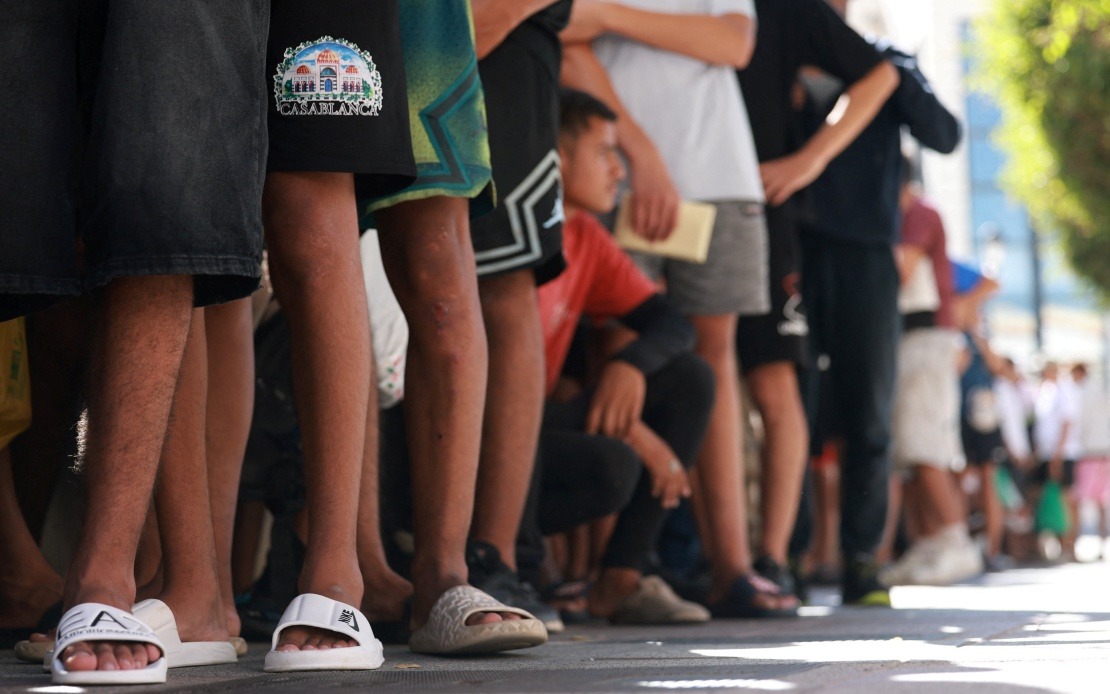
The immediate trigger for this diplomatic standoff traces to a massive surge of migrants into Ceuta, Spain's autonomous enclave on the North African coast, at the end of July. Around 80,000 people crossed into the Spanish territory in what officials described as an overwhelming influx, though nearly 75,000 subsequently chose to return voluntarily to Morocco. Nevertheless, between 3,000 and 5,000 migrants have remained stranded in Ceuta, creating what local authorities characterise as a severe humanitarian crisis that has saturated reception and processing facilities far beyond their capacity.
In response to this situation, Italian Prime Minister Giorgia Meloni announced temporary border controls on July 31, citing national security and border-management obligations. Italy's government framed the measures as necessary precautions to prevent onward migration flows into the Schengen area, where internal border restrictions have been largely dismantled to enable free movement among member states. The Italian controls specifically target third-country nationals arriving from Spain, though Rome clarified that Spanish citizens and other EU passport holders remain exempt when travelling by air or sea routes.
Spain's government has characterised Italy's move as unwarranted and divisive, describing the controls as unjustified, discriminatory, and fundamentally at odds with European Union principles and cohesion. Spanish authorities argue that Rome acted unilaterally on August 1 without consultation or notification, undermining the cooperative spirit that underpins the Schengen framework. The Spanish response now mirrors Italy's approach, implementing random identity and document checks at its own border crossing points with the intention of maintaining pressure until Rome reverses course.
Italy's government has refused to back down, asserting that it neither accepts ultimatums nor responds to external pressure when decisions involve national security and border sovereignty. Officials in Rome maintain that the temporary restrictions represent a proportionate response to legitimate security concerns and remain committed to minimising disruption to legitimate cross-border commerce and travel. This stance reflects broader anxieties across Europe about irregular migration patterns and the strain they place on individual member states' capacity to manage arrivals and integration.
The crisis underscores a fundamental fault line within the European Union regarding burden-sharing and responsibility for migrants and asylum seekers. Spain, positioned at Europe's southwestern entry point and with historical exposure to North African migration flows, has long argued that the EU's external borders require collective responsibility rather than individual state reactions. Italy, which has frequently served as a gateway for Mediterranean arrivals, shares similar frustrations about bearing disproportionate responsibility for managing irregular migration on behalf of the broader EU.
The Ceuta situation carries particular significance because the enclave's geography and legal status create unique vulnerabilities. As Spanish sovereign territory on the African continent, Ceuta has become a focal point for migrants seeking entry to Europe. Morocco's apparent reduced enforcement at its border with the enclave during late July may reflect broader diplomatic tensions between Madrid and Rabat over issues including Western Sahara and Spanish fishing interests in Moroccan waters. The sudden opening created an unprecedented surge that overwhelmed local authorities and triggered emergency responses across Europe.
This bilateral escalation carries implications extending well beyond Spain and Italy. The Schengen area depends on mutual confidence that member states will not unilaterally reimpose border checks without coordination or justification. Each country's decision to reinstate restrictions sets a precedent that others may follow, potentially unravelling decades of integration efforts. France, Austria, and other nations have periodically justified temporary border controls citing security or migration concerns, and this Spanish-Italian episode may encourage further fragmentation of the borderless travel system.
For Southeast Asian observers, this European dysfunction offers important lessons about migration management and regional integration. The Association of Southeast Asian Nations has similarly committed to facilitating people-to-people movement and regional integration, yet member states retain acute sensitivities about irregular migration and border security. The Spanish-Italian dispute demonstrates how quickly shared frameworks can fracture when one member perceives that another is externalising its security burdens rather than addressing root causes cooperatively.
The resolution of this standoff will likely depend on whether Spain and Italy can negotiate a common approach to managing Ceuta's aftermath while addressing Rome's underlying security anxieties. Spanish leaders have called for Italy to withdraw its measures immediately, but the current trajectory suggests prolonged tension unless the European Commission intervenes or Morocco increases enforcement at its border to prevent future surges. The broader challenge involves convincing individual member states that migration management requires collective sacrifice rather than unilateral border fortification.

