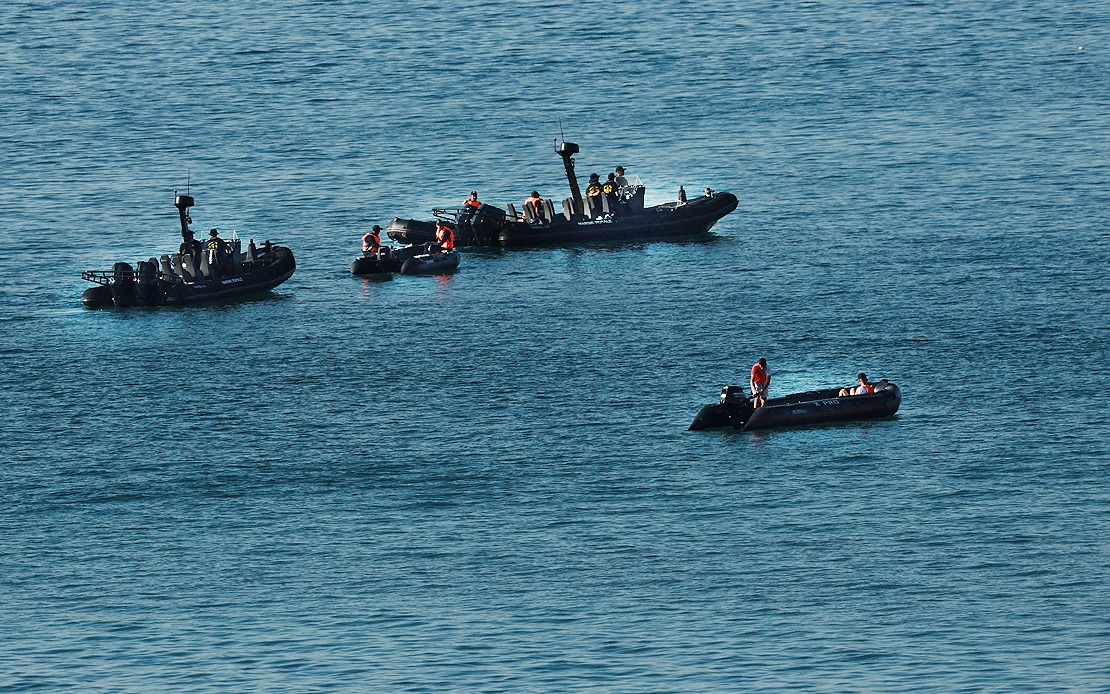
The waters off Ceuta remain the focus of intensive search operations as Spanish authorities work to recover the bodies of migrants who perished during a dramatic surge in crossings from Morocco. So far, recovery teams have retrieved 67 corpses from the sea, with officials warning that the final death toll may be considerably higher. The individuals who died were attempting to reach European Union territory through the perilous sea route separating Morocco from the Spanish exclave, a passage that has claimed numerous lives over the years but rarely seen such concentrated fatalities in such a short timeframe.
The scale of the crisis became evident when approximately 50,000 migrants crossed into Ceuta from Morocco within just a few days, overwhelming the territory's infrastructure and social services. For context, Ceuta's total resident population stands at around 85,000 people, meaning the influx represented a dramatic demographic shock to the city's administrative and humanitarian capacity. This unprecedented surge highlighted how migration pressures in North Africa continue to place strain on European border regions, with Spain bearing much of the immediate burden as a gateway nation.
Local and national authorities have taken urgent measures to address the humanitarian dimensions of the crisis. Spanish officials have established a facility designed to accommodate up to 200 bodies, a sobering preparation that underscores the scale of potential casualties still unaccounted for. The construction of such infrastructure reflects the grim reality that rescue operations often recover bodies weeks or months after drowning incidents, and officials are bracing for additional discoveries as search operations continue along the coastline.
While most of the 50,000 migrants who entered Ceuta have since voluntarily returned to Morocco, the political fallout from the crisis has extended well beyond the immediate humanitarian response. European Union leaders, particularly those from centre-right and conservative parties, have levelled sharp criticism at Spain's left-wing government, questioning its capacity to manage border security effectively. These criticisms reflect broader tensions within the EU over migration policy and burden-sharing, with several member states arguing that southern European nations shoulder disproportionate responsibility for managing arrivals from Africa and the Middle East.
The immediate aftermath of the crisis presented a deceptively calm appearance. Television footage from Sunday showed the Ceuta coastline in peaceful conditions, with workers engaged in installation of buoys designed to form a physical barrier at sea. This seemingly routine infrastructure project carries significant political and legal implications for Spain's approach to migration management and border control strategy.
The buoy installation forms part of a deliberate effort to exploit a legal loophole that inadvertently encouraged the recent surge in crossing attempts. Spain's Supreme Court had previously ruled that migrants who enter Spanish territory through irregular border crossings at unsealed sections—specifically including maritime routes—are legally entitled to individual asylum assessments rather than automatic deportation. This ruling created a perverse incentive structure whereby migrants understood that swimming into Spanish waters would grant them procedural protections unavailable to those apprehended at formal land borders or detected in waters before reaching land.
By constructing this physical maritime barrier, Spanish authorities aim to fundamentally alter the legal geography of the border. The buoys will delineate a zone where individuals attempting to cross may be intercepted before reaching Spanish territorial waters, potentially placing such intercepts under different legal frameworks that lack the Supreme Court's asylum assessment requirement. This represents a calculated attempt to close the loophole through infrastructure rather than waiting for court decisions or legislative changes—an approach that itself may face legal challenges.
For Southeast Asian observers, the Ceuta crisis offers instructive parallels to maritime migration pressures in the region. The Rohingya crisis and ongoing irregular crossings in the Andaman Sea have similarly demonstrated how geographic bottlenecks concentrate migration flows and create humanitarian emergencies. Malaysia and neighbouring countries have repeatedly grappled with determining legal obligations toward maritime arrivals, often navigating complex questions about territorial waters, rescue responsibilities, and asylum processing. The Spanish experience of creating physical barriers and attempting to adjust legal frameworks to manage migration flows reflects strategies that regional governments have also contemplated.
The broader context reveals how migration crises inevitably become political crises in receiving countries. When tens of thousands arrive within days, even temporary surges trigger questions about security, resource allocation, and state capacity. The left-wing Spanish government now faces accusations from political opponents of mismanaging the border, despite acknowledging the voluntary return of the vast majority of migrants. This dynamic—where humanitarian or procedural failings by government overshadow positive outcomes—repeats itself across jurisdictions managing migration pressure.
The search operations continuing off Ceuta represent the human cost of these border disputes and legal uncertainties. Each recovered body represents a failed migration attempt, often driven by desperation in Morocco or beyond. The 67 deaths recovered so far, with potentially many more undiscovered, demonstrate that border control debates ultimately involve life-and-death stakes for vulnerable populations. While Spanish authorities prepare facilities and install barriers, the underlying drivers of migration pressure—poverty, conflict, and limited legal pathways for movement—remain unaddressed.
Spain's response, combining immediate humanitarian infrastructure with longer-term barrier construction and legal positioning, reflects the complex balancing act demanded of destination countries. Authorities must simultaneously manage immediate humanitarian needs, assert border control, and navigate international legal frameworks. The outcome of Spain's strategy—whether the maritime barrier and legal repositioning successfully deter future attempts—will likely influence approaches adopted by other European nations and potentially inform discussions within Southeast Asian governments facing similar pressures.

