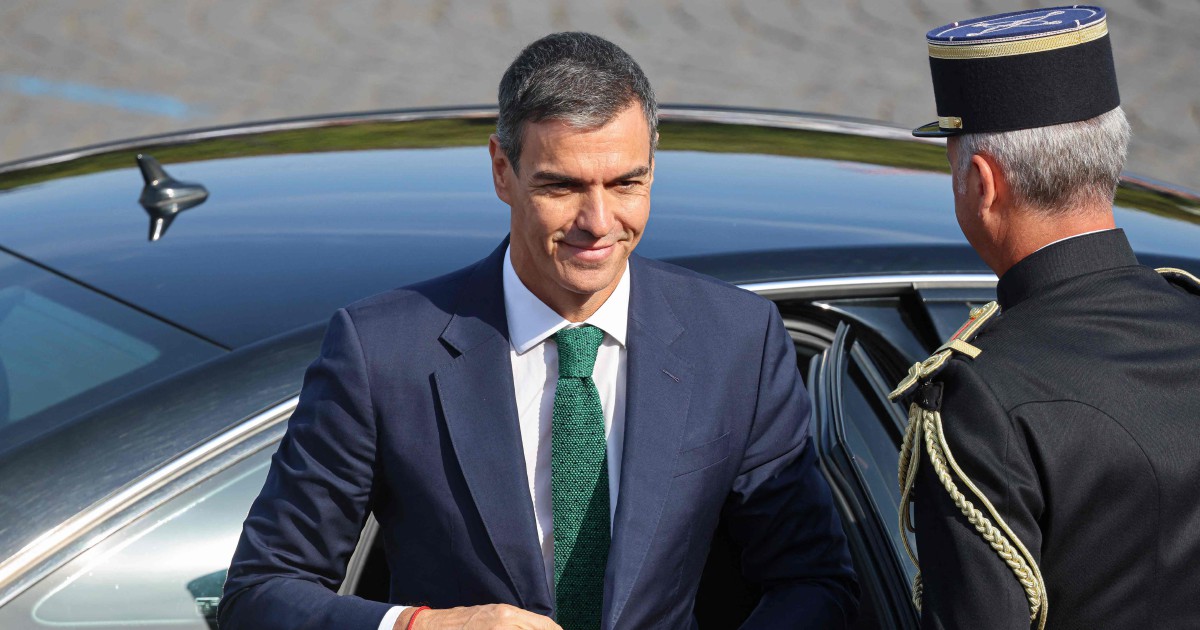
Spain's Prime Minister Pedro Sanchez seized upon the nation's football team's progress to the World Cup final as a moment of collective pride, offering a welcome counterweight to the political turbulence dominating headlines at home. With the squad poised to face Argentina on Sunday, Sanchez publicly celebrated what he characterised as the distinctive cohesion and spirit binding the players together, framing their journey as emblematic of Spanish national values.
The timing of Sanchez's remarks proved strategically significant given the mounting corruption allegations shadowing his administration in Madrid. Multiple investigations into alleged misconduct involving government figures have created a challenging political environment, making the unifying narrative presented by the national team's run through the tournament particularly valuable for the Spanish leadership. By aligning himself with the squad's achievements, Sanchez sought to channel public sentiment toward a source of genuine national celebration.
Sports and politics have long intersected in Spain, with major tournaments historically serving as platforms for national discourse and collective identity. The football team's performance, transcending regional divisions and class boundaries that often characterise Spanish society, represented something genuinely unifying at a moment when the country faced substantial internal political divisions. The squad's diverse composition and tactical discipline offered a compelling counternarrative to ongoing parliamentary disputes and judicial scrutiny.
The World Cup final itself carried enormous significance beyond the sporting arena. For Spain, which has not won the tournament since 1978, reaching the final represented the culmination of years of development under successive coaching regimes. Argentina, conversely, arrived as defending champions and one of the tournament's most formidable teams, making Sunday's encounter genuinely competitive rather than a foregone conclusion.
Sanchez's public endorsement of the team reflected broader patterns across European governments, where leaders routinely use sporting achievements as vehicles for expressing national solidarity. The statement served multiple audiences simultaneously: domestic voters seeking respite from political difficulties, international observers assessing Spain's stability, and the players themselves, who benefit from high-level political support during such momentous occasions.
The composition of the Spanish squad itself warranted attention for Malaysian and Southeast Asian observers. Spanish football's development model emphasises technical proficiency and tactical sophistication, principles that have influenced how Asian nations approach player development and recruitment. Several Spanish-trained coaches and directors work throughout Asia, implementing methodologies refined through Spain's extended football renaissance that began in the early 2000s.
The final against Argentina carried particular resonance for South American communities throughout Europe, including substantial populations within Spain itself. The match represented more than a sporting contest; it embodied broader narratives about continental identity, football philosophy, and the legacy of different coaching traditions. Spain's possession-based, technically demanding approach contrasted sharply with Argentina's more direct, individualistic style centered on elite playmakers.
For Malaysian readers, Spain's football model offers instructive lessons regarding how smaller European nations can compete at the highest level through systematic player development and tactical coherence rather than relying solely on individual brilliance. The Spanish federation's investment in youth academies, coaching education, and organisational infrastructure demonstrates how institutional commitment translates into sustained international competitiveness—principles equally applicable to developing football cultures throughout Asia.
Sanchez's remarks also illustrated how political leaders navigate the intersection of domestic challenges and international prestige. By publicly supporting the national team without making explicitly political statements, he positioned himself within a broader cross-party consensus regarding the squad's significance. Such unity around national sporting achievements often proves rare in polarised political environments, suggesting genuine appreciation for the team's accomplishments transcended typical partisan divides.
The World Cup final represented the culmination of months of intense preparation, training camps, tactical adjustments, and psychological conditioning. For the Spanish contingent, it offered the possibility of redemption and historical achievement, while for Argentina, it provided an opportunity to defend their recently-won title and cement their legacy as a footballing power. The contest promised to showcase contrasting football philosophies—Spain's elaborate passing sequences against Argentina's counter-attacking precision and individual creativity.

